
Reviewed · GOBUSTAN MUD VOLCANO TOURS
Gobustan, Mud volcanoes, Fire temple, Fire mountain PRIVATE TOUR
Just outside Baku, the ground tells four very different stories: prehistoric people carved animals into stone, mud pushes up through the earth, Hindu and Zoroastrian worshippers gathered around fire, and a hillside still burns with natural gas. This nine-hour private tour links those places in one long but rewarding day.
I like the freedom of having your own car and guide, especially when you want extra time at the petroglyphs or a quick look at the museum exhibits. I also like the range of stops: Gobustan gives you archaeology, while Ateshgah and Yanardag explain Azerbaijan’s enduring connection with fire.
The main drawback is cost at $89 per person, with about $23 more for admissions and no lunch included. The day also involves a fair amount of driving, and the outdoor sites are exposed to weather.
In This Review
- Four strong reasons to consider this private day
- A full day beyond Baku
- Gobustan’s petroglyphs begin the story
- Mud volcanoes bring a change of pace
- Ateshgah explains the sacred fire tradition
- Yanardag is fire in its raw form
- The guide can shape the whole experience
- Is $89 per person good value?
- Who should book this day?
- Booking, timing, and cancellation
- Should you book the Gobustan and fire sites tour?
- FAQ
- What time does the tour start?
- How long does the tour last?
- Where does pickup take place?
- Where does the tour end?
- Is this a private tour?
- What is included in the price?
- Are admission tickets included?
- Can I cancel for a full refund?
Four strong reasons to consider this private day
- More than 6,000 rock drawings at Gobustan: See carved images linked to human life from roughly 5,000 to 20,000 years ago.
- A genuine private format: Your group travels alone, so your guide can adjust the pace and answer your questions without a large tour crowd.
- Two different fire experiences: Ateshgah is a historic worship site, while Yanardag is a natural gas flame burning on a hillside.
- A clear introduction to Azerbaijan: The route joins archaeology, geology, religion, and local identity in one day.
- Hotel pickup and central drop-off: Begin at your Baku location around 9:30 a.m. and finish at Fountain Square.
- Strong guide-led experience: Rajab, Nigar, Mahmed, and Valah are specifically praised for clear English, personal attention, and helpful local explanations.
A full day beyond Baku
The tour begins with pickup from your hotel or other location within Baku at about 9:30 a.m. From there, you ride in an air-conditioned vehicle with an accredited guide.
That private setup matters more here than it would on a simple city sightseeing trip. The four stops are spread across different parts of the Absheron Peninsula and the Gobustan area, so the car becomes your base between sites. You are not tied to a fixed group schedule, and your guide can explain what is coming next.
The stated duration is about nine hours. The exact rhythm can change, since the Gobustan portion receives about two hours, the mud volcanoes about one hour, Ateshgah one hour, and Yanardag about 40 minutes. Driving time and admission arrangements fill out the rest of the day.
The tour ends at Fountain Square in central Baku rather than returning you to your hotel. That is useful if you want to continue exploring the city, eat nearby, or walk through the central streets after the excursion.
More gobustan mud volcano tours in Baku:
- Baku: Gobustan, Mud Volcano, Fire Mount, Temple Lunch Entry
★ 4.9 · 3,246 reviews - BEST Gobustan, Volcanoes & Absheron Fire Tour (Group or Private)
★ 5.0 · 1,254 reviews - Gobustan and Absheron tour (All inclusive)
★ 5.0 · 1,014 reviews
Gobustan’s petroglyphs begin the story
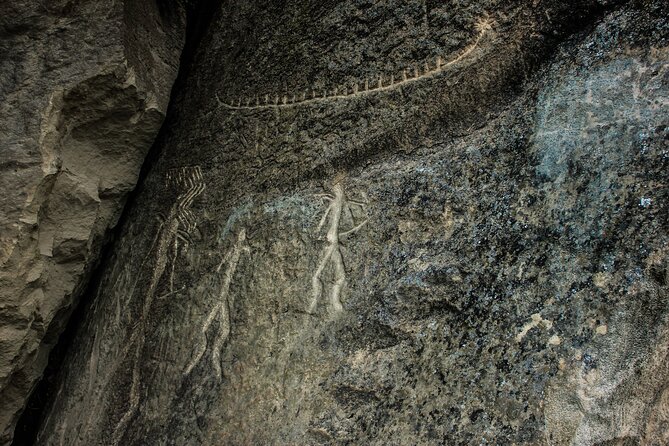
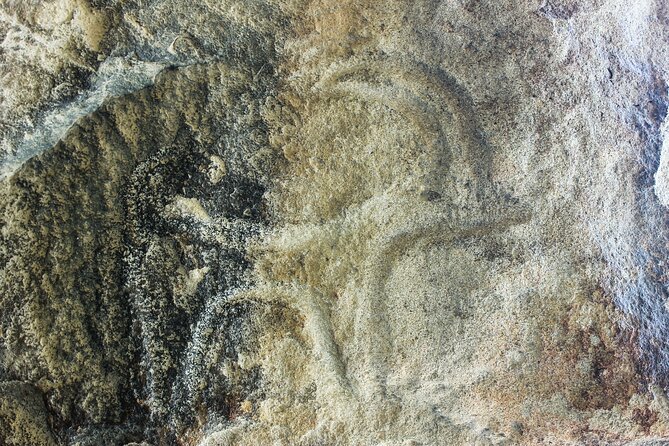
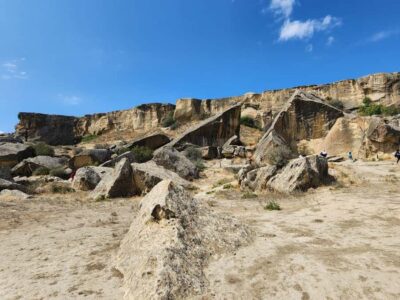
Gobustan is the anchor of the day. The area is known for more than 6,000 rock drawings, along with archaeological remains that show how people lived and worked thousands of years ago.
Your first stop is an interactive museum. Touch screens and 3D panoramas help explain the natural setting, the people who lived here, and the archaeological work carried out in the region. Exhibits date from approximately the fourth to second millennium BC, while the wider rock art record reaches much further back.
I like this order. The museum gives you a basic framework before you walk among the rocks. Without that context, the carvings can look like a scattered set of marks. With it, you have a better chance of noticing the figures, animals, scenes, and patterns your guide points out.
After the museum, you continue to the open-air rock site. This is where the past feels less abstract. You can see the stone surfaces directly and hear explanations about early human life, movement, hunting, and symbolic expression.
The site is also tied to a UNESCO-listed cultural area, which helps explain its importance beyond Azerbaijan. It is not just a collection of old drawings. It records how people used images to describe their world long before written records became common.
Plan on around two hours for the museum and rocks. That is enough time to take in the displays without turning the first stop into a rushed photo stop. The admission fee is not included, so set aside part of the additional $23 ticket budget for this and the other sites.
A guide makes a real difference here. Valah, for example, has been praised for connecting the petroglyphs with early human life and later religious ideas. Rajab is also noted for answering questions clearly and helping with photos, a small but useful touch when you are moving through several sites in one day.
Mud volcanoes bring a change of pace
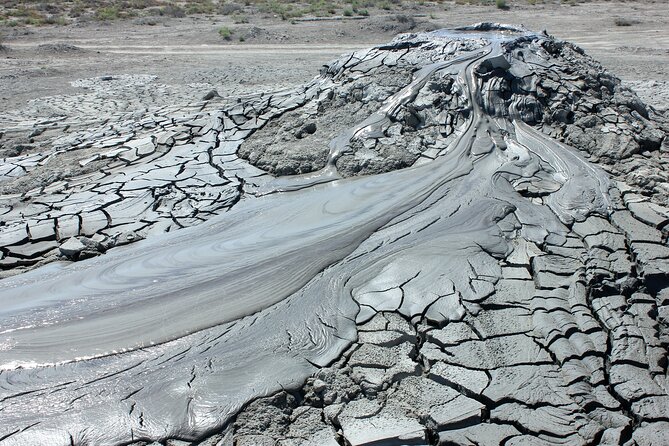
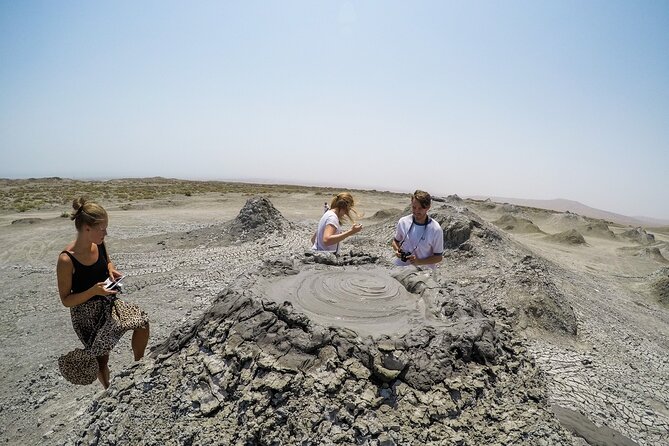
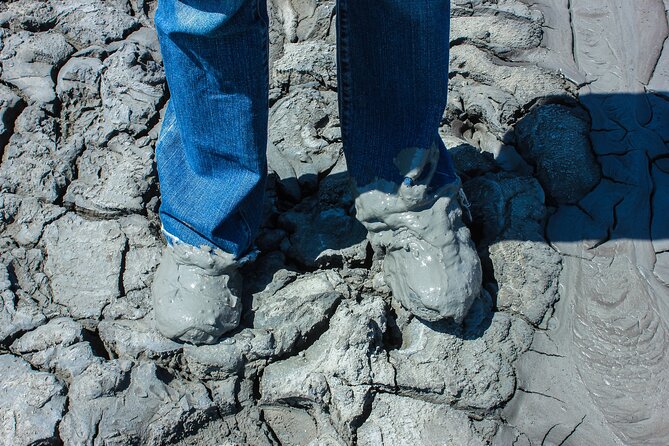
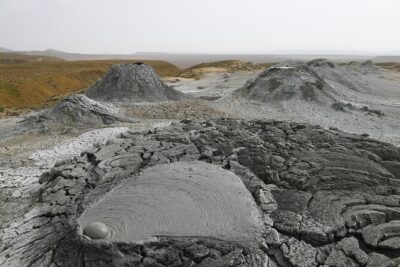
After Gobustan, the tour moves from carved stone to active geology. Azerbaijan is known for its mud volcanoes, where mud, water, and gases push toward the surface and form small cones and pools.
You spend about an hour in the mud volcano area. This stop is much less polished than the museum and temple, which is part of its appeal. You are seeing an unusual natural feature rather than entering a carefully restored historic building.
The mud may bubble or shift, but you should not expect a dramatic eruption every minute. The experience is about seeing the strange terrain up close and understanding how different it is from the dry rock country around Gobustan.
One practical point: the road and access conditions can vary. One account describes riding in vintage Lada vehicles for the final approach, calling that part of the fun. Do not treat this as a guaranteed inclusion in the standard tour, but be prepared for the mud volcano visit to feel more basic than the other stops.
This is often a good part of the day for families. Mahmed has been praised for keeping toddlers involved at both the museum and mud volcanoes. Still, stay close to your guide and follow any instructions around soft ground or bubbling areas.
The mud volcanoes are also a reminder that this tour is not only about ancient monuments. Azerbaijan’s story is tied to its geology. The same underground forces that produce natural gas and mud help explain why fire worship developed here and why the Absheron Peninsula has long been associated with flames.
Ateshgah explains the sacred fire tradition
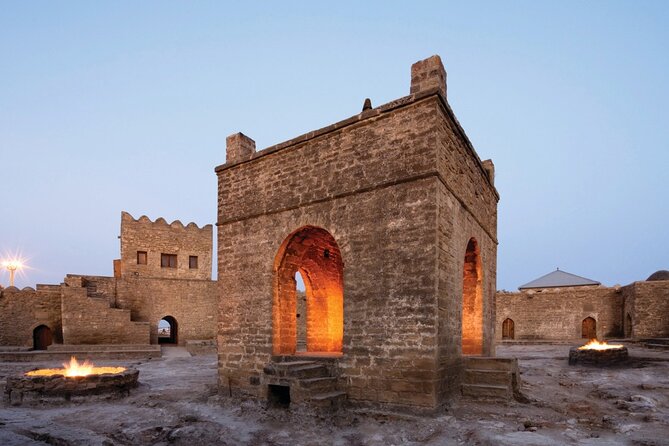
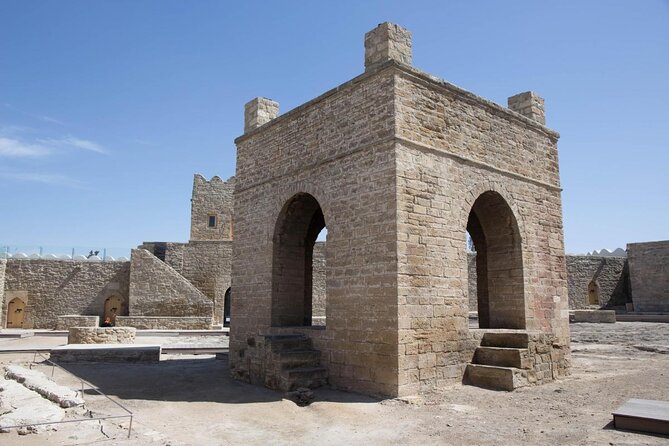
Ateshgah, the Fire Temple of Baku, is the most structured historic site on the route. The complex was used as a place of Hindu and Zoroastrian worship, and the earliest reference to the temple dates to the seventh century AD.
The buildings include cells once used by fire worshippers. Inside, you can see historical objects such as cookware, stone slabs with inscriptions, and clothing elements found during archaeological work.
The temple is valuable because it adds human meaning to the natural fire theme. At Gobustan, you are looking at early images. At the mud volcanoes, you are seeing the earth at work. At Ateshgah, you learn how people interpreted fire and built religious practice around it.
Your guide should help separate the different strands of the site’s story. The Persian and Indian inscriptions point to contact among religious communities and travelers from different regions. The temple is not simply an old building with a flame in the middle. It reflects the movement of beliefs and people across the area.
The stop lasts about an hour. That is enough for the courtyard, the cells, the displays, and an explanation of the site’s background. Because admission is not included, confirm with your guide how ticket payment will be handled during the day.
I would pay attention to the inscriptions and small household objects rather than rushing straight to the central fire area. The cells and everyday items help you picture the people who lived and worshipped there.
More ateshgah fire temple tours in Baku:
- Baku: Gobustan, Volcanoes, Fire Temple and Yanardag Day Trip
★ 4.7 · 433 reviews - Gobustan & Mud, Fire Temple, Burning Mountain (Group & Private)
★ 4.5 · 418 reviews - Gobustan-Mud Volcan-Fire Temple and Mountain Tour/Entrance inc
★ 5.0 · 267 reviews - Gobustan & Mud, Fire Temple, Burning Mountain, H.A. Center
★ 4.6 · 46 reviews
Yanardag is fire in its raw form
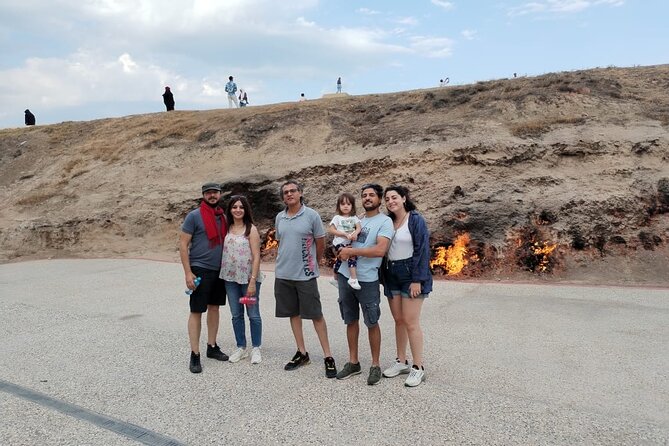
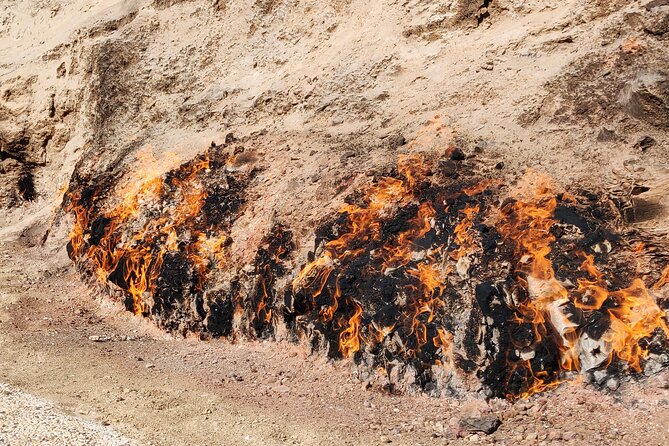
The final major stop is Yanardag, meaning Burning Mountain. Here, natural gas burns on a hillside on the Absheron Peninsula, and the flame has continued since ancient times.
Yanardag is a short stop of about 40 minutes, but it leaves a strong impression because the fire is not contained inside a temple or museum display. It comes directly from the hillside.
The site also has religious importance. Pilgrims from Iran and India still come to see the burning mountain, linking the natural feature with the same fire traditions explored at Ateshgah.
I like having both sites in the same day. Ateshgah shows fire as an object of worship, while Yanardag shows the physical source that helped shape those beliefs. The comparison gives the route a clear thread instead of making it feel like four unrelated attractions.
Keep your expectations sensible. Yanardag is a focused sight, not a large attraction requiring hours of exploration. The flame itself is the point, and 40 minutes is a reasonable amount of time.
After Yanardag, you are dropped at Fountain Square. Since the tour does not include lunch, you can arrange your own meal before or after the excursion, but the supplied details do not specify a planned restaurant stop. Bring water and a snack if you prefer not to wait until the end of the day.
The guide can shape the whole experience
The strongest part of this tour is not just the route. It is the person explaining it.
Rajab has received particularly strong praise for excellent English, clear answers, photo help, and useful suggestions for exploring Baku. Nigar is described as warm and genuinely interested in sharing everyday life in Azerbaijan. Mahmed has been singled out for working well with young children, while Valah has been praised for making archaeology and Zoroastrianism easy to follow.
Those details matter because Gobustan and the fire sites can be hard to interpret on your own. A good guide connects the dates, objects, beliefs, and natural features without turning the day into a lecture.
The experience is rated 4.9 out of 5 from 47 ratings, with 100 percent recommending it. That is a strong result, but the practical lesson is more useful than the number: guide quality appears to be central to the experience, so use the booking process to confirm your pickup details and ask any questions before departure.
Pickup problems can happen in a busy city. One person had a difficulty locating the meeting point, but the company handled it with a phone call. Confirm your exact pickup location and keep the provider’s contact information handy.
Is $89 per person good value?
At $89 per person, this is not the cheapest way to see the area. But it is a private nine-hour trip with an air-conditioned vehicle, an accredited guide, hotel pickup within Baku, and four major stops.
The value improves if you are traveling with family or friends and can benefit from the private format. You are paying for transport, planning, and flexibility, not just entry to each site. Group discounts are offered, although the exact discount is not stated.
You should budget an additional $23 for admissions. Lunch is not included, so the final cost is higher than the advertised tour price. Even so, arranging these sites independently would require transport across several locations and your own route planning.
I think the price is fair for a first visit to Baku, especially if you have only a few days and want to see the main sights outside the city. It is less attractive if you prefer slow travel, public transport, or spending a full morning at one archaeological site.
Who should book this day?
This tour suits first-time visitors who want a broad introduction to the area around Baku. You will see ancient art, unusual geology, religious architecture, and a natural flame without changing hotels or arranging several separate trips.
Families may also find the private format helpful. Mahmed’s work with toddlers suggests that the tour can be adapted for younger children, though the long duration and outdoor stops still require patience.
It is a good fit for curious travelers who enjoy asking questions. The guide-led explanations are important at Gobustan and Ateshgah, where the meaning of what you see is not always obvious.
You may want to skip it if you dislike long day trips or prefer a carefully paced archaeological visit. The route covers a lot, and the mud volcanoes and Yanardag are relatively short stops. Poor weather can also affect the operation, since the experience requires suitable conditions.
The tour is generally suitable for most people, but the provided information does not give detailed accessibility guidance. Ask the operator before booking if you have specific mobility needs.
Booking, timing, and cancellation
The normal start time is 9:30 a.m., and the tour is often booked about 30 days ahead. That suggests you should reserve early if your Baku dates are fixed.
Confirmation is provided when you book, and the experience is private, meaning only your own group takes part. Mobile tickets are available, and pickup is offered within Baku.
Free cancellation is available up to 24 hours before the start time for a full refund. Inside 24 hours, cancellations and changes are not accepted for a refund. If bad weather or failure to meet the minimum number of participants forces cancellation, you are offered another date or experience, or a full refund.
Should you book the Gobustan and fire sites tour?
I would book this tour if you want one efficient day that explains why Azerbaijan is called the Land of Fire. The combination of Gobustan’s ancient carvings, the mud volcanoes, Ateshgah, and Yanardag is varied enough to keep the day moving.
The private car and guide are the biggest advantages. You can ask for more time at the stops that interest you, and guides such as Rajab, Nigar, Mahmed, or Valah can help turn scattered sights into a clear story.
Book it with three cautions in mind: admission fees and lunch cost extra, the day is long, and the mud volcano access may be basic. For a first visit to Baku, those tradeoffs are reasonable. This is a practical way to see the city’s most important nearby sites without losing time to transport planning.
FAQ
What time does the tour start?
The tour starts at approximately 9:30 a.m.
How long does the tour last?
The experience lasts about nine hours.
Where does pickup take place?
Pickup is offered from your location within Baku.
Where does the tour end?
The tour ends at Fountain Square in Baku.
Is this a private tour?
Yes. Only your group participates in the activity.
What is included in the price?
An air-conditioned vehicle and an accredited tour guide are included.
Are admission tickets included?
No. Ticket fees are not included. The stated additional ticket cost is about $23.
Can I cancel for a full refund?
Yes, if you cancel at least 24 hours before the experience starts. Cancellations within 24 hours are not refundable.
More Yanar Dag Burning Mountain Tours in Baku
- Ateshgah Fire temple and Burning mountain tour
★ 4.5 · 42 reviews - Baku: Gobustan, Mud Volcanoes, Fire Temple, & Yanar Dag Tour
★ 4.8 · 36 reviews - Baku: Atashgah Fire Temple & Burning Mountain Half-Day Tour
★ 4.0 · 35 reviews - Baku: Burning Mountain & Zorastrian Temple Private Tour
★ 4.9 · 34 reviews
Just added around Baku
- Wine Tour Baku★ 5.0 · 4 reviews
- Traditional Azerbaijani Cuisine Workshop★ 5.0 · 5 reviews
- Tour to the North part of Azerbaijan Forests and Mountatin Quba★ 5.0 · 10 reviews
- Full Day KHINALUG and the Candy Mountains Tour★ 5.0 · 15 reviews
- Baku Sightseing Tour★ 5.0 · 12 reviews
- Small-Group Day Trip to Gobustan, Mud Volcanoes, Ateshgah & Yanar Dagh★ 4.5 · 3 reviews
- The Magnificent Baku Night Tour★ 5.0 · 3 reviews
- Sheki tour with overnight★ 5.0 · 5 reviews
Gobustan Mud Volcano Tours, compared.
Gobustan, Mud Volcano, Fire Mount, Temple Lunch Entry
Read our review →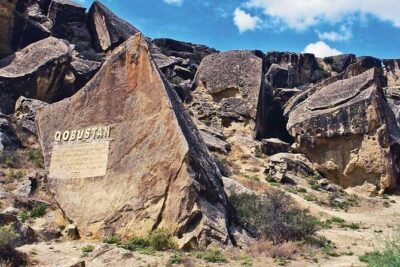
Gobustan, Volcanoes, Fire Temple and Yanardag Day Trip
Read our review →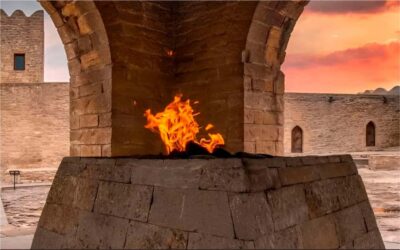
Mud Volcan-Fire Temple and Mountain Tour/Entrance inc
Read our review →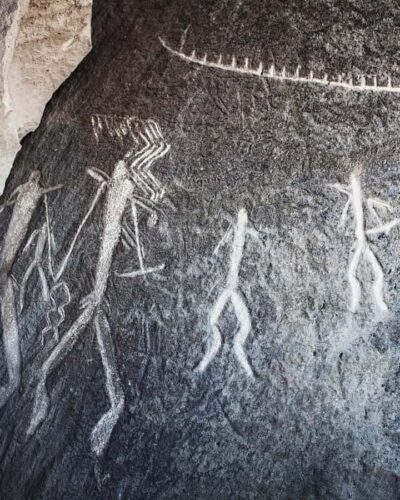
Gobustan Mud Volcanoes Temple & Entry tickets included
Read our review →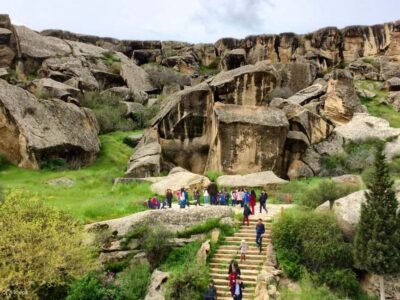
Gobustan-Absheron Tour with Hotel PICK UP and DROP OFF
Read our review →
Gobustan/Absheron guided tour with lunch and tickets
Read our review →Browse the lists this tour appears in