
Reviewed · ATESHGAH FIRE TEMPLE TOURS
Baku: Atashgah Fire Temple & Burning Mountain Half-Day Tour
Atashgah and Yanardag show you the two faces of Absheron’s fire tradition: one is a stone temple built around natural gas flames, and the other is a bare hillside where fire still licks from the earth. I like the pairing because you get both human history and a living geological oddity in one outing. The Atashgah courtyard is especially atmospheric, with its small cells and central fire.
I also like the low price, $23 per person, which covers transport, entry tickets, and an English or Russian-speaking guide. The main caution is timing: this half-day outing may be joined to a longer group tour, and past departures have included long waits for lunch or a later meeting point. If your schedule is tight, confirm the pickup details before setting off.
In This Review
- Key points at a glance
- Why Baku’s fire sites matter
- Reaching Atashgah, 21 kilometers east of Baku
- Inside the stone courtyard at Atashgah
- What Atashgah can and cannot offer
- The 35 to 40 minute transfer to Yanardag
- Watching the flames at Yanardag
- How the two stops work together
- Price, transport, and the real value
- Who will enjoy this three-hour outing
- Practical advice before you book
- Should you book Atashgah and Yanardag?
- FAQ
- How long is the Atashgah and Yanardag tour?
- What does the $23 price include?
- Which languages are available?
- Where is Atashgah Fire Temple?
- Can I cancel the booking?
- Can I reserve without paying immediately?
- Is the tour wheelchair accessible?
Key points at a glance
- Two very different fire sites: Compare the man-made Atashgah temple with Yanardag’s naturally burning hillside.
- A compact Absheron trip: The advertised duration is three hours, useful when you have limited time in Baku.
- A good price for the basics: At $23, transport, entrance tickets, and a live guide are included.
- Strong guide potential: One guest praised the guide as friendly and highly informative, though no guide names are supplied.
- Timing needs checking: Some departures have involved lunch stops, group transfers, and serious delays.
- Flexible booking: You can cancel up to 24 hours ahead for a full refund and reserve without paying immediately.
Why Baku’s fire sites matter
Azerbaijan is often called the Land of Fire, and this trip gives that nickname a physical meaning. Gas rises through the ground around Absheron, the peninsula east of Baku, where natural flames have attracted worshippers, merchants, and curious visitors for centuries.
You are not simply looking at two fires. Atashgah shows how people built a place of worship around a natural phenomenon. Yanardag shows the phenomenon itself, still burning from a gas leak in the earth.
That contrast gives the excursion more substance than a quick photo stop. At the temple, you consider ritual and trade. At the mountain, you watch geology in action. Neither site takes all day, so the combination works well for a first visit to Baku or for a spare afternoon between city sights.
More ateshgah fire temple tours in Baku:
- Baku: Gobustan, Volcanoes, Fire Temple and Yanardag Day Trip
★ 4.7 · 433 reviews - Gobustan & Mud, Fire Temple, Burning Mountain (Group & Private)
★ 4.5 · 418 reviews - Gobustan-Mud Volcan-Fire Temple and Mountain Tour/Entrance inc
★ 5.0 · 267 reviews
Reaching Atashgah, 21 kilometers east of Baku
The first stop is Atashgah Fire Temple, about 21 kilometers east of Baku. Transportation is supplied in a minivan or van, so you do not need to arrange a separate taxi for the trip out to Absheron.
The ride itself is part of the change in mood. Central Baku is urban and polished, while the temple sits outside the city in an area shaped by oil, gas, and open ground. The supplied information does not give a fixed pickup point for every departure, so you should check the exact meeting instructions carefully.
Atashgah is often described as an 18th-century temple built by Indian merchants around a place where natural gas rose from below. That detail matters. The structure is not just an old religious monument placed at random. Its design and purpose grew from the flames already coming from the earth.
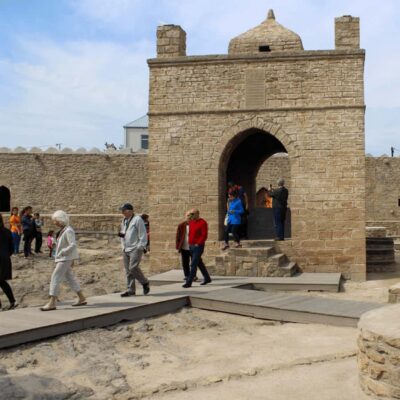
The site has the form of a small stone fortress. A walled courtyard surrounds the central shrine, and small rooms line the inside of the walls. These cells once held ascetics and pilgrims, giving the place a human scale that a simple open-air flame would not have had.
Inside the stone courtyard at Atashgah
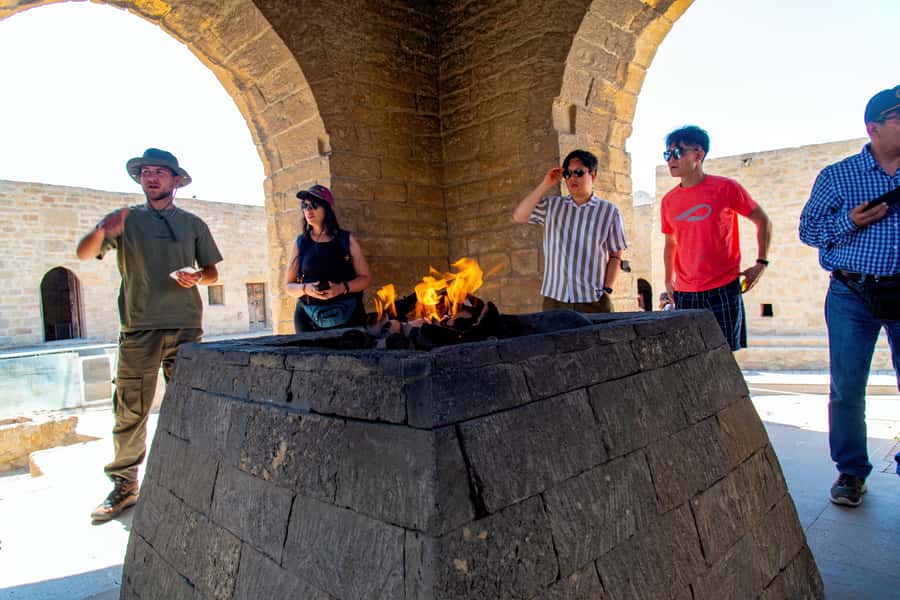
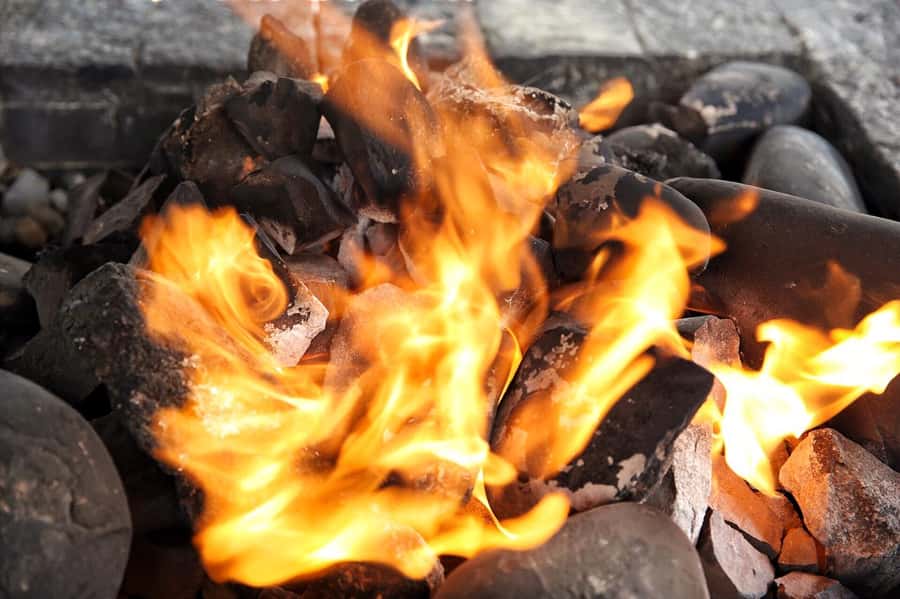
The central fireplace is the visual focus. Natural gas is brought through ventilation in the centre, creating the main flame, with four smaller fires on the pavilion’s rooftop corners.
You will want a few minutes to look up as well as ahead. The roof flames help you understand how the whole building was arranged around fire. The central flame carries the ritual focus, while the smaller flames turn the pavilion into a clear symbol from every side.
The cells around the courtyard are just as useful for understanding the site. They were connected with ascetic believers and pilgrims, so the temple was not merely a place to stop, take a picture, and leave. It supported a religious community and visiting worshippers.
The tour presents Atashgah through the story of fire worship, described as one of the world’s oldest religious traditions. Your guide should help connect the building’s layout with those practices. An English or Russian-speaking guide is included, and a strong guide can make the difference between seeing a stone courtyard and understanding why it was built.
One highly positive account singled out the guide’s friendliness and clear information. No guide’s name is provided, so you cannot request a particular person in advance based on the available details.
What Atashgah can and cannot offer
Atashgah is atmospheric, but it is not a vast complex. You will explore a compact courtyard, central shrine, roof flames, and surrounding cells rather than spend hours walking through a large archaeological site.
That compact size is an advantage on a three-hour tour. You can see the main features without giving up a full day in Baku. It also explains why some people may wish for more free time. If you like to study inscriptions, linger in each cell, or take photographs without being hurried, the scheduled visit may feel brief.
The supplied experience does not state the exact amount of time allocated at Atashgah. That makes the guide’s pacing important. If independent exploration matters to you, ask how much time you will have at each stop before the vehicle leaves.
The temple is best understood as a cultural and historical site, not as an untouched ancient fire shrine. Its present form reflects the 18th-century building associated with Indian merchants, while the natural gas beneath the area is far older. That distinction helps keep expectations sensible.
More yanar dag burning mountain tours in Baku:
- Gobustan, Mud volcanoes, Fire temple, Fire mountain PRIVATE TOUR
★ 5.0 · 47 reviews - Gobustan & Mud, Fire Temple, Burning Mountain, H.A. Center
★ 4.6 · 46 reviews - Ateshgah Fire temple and Burning mountain tour
★ 4.5 · 42 reviews - Baku: Gobustan, Mud Volcanoes, Fire Temple, & Yanar Dag Tour
★ 4.8 · 36 reviews
The 35 to 40 minute transfer to Yanardag
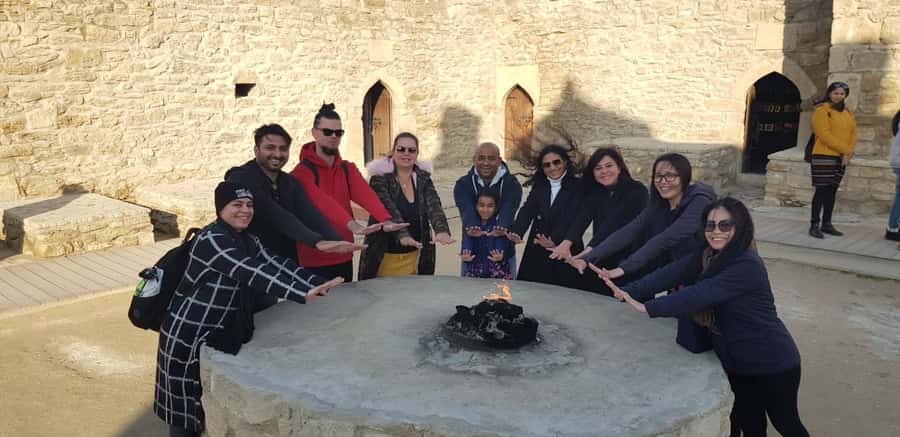
After Atashgah, the tour continues to Yanardag State Historical, Cultural and Natural Reserve. The transfer is described as taking about 35 to 40 minutes.
This is the longer movement between the two sights, and it can affect how the short tour feels. Under a smooth schedule, it gives you a quick look at two separate parts of Absheron. With delays or an added lunch stop, the time available for the actual attractions can shrink sharply.
The tour’s advertised duration is three hours, but past group arrangements have not always followed that simple outline. Some half-day passengers were combined with people taking a full-day tour and were asked to wait while the larger group ate lunch. One account describes a wait of about an hour and 20 minutes before the sightseeing began, while another reports a total delay of roughly two and a half hours.
That is the main practical issue here, not the sights themselves. Ask in advance if your departure is a stand-alone half-day outing or part of a longer group itinerary. Also confirm the pickup time and location on the day before the tour. A three-hour plan leaves little room for an unannounced meal or a late transfer.
Watching the flames at Yanardag
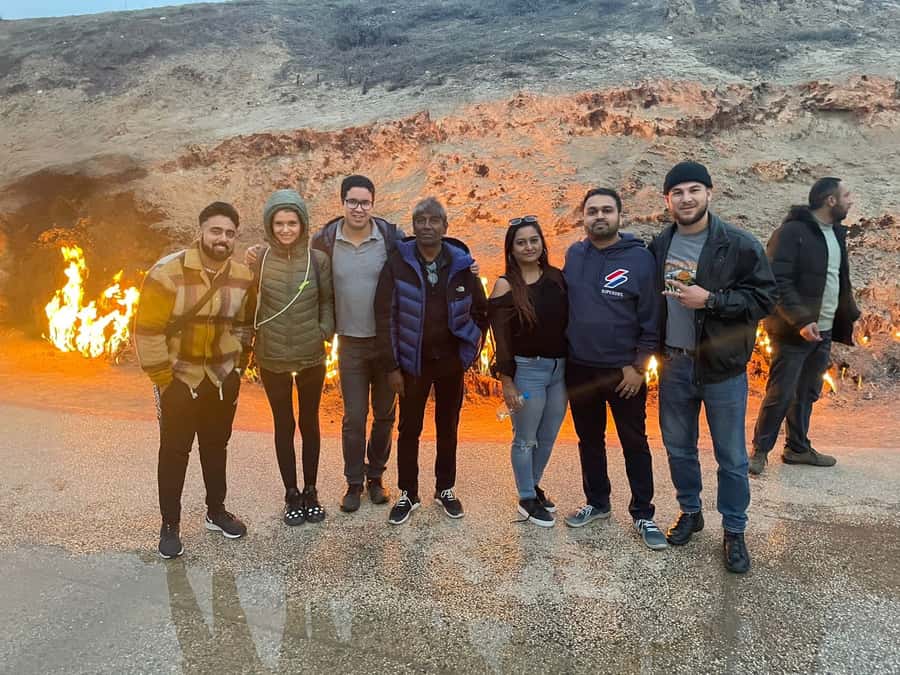
Yanardag means burning mountain, though the attraction is a constantly burning wall of flame along a hill rather than a large mountain erupting with fire. Natural gas escapes through cracks in the rocks, and the flame burns where it reaches the surface.
The explanation given for the fire points to tectonic shifts and volcanic material below the ground. That makes Yanardag different from Atashgah. At the temple, people built a religious setting around gas flames. At Yanardag, the exposed earth itself is the subject.
The fire has attracted attention for centuries. Marco Polo is said to have described flames around Baku and its surroundings during his travels. The exact age of the Yanardag fire is uncertain, but the attraction is presented as a long-running natural phenomenon.
You will likely find Yanardag more immediate than Atashgah. There is no need to interpret a building first. You see a line of flame emerging from the hillside and then consider the gas below your feet.
The site is also less elaborate. If you expect a dramatic volcano, you may find the scale modest. Its appeal comes from the oddness of a steady fire burning from bare rock, especially when you remember that this is not a staged effect or a torch placed by the tour operator.
How the two stops work together
Atashgah and Yanardag are worth visiting together because they answer different questions. Atashgah asks how communities responded to natural fire. Yanardag asks how that fire is produced in the first place.
I would not choose this excursion only for religious history or only for geology. The value comes from the comparison. You see architecture, worship, pilgrimage, natural gas, and local legend within a single trip outside Baku.
The pairing also keeps the visit varied. Atashgah rewards close attention to the courtyard and rooms. Yanardag is more about standing before the flame and grasping the physical phenomenon. If one stop feels small to you, the other supplies a different kind of interest.
For photographers, the two sites offer distinct subjects, but lighting and flame conditions can change. The information supplied does not promise a particular sunset departure or special photography stop, so do not book this as a guaranteed sunset experience.
Price, transport, and the real value
At $23 per person, this is an inexpensive way to reach two sites outside Baku. The price includes transport in a minivan or van, entrance tickets, and an English or Russian-speaking guide.
That package is useful because the sites are separated from the city and from each other. If you arranged separate taxis and paid entry at both locations, the convenience could easily become more important than the guiding itself. The tour also removes the need to work out the route across Absheron.
The value becomes weaker if you lose a large part of the three hours to waiting. A cheap tour is not a bargain when you spend the scheduled sightseeing time sitting in an office, waiting for a group, or accompanying a lunch stop that was not clearly explained.
I would judge the price in two ways. If the operator confirms a direct half-day departure, $23 is a sensible buy for a short introduction to the fire sites. If you are told that you will join a full-day group, ask how the timing will work before paying. The low price does not compensate for a badly managed afternoon if you have only one free day in Baku.
The booking terms provide some protection. You can cancel up to 24 hours before departure for a full refund, and you can reserve now and pay later. Those options are helpful, but they do not replace checking the operational details.
Who will enjoy this three-hour outing
I would recommend the trip to you if you want a simple introduction to Absheron without arranging transport yourself. It suits first-time visitors, people with a free morning or afternoon, and anyone curious about the link between Azerbaijan’s natural gas and its fire traditions.
It is also a good fit if you prefer a guide to provide the historical frame. Atashgah’s rooms and rituals make more sense when someone explains their purpose, and Yanardag benefits from a clear account of the gas beneath the hill.
The trip may suit solo visitors particularly well. One solo participant described the experience as smooth and suitable for independent visitors, though that positive result depends on the departure being organized as promised.
You should be more cautious if you have a strict onward booking, a flight to catch, or only a narrow window between other plans. The reports of delayed starts and unexpected lunch arrangements are serious for a tour advertised at only three hours.
Private groups are available, which may be worth considering if you want greater control over the pace and company. The supplied details do not state the private-group surcharge or whether private departures avoid every possible delay, so ask for those terms directly.
The tour is listed as wheelchair accessible. Since the exact surface conditions and time at each site are not described, you may still want to confirm the route details when booking if you need specific assistance.
Practical advice before you book
Check the exact pickup point and start time rather than assuming they will arrive automatically the day before. This is especially important because one scheduled 1 pm departure led to last-minute communication and a change of meeting arrangements.
Ask one plain question: is this a dedicated three-hour tour, or will I join a full-day group? That answer may determine whether the outing feels efficient or frustrating.
If lunch is mentioned, find out if it is included in your plan and how long it will take. A meal stop may make sense on a full-day excursion, but it takes up a large share of a half-day trip.
Leave some room after the advertised end time. The official duration is three hours, yet past departures ran much later because of group coordination. I would not place a timed museum visit, airport transfer, or important dinner immediately afterward.
Expect a guided visit rather than a long period of free exploration. If you want to linger at the temple cells or spend extra time near the flames, tell the guide early and ask what flexibility is possible.
Should you book Atashgah and Yanardag?
Book this tour if you want an affordable, guided look at two of Absheron’s most unusual sights and can confirm that the half-day schedule will run directly. The Atashgah courtyard and Yanardag flames make a memorable pair, and the included transport, tickets, and guide offer good value at $23.
I would skip it, or choose a private arrangement, if your afternoon must run precisely to the minute. The sites are worthwhile, but the organization has sometimes been the weak link. Confirm the pickup, lunch plan, group setup, and expected finish before you commit.
FAQ
How long is the Atashgah and Yanardag tour?
The advertised duration is three hours. The transfer from Atashgah to Yanardag takes about 35 to 40 minutes, but past departures have run longer because of group delays and lunch arrangements.
What does the $23 price include?
The price includes transportation in a minivan or van, entrance tickets, and an English or Russian-speaking guide.
Which languages are available?
The live guide is available in English or Russian.
Where is Atashgah Fire Temple?
Atashgah is about 21 kilometers east of Baku, on the Absheron side of the city.
Can I cancel the booking?
Yes. You can cancel up to 24 hours in advance for a full refund.
Can I reserve without paying immediately?
Yes. The reserve now and pay later option lets you hold a place without paying at the time of booking.
Is the tour wheelchair accessible?
The activity is listed as wheelchair accessible. The supplied details do not specify the exact surfaces or access arrangements at each stop, so confirm any particular mobility needs before departure.
More Half-Day in Baku
- Baku: Half-Day Gobustan and Mud Volcanoes Tour with Entry
★ 4.7 · 144 reviews - Half-Day Baku City Sightseeing Tour
★ 5.0 · 23 reviews - Half-Day Baku Private Walking Tour with Pickup
★ 5.0 · 5 reviews
Just added around Baku
- Wine Tour Baku★ 5.0 · 4 reviews
- Traditional Azerbaijani Cuisine Workshop★ 5.0 · 5 reviews
- Tour to the North part of Azerbaijan Forests and Mountatin Quba★ 5.0 · 10 reviews
- Full Day KHINALUG and the Candy Mountains Tour★ 5.0 · 15 reviews
- Baku Sightseing Tour★ 5.0 · 12 reviews
- Small-Group Day Trip to Gobustan, Mud Volcanoes, Ateshgah & Yanar Dagh★ 4.5 · 3 reviews
- The Magnificent Baku Night Tour★ 5.0 · 3 reviews
- Sheki tour with overnight★ 5.0 · 5 reviews
Ateshgah Fire Temple Tours, compared.
Gobustan, Volcanoes, Fire Temple and Yanardag Day Trip
Read our review →
Mud Volcan-Fire Temple and Mountain Tour/Entrance inc
Read our review →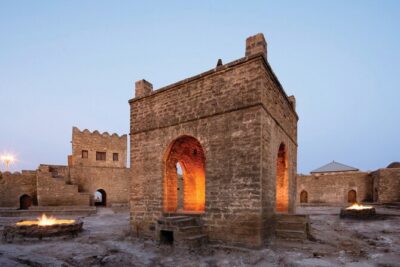
Gobustan, Mud volcanoes, Fire temple, Fire mountain PRIVATE TOUR
Read our review →
Gobustan & Mud, Fire Temple, Burning Mountain, H.A. Center
Read our review →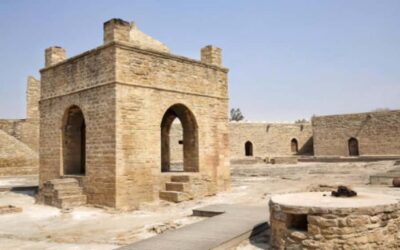
Gobustan, Mud Volcanoes, Fire Temple, & Yanar Dag Tour
Read our review →
Qobustan rock arts, Mud Volcanoes, Fire temple Ateshgah, Yanardag
Read our review →
All inclusive! Qobustan, Mud Vulcano, Ateshgah & Yanardag Fire Mountain Tour
Read our review →Browse the lists this tour appears in