
Reviewed · GOBUSTAN MUD VOLCANO TOURS
Gobustan, Mud volcanoes, Fire temple, Fire mountain GROUP TOUR
A hillside of natural gas has burned for centuries at Yanar Dag, while nearby mud volcanoes bubble from the earth like giant pots of gray soup. Add Gobustan’s ancient rock carvings and Ateshgah Fire Temple, and you get a full day covering four very different sides of Azerbaijan.
I like the wide range of sights and the fact that transport links places that are awkward to visit together on your own. I also like the small-group format, capped at 20 people, which should give you more room to ask questions than a large coach tour. The main caution is the long day and the extra cost: entrance tickets total about $23, and lunch is not included.
In This Review
- Key points to know
- Why this Baku day trip works
- Gobustan Museum puts the rock art in context
- Reading the carvings in Gobustan’s open air
- Mud volcanoes offer the strangest stop
- Ateshgah Fire Temple explains the fire theme
- Yanar Dag ends the day with real flames
- What the guide and group size mean
- Is $59 a fair price?
- Who should book this experience?
- Should you book it?
- FAQ
- What time does the tour start?
- How long does the tour last?
- What is included in the price?
- How much should I budget for entrance tickets?
- Is lunch included?
- How many people can join the group?
Key points to know
- Four major stops in one day: Gobustan, mud volcanoes, Ateshgah, and Yanar Dag.
- Gobustan combines a museum with open-air rock art, so you get context before seeing the carvings.
- The mud volcano visit is active and hands-on: you can climb up and look into the craters.
- Ateshgah connects Persian, Indian, Hindu, and Zoroastrian traditions through its inscriptions and exhibits.
- Yanar Dag is a natural gas fire, not a staged flame or an ordinary campfire.
- Budget about $82 before lunch, combining the $59 tour price with approximately $23 in admission fees.
Why this Baku day trip works
Baku is an easy base for exploring the Absheron Peninsula, but the sights are scattered. Gobustan lies southwest of the city, while Ateshgah and Yanar Dag are on the peninsula east of Baku. Public transport can reach some of these places, but combining all four in one day takes planning, timing, and several changes.
This tour handles the driving in an air-conditioned vehicle and provides an accredited guide. Pickup begins around 9:30 AM from your location in Baku, with the stated meeting point on the road by Nizami Badalan School. The day lasts about nine hours, ending with drop-off at Fountain Square.
The route gives you a useful story arc. You begin with prehistoric life, move on to the strange geology of mud volcanoes, then visit a religious site shaped by fire worship. The final stop, Yanar Dag, brings the theme back to nature with gas flames rising from a hillside.
That range is the reason I would choose this tour over a simple city excursion. You are not seeing four versions of the same attraction. Each stop explains a different reason Azerbaijan has long been called the Land of Fire.
More gobustan mud volcano tours in Baku:
- Baku: Gobustan, Mud Volcano, Fire Mount, Temple Lunch Entry
★ 4.9 · 3,246 reviews - BEST Gobustan, Volcanoes & Absheron Fire Tour (Group or Private)
★ 5.0 · 1,254 reviews - Gobustan and Absheron tour (All inclusive)
★ 5.0 · 1,014 reviews
Gobustan Museum puts the rock art in context
Your first major stop is the Gobustan Rock Art Museum. This is more than a quick room before the rocks. Touch screens and 3D panoramas explain the area’s natural setting, its people, archaeological work, and cultural development.
The museum presents material connected with life from roughly 5,000 to 20,000 years ago. You can also see historical objects dating from about the fourth to second millennium BC. The exhibits help you understand that the carvings are not random marks on stone. They are traces of people, animals, movement, and ritual from a very distant past.
I like the museum portion because the outdoor carvings can be hard to read without help. Once you reach the rocks, the guide can connect what you see to the displays you have just encountered. That makes the outdoor stop more useful than simply walking past panels of weathered stone.
Allow about two hours for the Gobustan section, including the museum and open-air area. Admission is not included, so keep part of the stated $23 ticket budget available. The exact ticket breakdown between stops is not given, but all four attractions list admission as extra.
Reading the carvings in Gobustan’s open air
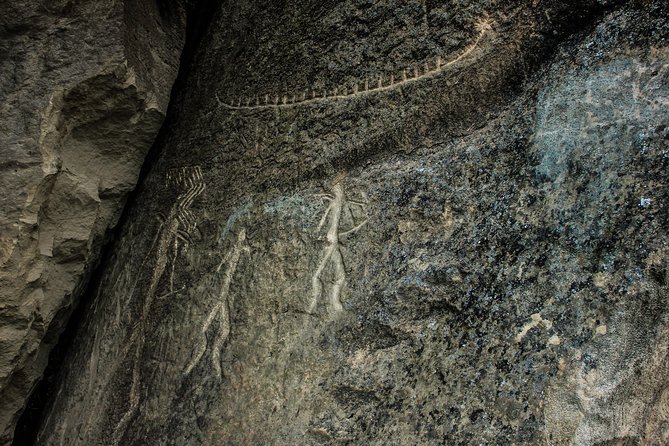
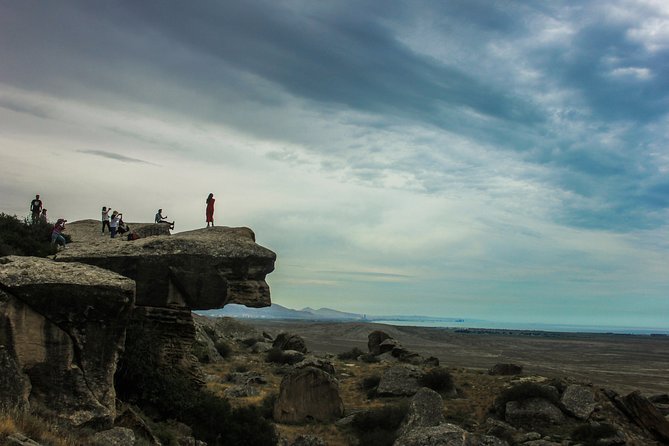
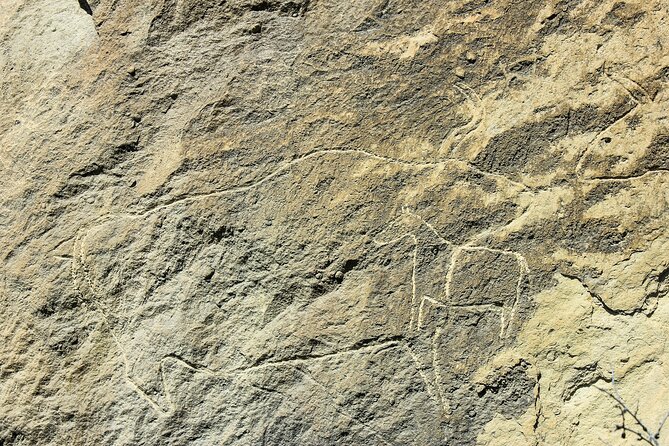
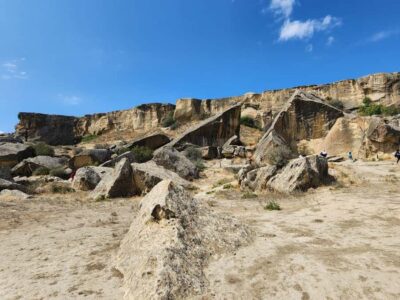
After the museum, the guide takes you into the Gobustan rock area. The open-air setting matters. You are seeing the engravings where they were made, among the rocks and dry surroundings of the reserve.
Gobustan is recognized as a UNESCO World Heritage Site, which gives this stop special weight. The value is not simply that the carvings are old. It is the way they record human activity across a long span of time and help show how people interacted with their surroundings.
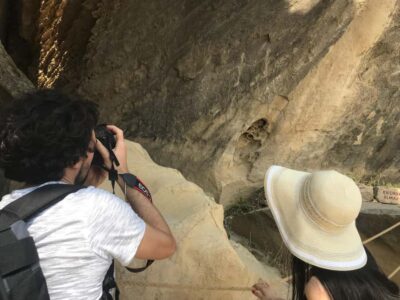
Do not expect a polished archaeological park at every turn. Ancient carvings can be subtle, and the pleasure comes from careful looking. Your guide’s explanations are important here, especially if you want to understand what a particular engraving represents or how archaeologists study the site.
The two-hour visit is a good length for a first look. If prehistoric art is your main interest, you may wish you had more time. For most people, though, this schedule gives enough room to visit the museum, see the rocks, and continue before the day becomes too slow.
Mud volcanoes offer the strangest stop
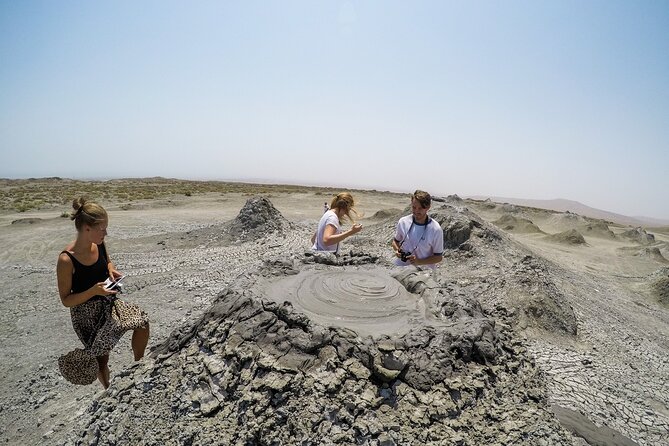
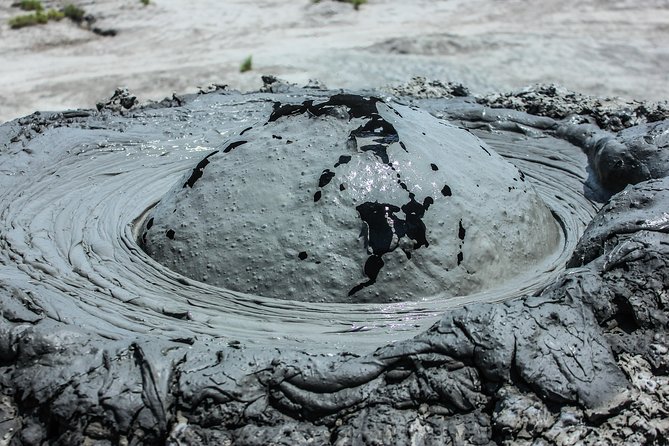
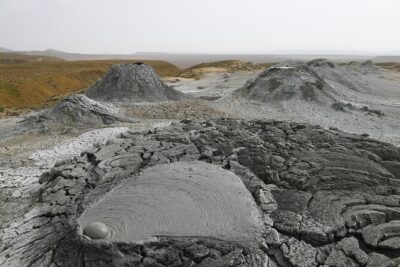
The nearby mud volcanoes are the day’s oddest attraction. Azerbaijan has about 350 of the roughly 800 mud volcanoes found around the world, according to the tour information. They are not fiery cones like the volcanoes you may picture. Instead, they push mud, gas, and mineral material toward the surface.
The volcanoes in this region began appearing about 25 million years ago. Their mud has uses in chemical and construction industries, pharmacology, and certain forms of treatment connected with skin, rheumatism, and the nervous system.
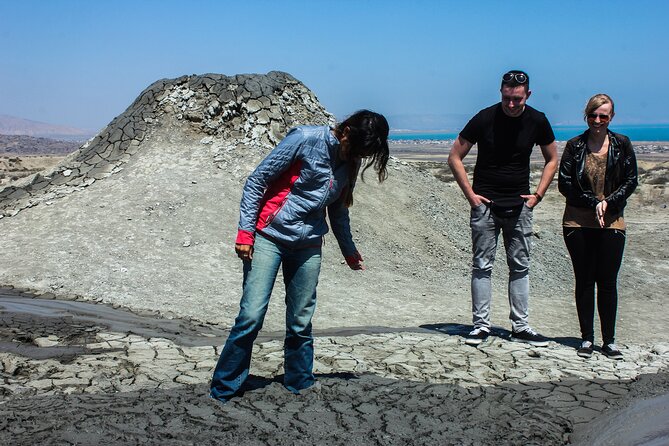
For you, the appeal is much simpler: you can get close to active craters, see the bubbling surfaces, and climb the formations. The sight is unusual and tactile. The gray mud, small eruptions, and bare setting make this feel very different from a museum visit.
Wear shoes you do not mind using on uneven ground. That is practical advice based on the fact that the visit involves climbing and viewing craters up close. The tour description does not give a detailed surface or footwear guide, so sensible walking shoes are the safest choice.
The stop lasts about an hour. It is long enough to see the active areas without making the strange scenery feel repetitive. The tour then allows an hour for lunch in the city center before the second half of the day.
Lunch is at your own expense, and no restaurant or menu is specified. Treat the break as free time rather than part of the sightseeing program. If you have a particular dietary need, the available information does not promise a dedicated option, so ask the operator before booking.
More ateshgah fire temple tours in Baku:
- Baku: Gobustan, Volcanoes, Fire Temple and Yanardag Day Trip
★ 4.7 · 433 reviews - Gobustan & Mud, Fire Temple, Burning Mountain (Group & Private)
★ 4.5 · 418 reviews - Gobustan-Mud Volcan-Fire Temple and Mountain Tour/Entrance inc
★ 5.0 · 267 reviews - Gobustan, Mud volcanoes, Fire temple, Fire mountain PRIVATE TOUR
★ 5.0 · 47 reviews
Ateshgah Fire Temple explains the fire theme
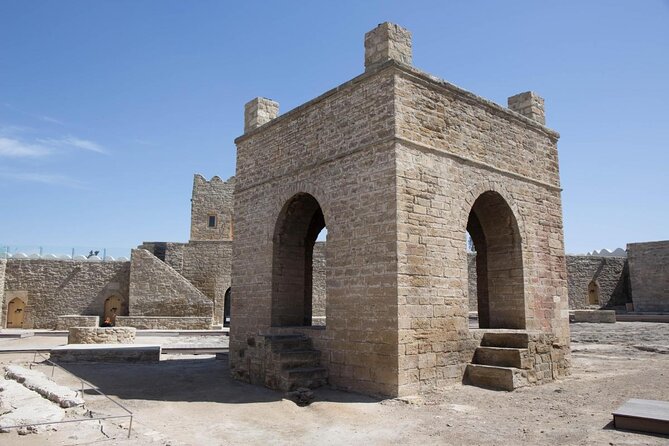
Ateshgah is the most important cultural stop on the route. The temple was used as a place of Hindu and Zoroastrian worship, with Persian and Indian inscriptions showing the connections that shaped the site. Its first recorded mention dates to the seventh century AD.
The complex includes cells where fire worshippers lived or stayed, along with objects found during archaeological work. Look for cookware, stone slabs with inscriptions, and clothing elements. These details help turn the temple from a simple collection of walls into a place connected with daily religious practice.
The fire theme is central, but the site is not just about a flame. Ateshgah gives you a chance to think about trade, pilgrimage, and the movement of religious ideas across the region. People from Iran and India still visit fire-related sites in Azerbaijan, and this temple reflects those long connections.
Plan for about an hour. That is enough for a guided introduction and a walk through the cells, though anyone with a strong interest in religious history may want to linger. Since the tour provides an accredited guide, listen closely here. The inscriptions and religious background are the parts most likely to lose meaning without explanation.
Entrance is extra. The separate ticket charges can make the total price feel higher than the initial $59 figure, so include the approximately $23 admission budget when comparing this outing with other Baku day tours.
Yanar Dag ends the day with real flames
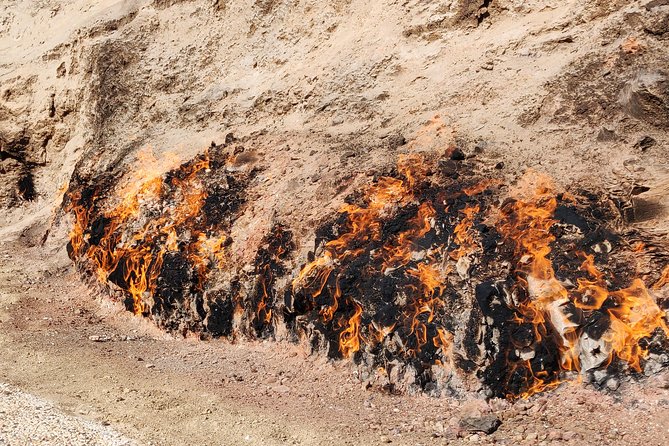
The final stop is Yanar Dag, or Burning Mountain. Natural gas has kept flames burning on a hillside of the Absheron Peninsula since ancient times. The fire is a natural phenomenon, not a theatrical show arranged for visitors.
The visit lasts about 40 minutes. That is a sensible amount of time for a site built around one main attraction. You can watch the flames, take in the setting, and hear how natural gas shaped the area’s identity and religious traditions.
The fire may be most striking near the end of a long day because it is so simple and direct. Gobustan asks you to study small marks in stone. Yanar Dag gives you a visible reminder that gas is still escaping from the ground and catching fire.
Pilgrims from Iran and India come to the site, which connects Yanar Dag with the wider fire-worship traditions seen at Ateshgah. Seeing both places on the same day makes their relationship clearer. One is a human-built religious complex, while the other is a natural flame that inspired sacred meaning.
Admission is not included here either. After the visit, you are dropped off in Baku, with Fountain Square listed as the end point.
What the guide and group size mean
The group can include up to 20 people. That is not an intimate private tour, but it is more manageable than a full-size coach. You should be able to hear the guide more easily, and moving between stops should be less cumbersome.
The guide is described as accredited, but no guide’s name is provided in the booking information. If having a particular person lead the day matters to you, confirm the assigned guide before departure. This is worth doing because the quality of interpretation matters most at Gobustan and Ateshgah, where the significance is not always obvious at first glance.
One published account of the experience raised a concern about an inexperienced guide who gave little information and even appeared to sleep during part of the drive. The operator disputed that account, saying the booking could not be matched and asking for the guide’s name. I would treat this as a reminder to confirm the operator, meeting point, and guide details carefully rather than as proof of a regular problem.
The overall rating is 4.6 from 19 ratings, with 95 percent recommending the experience. That is a positive signal, but the sample is small. The strongest consistent appeal is the collection of interesting places, not a luxury vehicle, included meals, or a private-tour experience.
Is $59 a fair price?
At $59 per person, the tour is reasonably priced for a nine-hour outing with Baku pickup, an air-conditioned vehicle, and a guide. You are paying for the convenience of covering distant sites in one day without arranging separate transport.
The real cost is closer to $82 before lunch once the stated $23 in admission fees are added. That remains fair if you want all four attractions, but it is important to compare the full figure rather than the headline price.
The value is strongest for a first visit to Baku. You see UNESCO-listed Gobustan, active mud volcanoes, Ateshgah, and Yanar Dag in one organized route. The tradeoff is limited control over your pace. You cannot easily spend an extra hour at Gobustan or skip a stop that interests you less.
For a private car or a small custom itinerary, you would normally pay more. For a solo visitor or couple who want the simplest way to connect these sights, this group tour makes financial sense. For families with very young children or anyone who dislikes a full day of driving and scheduled stops, the pace may feel demanding.
Who should book this experience?
I would recommend it to first-time visitors who want to get beyond central Baku, history fans who enjoy mixing archaeology with living religious traditions, and curious sightseers looking for unusual natural features. The mud volcanoes alone make this more memorable than a standard city tour.
It is also a good match if you prefer a guide to explain the meaning of what you are seeing. Gobustan’s carvings, Ateshgah’s inscriptions, and the connection between fire and pilgrimage all benefit from interpretation.
You may prefer another plan if you want a slow archaeological visit, a long independent lunch, or a private schedule. The day covers a lot of ground, and each stop receives a fixed amount of time. It is efficient rather than leisurely.
The tour requires good weather. If poor weather cancels it, you are offered another date or a full refund. If the minimum group size is not reached, the operator offers another date or experience, or a full refund. You can cancel for a full refund up to 24 hours before the start time, while later cancellations and changes are not accepted.
Should you book it?
Book this tour if you want the best one-day introduction to Azerbaijan’s prehistoric art, mud volcanoes, fire worship, and natural gas flames. The route is varied, the transport saves time, and the $59 starting price is fair once you understand what is and is not included.
Before paying, budget for the $23 in entry fees and lunch, confirm the pickup details, and ask who will guide the group. If you are comfortable with a long scheduled day and a group of up to 20 people, this is a practical way to see four of the Absheron region’s most distinctive sights.
FAQ
What time does the tour start?
Pickup begins at approximately 9:30 AM. The listed starting point is on the road by Nizami Badalan School in Baku.
How long does the tour last?
The experience lasts about nine hours, including the visits to Gobustan, the mud volcanoes, Ateshgah Fire Temple, and Yanar Dag.
What is included in the price?
An accredited tour guide and an air-conditioned vehicle are included. Admission tickets and lunch are not included.
How much should I budget for entrance tickets?
The listed ticket fees total approximately $23. The information does not provide a separate price for each attraction.
Is lunch included?
No. You receive about an hour for a lunch break in the city center, but you pay for lunch yourself.
How many people can join the group?
The group can include a maximum of 20 travelers.
More Yanar Dag Burning Mountain Tours in Baku
- Gobustan & Mud, Fire Temple, Burning Mountain, H.A. Center
★ 4.6 · 46 reviews - Ateshgah Fire temple and Burning mountain tour
★ 4.5 · 42 reviews - Baku: Gobustan, Mud Volcanoes, Fire Temple, & Yanar Dag Tour
★ 4.8 · 36 reviews - Baku: Atashgah Fire Temple & Burning Mountain Half-Day Tour
★ 4.0 · 35 reviews
Just added around Baku
- Wine Tour Baku★ 5.0 · 4 reviews
- Traditional Azerbaijani Cuisine Workshop★ 5.0 · 5 reviews
- Tour to the North part of Azerbaijan Forests and Mountatin Quba★ 5.0 · 10 reviews
- Full Day KHINALUG and the Candy Mountains Tour★ 5.0 · 15 reviews
- Baku Sightseing Tour★ 5.0 · 12 reviews
- Small-Group Day Trip to Gobustan, Mud Volcanoes, Ateshgah & Yanar Dagh★ 4.5 · 3 reviews
- The Magnificent Baku Night Tour★ 5.0 · 3 reviews
- Sheki tour with overnight★ 5.0 · 5 reviews
Gobustan Mud Volcano Tours, compared.
Gobustan, Mud Volcano, Fire Mount, Temple Lunch Entry
Read our review →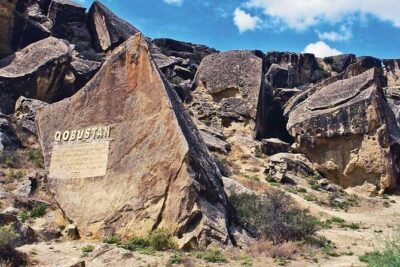
Gobustan, Volcanoes, Fire Temple and Yanardag Day Trip
Read our review →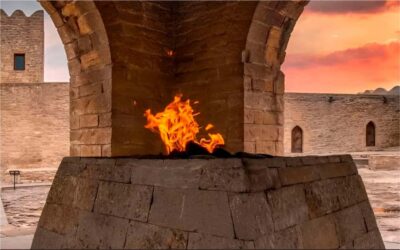
Mud Volcan-Fire Temple and Mountain Tour/Entrance inc
Read our review →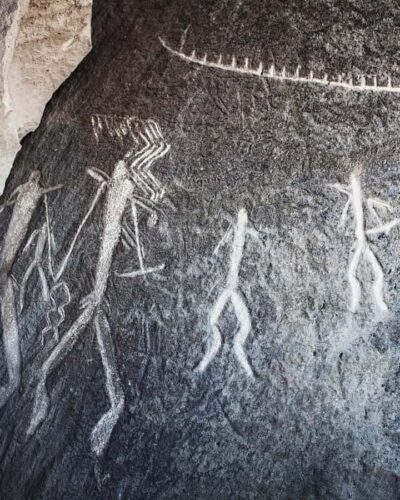
Gobustan Mud Volcanoes Temple & Entry tickets included
Read our review →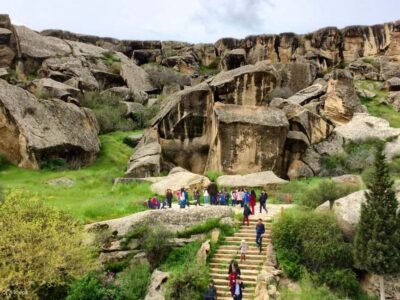
Gobustan-Absheron Tour with Hotel PICK UP and DROP OFF
Read our review →
Gobustan/Absheron guided tour with lunch and tickets
Read our review →Browse the lists this tour appears in