
Reviewed · GOBUSTAN MUD VOLCANO TOURS
Baku: Gobustan, Mud Volcanoes, Ateshgah, and Yanardag Tour
Gobustan’s ancient carvings and Azerbaijan’s natural flames make this one of Baku’s most varied day trips. In a single outing, you move from prehistoric rock art to bubbling mud craters, then on to places shaped by Zoroastrian and Hindu fire worship. The contrasts are the point.
I like the private transport, which keeps a long day more comfortable, and I like the English-speaking guide who ties the separate sights together. A guide named Mushfiq has received especially warm praise for his clear English, strong knowledge of Azerbaijan, and thoughtful help after the tour. The main drawback is cost: the $99 price does not include up to $24 in listed entrance fees, lunch, or personal expenses.
In This Review
- Key points at a glance
- Why this Baku day trip works
- Gobustan Museum brings prehistoric life into focus
- Reading the ancient carvings at Gobustan
- Mud volcanoes: strange, active, and very Azerbaijani
- A lunch break before the fire sites
- Ateshgah Fire Temple and the old fire-worship tradition
- Yanardag and the hillside flame
- A private tour with a useful human touch
- What $99 really buys you
- Timing, comfort, and what to bring
- Who should book this tour?
- Should you book this Baku tour?
- FAQ
- How long is the Baku Gobustan and fire sites tour?
- What places does the tour visit?
- Is transportation included?
- Is the tour private?
- Is an English-speaking guide included?
- Are entrance tickets included in the $99 price?
- Is lunch included?
- What should I bring?
Key points at a glance
- 6,000-plus rock drawings at Gobustan: See carvings made across several ancient periods, along with caves and rocky hills outside Baku.
- Active mud volcanoes: Climb close to the craters and watch the thick clay-like mud move and bubble.
- Four major stops in nine hours: The schedule covers Gobustan Museum, rock art, mud volcanoes, Ateshgah, and Yanardag.
- Private English-guided touring: Hotel pickup, private transport, and drop-off in Baku are included.
- A clear fire-and-earth theme: The tour connects prehistoric life, volcanic mud, sacred fire, and natural gas.
- Budget for extras: The listed entrance fees add up to $24, and lunch is not included.
Why this Baku day trip works
Baku is easy to enjoy as a city break, but its most unusual sights sit beyond the center. This tour gives you a practical way to reach four very different places without arranging separate taxis, drivers, or museum visits.
The route is also more interesting than a simple collection of attractions. Gobustan shows how people recorded daily life thousands of years ago. The mud volcanoes reveal Azerbaijan’s unusual geology. Ateshgah explains the region’s connection with sacred fire, while Yanardag shows fire in its natural form.
You get a full nine-hour day, so this is not a quick outing with a few photo stops. The private format matters here. There are several drives between sites, and having your own vehicle gives you more room than a large coach tour. Pickup and drop-off are available at hotels or other locations in Baku, with the tour ending at Fountain Square.
The pace is fairly brisk. Gobustan receives about two hours, the mud volcanoes about 40 minutes, Ateshgah one hour, and Yanardag another 40 minutes. You will see a lot, but you will not have unlimited time at any one place.
More gobustan mud volcano tours in Baku:
- Baku: Gobustan, Mud Volcano, Fire Mount, Temple Lunch Entry
★ 4.9 · 3,246 reviews - BEST Gobustan, Volcanoes & Absheron Fire Tour (Group or Private)
★ 5.0 · 1,254 reviews - Gobustan and Absheron tour (All inclusive)
★ 5.0 · 1,014 reviews
Gobustan Museum brings prehistoric life into focus
The day begins at the Gobustan Museum, where interactive displays help explain the outdoor rock art site. This is a useful first stop because the carvings can look cryptic if you arrive without context.
Touch screens and three-dimensional panoramas show how people may have lived in Gobustan between 5,000 and 20,000 years ago. Museum exhibits also cover the natural setting, local populations, cultural development, and archaeological work in the area.
You can expect historical objects dating from roughly the fourth to second millennium BC. The museum helps you notice details later at the rocks: hunting scenes, human figures, animals, boats, dances, and symbols connected with ancient customs and beliefs.
I like the museum’s role in the tour because it turns the rock drawings into more than a quick stop for photographs. You first learn what archaeologists found, then see the setting where the evidence remains.
The listed entry fee for Gobustan is $6. Bring water and wear shoes with a firm sole. The site is outdoors, and the combination of sun, uneven ground, and exposed rock can make the visit tiring in hot weather.
Reading the ancient carvings at Gobustan
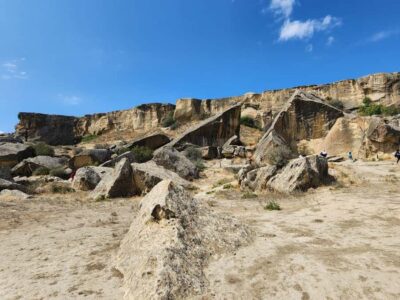
After the museum, the tour continues to the Gobustan rocks. The area contains more than 6,000 drawings and caves, discovered by scientists in the 1930s. These images come from different periods, so your guide’s explanations are important.
The carvings offer clues about ancient people’s work, beliefs, customs, and view of the natural world. You are not simply looking at old marks on stone. You are seeing one of the few surviving records of how people represented animals, movement, group life, and ritual activity before written records became common.
The setting adds to the experience. Gobustan is not a polished indoor attraction. You move among exposed rocks and caves, with the terrain providing the backdrop to the drawings. That makes the stop feel more like a field visit than a museum visit.
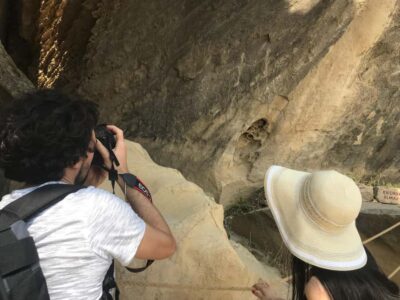
Allow yourself time to look closely. Some carvings are easy to miss if you rush behind the guide. A camera is worth bringing, though harsh sunlight can make photographs difficult. Sunscreen and water are practical essentials.
The drawback is that the site may be challenging for anyone with limited mobility. The tour is specifically not suitable for wheelchair users, and the rocky ground means you should be comfortable walking outdoors.
Mud volcanoes: strange, active, and very Azerbaijani
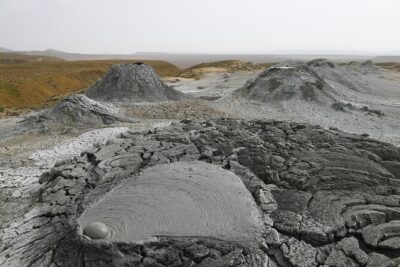
The mud volcanoes are the day’s most unusual stop. Azerbaijan has about 350 of the world’s roughly 800 mud volcanoes, making the country a major center for this rare geological feature.
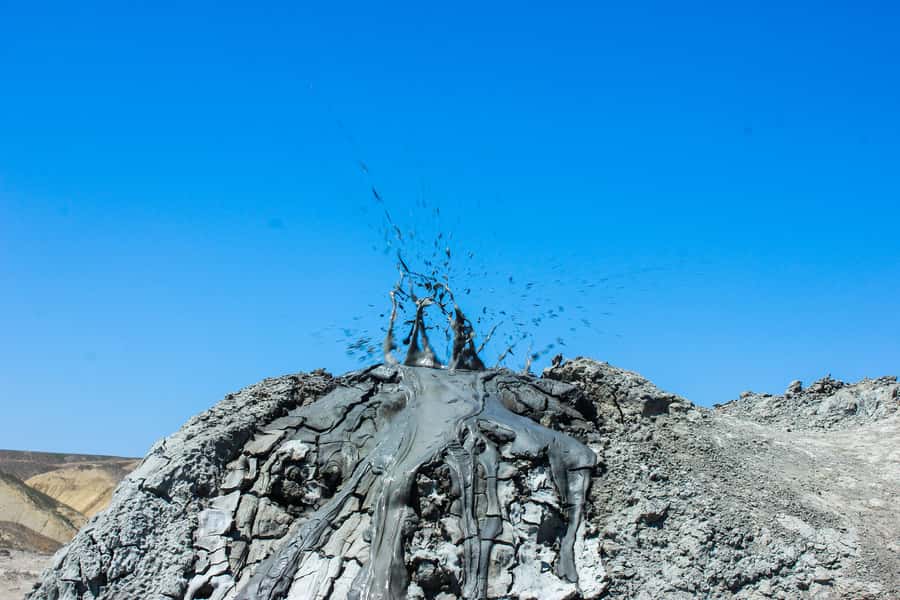
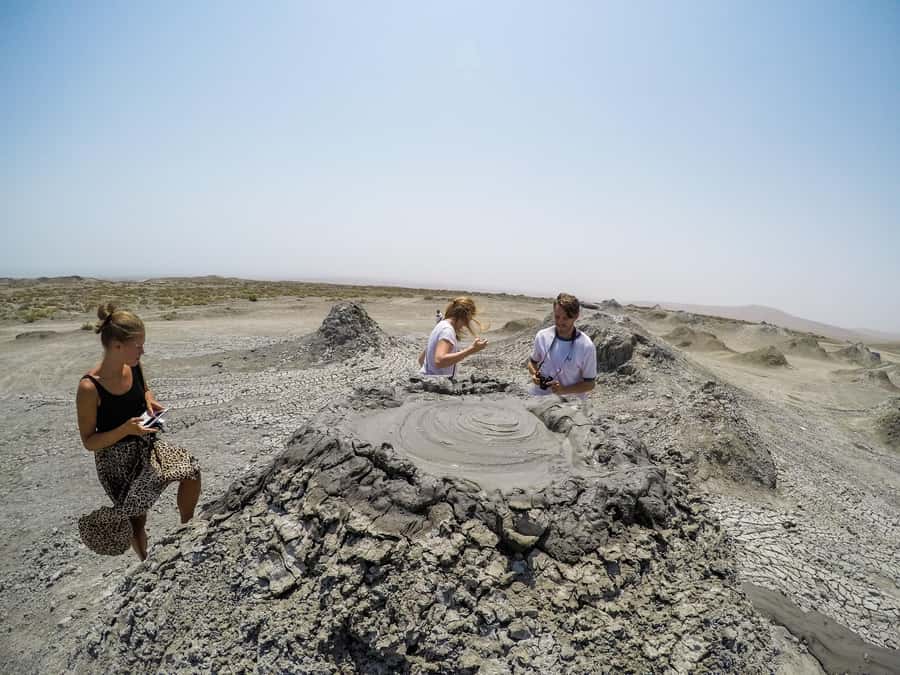
These are not the blazing lava volcanoes many people picture. Instead, gas pushes mud and clay toward the surface. The result is a group of low craters, wet patches, and bubbling pools that can look almost otherworldly.
The volcanoes in present-day Azerbaijan formed about 25 million years ago. Their mud has been used in chemical and construction industries, as well as in pharmacology. The tour also explains claims about its use in treatments connected with the nervous system, skin conditions, and rheumatism.
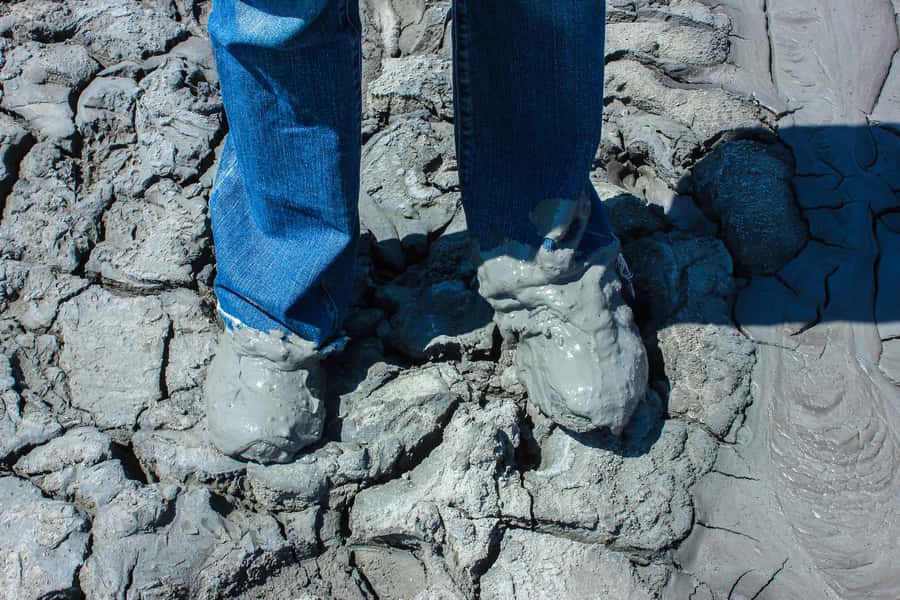
You get about 40 minutes here and can climb close to active craters. That proximity is part of the fun, but you should follow the guide’s instructions and avoid treating the mud like a harmless playground. Wear shoes you do not mind getting dirty, even though comfortable footwear is the main stated recommendation.
The listed entrance fee is $9. This extra charge is important when calculating the real price of the day. The area is raw and undeveloped compared with a standard museum or park, which some people will find fascinating and others may find basic.
I like this stop because it gives the tour a strong sense of place. You are not looking at a feature that could be anywhere. The mud volcanoes help explain why Azerbaijan has such a close relationship with the earth beneath it.
More ateshgah fire temple tours in Baku:
- Baku: Gobustan, Volcanoes, Fire Temple and Yanardag Day Trip
★ 4.7 · 433 reviews - Gobustan & Mud, Fire Temple, Burning Mountain (Group & Private)
★ 4.5 · 418 reviews - Gobustan-Mud Volcan-Fire Temple and Mountain Tour/Entrance inc
★ 5.0 · 267 reviews - Gobustan, Mud volcanoes, Fire temple, Fire mountain PRIVATE TOUR
★ 5.0 · 47 reviews
A lunch break before the fire sites
After Gobustan and the mud volcanoes, the schedule includes a break for lunch in Baku city center. Lunch is not included, so you pay for your own meal.
This pause comes at a sensible point. The first half involves outdoor walking and uneven ground, while the afternoon focuses on two historic fire sites. You can use the break to rest, drink water, and prepare for the second part of the tour.
The supplied details do not specify a restaurant or set menu, so do not book this tour expecting a planned food experience. Think of lunch as free time within a tightly arranged sightseeing day.
Ateshgah Fire Temple and the old fire-worship tradition
Ateshgah is a fortified temple complex associated with both Hindu and Zoroastrian worship. The first mention of the temple dates to the seventh century AD, and the site contains small cells once used by fire worshippers.
This is where the tour’s history of fire becomes human and religious. At Gobustan, fire and survival belong to prehistory. At Ateshgah, fire becomes the center of ritual, pilgrimage, and belief.
You will see historical objects found during archaeological excavations, along with the temple’s cells and central worship area. The compact layout makes the one-hour visit useful. It gives you enough time to hear the story and examine the complex without turning the stop into a long lecture.
The guide’s role is especially valuable here. Ateshgah can appear simple at first glance, but the meaning of the site depends on understanding who came here, why they worshipped fire, and how the temple fits into Azerbaijan’s wider cultural links with India and Iran.
The listed entrance fee for Ateshgah and Yanardag together is $9. The information provided does not separate the price between the two sites, so budget for the combined charge rather than trying to calculate each one independently.
Yanardag and the hillside flame
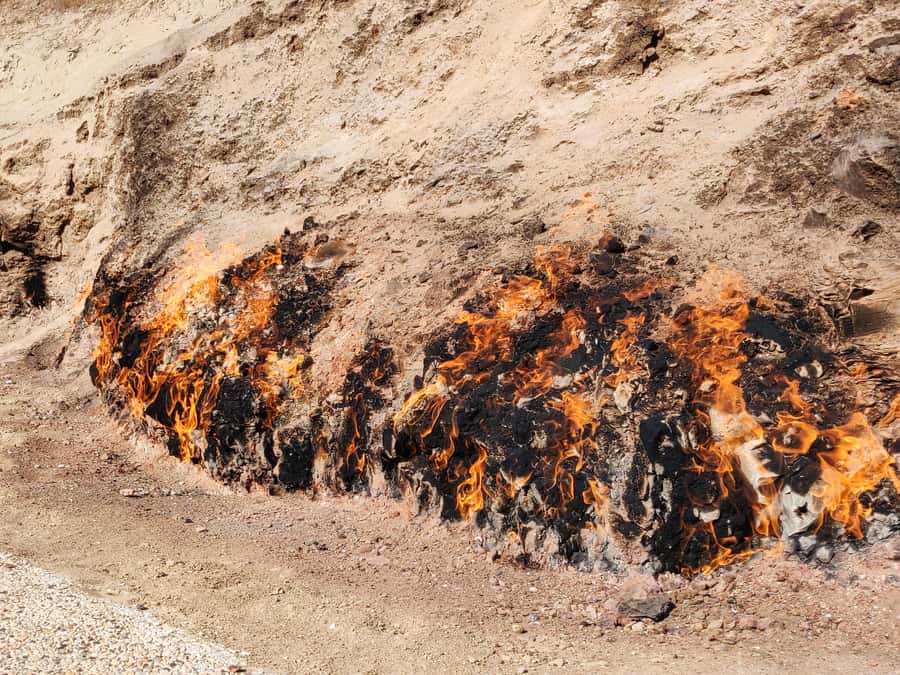
Yanardag means Burning Mountain, and the name is direct. Natural gas burns continuously on a hillside on the Absheron Peninsula near Baku.
This is a different experience from Ateshgah. Ateshgah is an architectural and religious site built around sacred fire. Yanardag is a natural gas flame coming from the ground itself. The connection between geology and worship becomes clear when you see both places on the same day.
You get about 40 minutes at Yanardag. That is enough to view the fire, listen to the guide, and take photographs, though it may feel short if the flame is busy with visitors or you want time to study the site.
The fire has burned since ancient times, and pilgrims from Iran and India still come to the area to visit the sacred mountain. That continuing religious interest gives Yanardag more meaning than a simple natural oddity.
Do not expect a huge mountain or a broad volcanic crater. This is a hillside flame, and the attraction is its persistence and setting. The experience works best when you pay attention to the story behind the fire rather than expecting a large spectacle.
A private tour with a useful human touch
The tour uses private transportation and a private group format. That gives you a more personal day than a fixed coach excursion, particularly when the route includes several stops outside Baku.
The guide language is English, and the guide is described as accredited. A guide named Mushfiq has been praised for speaking English well, explaining Azerbaijan’s past with passion, and adding personal help at the end of the day. In one case, he escorted a couple toward Baku’s Old Town and pointed out good places for dinner after the formal tour ended.
That extra help is not a guaranteed part of the advertised route, but it shows why the guide can shape the experience. If Mushfiq is available, you may want to request him when booking. Either way, use the drive time to ask about Azerbaijan’s ancient cultures, religious traditions, and modern life.
The tour ends with drop-off at Fountain Square. This is convenient if you plan to continue exploring central Baku after returning. It also leaves you near the city center for dinner, though your own meal remains separate from the tour price.
What $99 really buys you
The base price is $99 per person. That includes hotel or central-location pickup and drop-off, private transport, an accredited English-speaking guide, and visits to Gobustan, the mud volcanoes, Ateshgah, and Yanardag.
The listed entrance charges are extra:
- Gobustan: $6
- Mud volcanoes: $9
- Ateshgah and Yanardag: $9
That brings the known sightseeing cost to as much as $123 per person before lunch and personal expenses. The extra fees are not a surprise if you plan for them, but they do change how you compare this tour with cheaper-looking alternatives.
For a private nine-hour day with transport and a guide, the price is reasonable if you value convenience and personal attention. It is less attractive if you are traveling alone on a tight budget or mainly want a short trip outside Baku.
The value also depends on your interest in the full route. If you only want Gobustan, a shorter visit may suit you better. If you want ancient art, geology, religious history, and a natural flame in one day, this package saves planning time and connects the sights in a sensible way.
Timing, comfort, and what to bring
Nine hours is a long sightseeing day, but the route covers a wide area and includes several distinct places. Comfortable shoes are essential because Gobustan and the mud volcanoes involve outdoor ground rather than smooth museum floors.
Pack water, sunscreen, and a camera. The tour information does not promise meals, so plan to buy lunch during the central Baku break. You should also be prepared for a day that mixes indoor exhibits with exposed outdoor sites.
The tour is not suitable for wheelchair users. If you have difficulty walking over uneven rock or climbing near the mud volcanoes, ask detailed questions before booking.
Free cancellation is available up to 24 hours in advance, and you can reserve while paying later. Those policies are useful if your Baku plans may change, but the main decision should still be the route and the outdoor walking.
Who should book this tour?
I would recommend this tour to first-time visitors who want to understand more than Baku’s city center. It suits people who enjoy archaeology, unusual geology, religious history, and a full day with a guide explaining what they are seeing.
It also works well for couples, families with older children, and small private groups who prefer their own vehicle. The route has enough variety to keep the day moving, and the museum helps younger visitors understand the rock art before seeing it outdoors.
You may want another plan if you dislike long days, outdoor heat, uneven ground, or attractions that are more historically important than visually grand. Yanardag is not a giant mountain of flame, and the mud volcanoes are basic in their facilities. Their appeal comes from their rarity and story.
Should you book this Baku tour?
Book it if you want a broad introduction to the Absheron region without arranging transport between scattered sights. The strongest reasons are the private format, the unusual mix of prehistoric carvings and natural fire, and the chance to have an English-speaking guide such as Mushfiq explain the connections.
Skip it if your priority is the lowest possible cost, a relaxed schedule, or a highly polished attraction experience. At $99 plus listed admissions and lunch, it is not a budget outing, but it offers solid value for a private nine-hour route that reaches places difficult to combine on your own.
FAQ
How long is the Baku Gobustan and fire sites tour?
The tour lasts nine hours, including pickup in Baku, visits to the listed attractions, and return drop-off.
What places does the tour visit?
The route includes the Gobustan Museum, Gobustan’s ancient rock drawings and caves, the mud volcanoes, Ateshgah Fire Temple, and Yanardag Burning Mountain.
Is transportation included?
Yes. Private transportation, hotel or other-location pickup in Baku, and drop-off are included.
Is the tour private?
Yes. The activity is offered for a private group rather than as a shared group tour.
Is an English-speaking guide included?
Yes. An accredited live guide who speaks English is included. A guide named Mushfiq has been praised for clear English and strong explanations of Azerbaijan’s past.
Are entrance tickets included in the $99 price?
No. The listed additional fees are $6 for Gobustan, $9 for the mud volcanoes, and $9 for Ateshgah and Yanardag together.
Is lunch included?
No. Lunch and personal expenses are not included. The schedule provides a break for lunch in Baku city center.
What should I bring?
Bring comfortable shoes, water, sunscreen, and a camera. The tour is not suitable for wheelchair users because some stops involve outdoor and uneven ground.
More Yanar Dag Burning Mountain Tours in Baku
- Gobustan & Mud, Fire Temple, Burning Mountain, H.A. Center
★ 4.6 · 46 reviews - Ateshgah Fire temple and Burning mountain tour
★ 4.5 · 42 reviews - Baku: Gobustan, Mud Volcanoes, Fire Temple, & Yanar Dag Tour
★ 4.8 · 36 reviews - Baku: Atashgah Fire Temple & Burning Mountain Half-Day Tour
★ 4.0 · 35 reviews
Just added around Baku
- Wine Tour Baku★ 5.0 · 4 reviews
- Traditional Azerbaijani Cuisine Workshop★ 5.0 · 5 reviews
- Tour to the North part of Azerbaijan Forests and Mountatin Quba★ 5.0 · 10 reviews
- Full Day KHINALUG and the Candy Mountains Tour★ 5.0 · 15 reviews
- Baku Sightseing Tour★ 5.0 · 12 reviews
- Small-Group Day Trip to Gobustan, Mud Volcanoes, Ateshgah & Yanar Dagh★ 4.5 · 3 reviews
- The Magnificent Baku Night Tour★ 5.0 · 3 reviews
- Sheki tour with overnight★ 5.0 · 5 reviews
Gobustan Mud Volcano Tours, compared.
Gobustan, Mud Volcano, Fire Mount, Temple Lunch Entry
Read our review →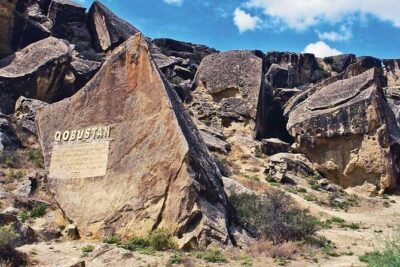
Gobustan, Volcanoes, Fire Temple and Yanardag Day Trip
Read our review →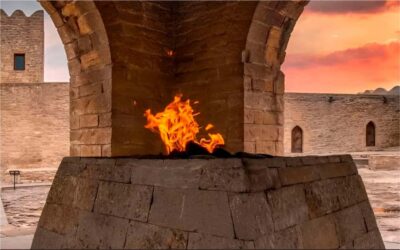
Mud Volcan-Fire Temple and Mountain Tour/Entrance inc
Read our review →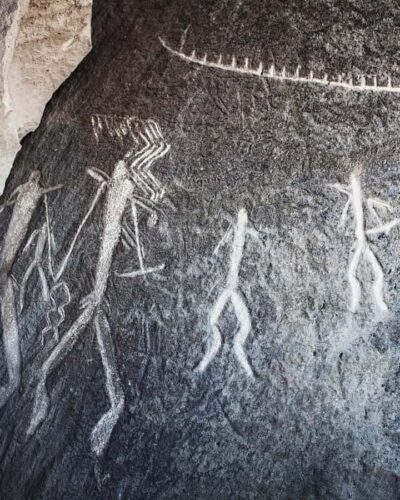
Gobustan Mud Volcanoes Temple & Entry tickets included
Read our review →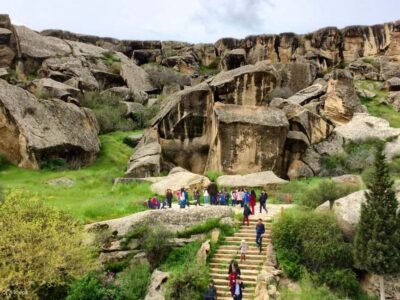
Gobustan-Absheron Tour with Hotel PICK UP and DROP OFF
Read our review →
Gobustan/Absheron guided tour with lunch and tickets
Read our review →Browse the lists this tour appears in