
Reviewed · GOBUSTAN MUD VOLCANO TOURS
Gobustan and Fire temple Tour with Polish speaking guide
Gobustan gives you two very different glimpses of Azerbaijan: mud volcanoes bubbling from the earth and petroglyphs left by people thousands of years ago. Add the fire sites of Absheron, and this becomes a full day of geology, faith, oil, and early human life rather than a simple sightseeing drive.
I like the mix of rare natural sights and serious cultural stops. Bibiheybat Mosque brings elegant architecture into the day, while Ateshgah and Yanardagh explain why fire has such a strong place in Azerbaijan’s story. The main thing to watch is the extra admission cost, since tickets are not included unless you choose the ticket option.
In This Review
- Key points to know before booking
- Why this tour covers more than Gobustan
- Gobustan’s mud volcanoes, where the ground bubbles
- Gobustan rock art and the lives behind the carvings
- Bibiheybat Mosque brings a different mood
- Azerbaijan’s first drilled oil well
- Ateshgah Fire Temple and the old worship of flame
- Yanardagh, the Burning Mountain
- Heydar Aliyev Center as the final Baku photo stop
- What the $65 price really includes
- Who will get the most from this route
- Booking details worth checking
- Should you book the Gobustan and Fire Temple tour?
- FAQ
- Is hotel pickup included?
- Is transportation included?
- Is the guide Polish-speaking?
- Are entrance tickets included?
- Does the tour enter the Heydar Aliyev Center?
- Can I cancel the booking?
Key points to know before booking
- Gobustan combines mud volcanoes and ancient rock art, giving you both unusual geology and thousands-year-old images in one visit.
- The Polish-speaking guide adds context at each stop, especially useful when several sites cover very different periods of Azerbaijani history.
- Bibiheybat Mosque provides a calm architectural contrast to the rough volcanic terrain and industrial oil sites.
- Ateshgah Fire Temple and Yanardagh are separate experiences, one shaped by worship and the other by a natural gas flame.
- Entry tickets cost an extra 30 AZN if they are not included in your selected option, split between Gobustan and the two Absheron fire sites.
- Heydar Aliyev Center is a photo stop only, since the group does not enter the building because of time limits.
Why this tour covers more than Gobustan
Azerbaijan is often introduced through Baku’s modern skyline, but this trip takes you into the forces that shaped the country long before its glass towers appeared. You see ground that bubbles with mud, carvings made by early communities, shrines linked to fire worship, and the oil sites that changed the region’s fortunes.
That range is the tour’s greatest strength. You are not spending the whole day looking at similar ruins or museums. Every major stop changes the subject. The tradeoff is that the day has a lot packed into it, so you should choose this tour for variety and context rather than for a slow, private visit at one location.
The tour includes hotel pickup and drop-off, or collection from a central location, along with roundtrip transportation. A bottle of water is supplied. The Polish-speaking guide is the key to the experience, since the sites are much more meaningful when you understand what you are looking at instead of simply taking photographs.
The published rating is 5 out of 5 from five reviews, with the clearest praise being a direct recommendation to others. That is a small sample, so I would not treat it as proof of perfection, but it does support the idea that the tour’s strongest feature is its overall combination of sights and guiding.
More gobustan mud volcano tours in Baku:
- Baku: Gobustan, Mud Volcano, Fire Mount, Temple Lunch Entry
★ 4.9 · 3,246 reviews - BEST Gobustan, Volcanoes & Absheron Fire Tour (Group or Private)
★ 5.0 · 1,254 reviews - Gobustan and Absheron tour (All inclusive)
★ 5.0 · 1,014 reviews
Gobustan’s mud volcanoes, where the ground bubbles
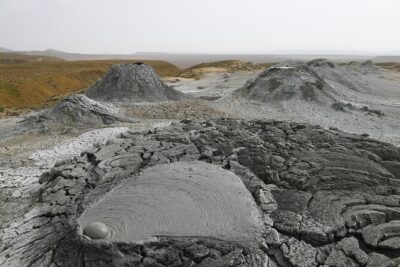
The first major natural stop is the Gobustan mud volcano area. These are not lava volcanoes. They push mud, gas, and sediment toward the surface, creating small cones and pools that bubble and ooze in a strange, almost otherworldly setting.
I like this stop because it gives you something difficult to find on a standard city excursion. The sight is not polished or carefully staged. You are looking at an active geological process, with the earth making its own sounds and movements. The attraction is the phenomenon itself, not a large monument built around it.
The ground around mud volcanoes can feel rough and exposed, so practical footwear is sensible. The supplied information does not specify walking distances or surface conditions, but you should expect this part to be more outdoors-oriented than the mosque or fire temple visits. Bring sun protection and keep the bottle of water handy.
This stop also helps explain why Gobustan is more than an archaeological site. The region has a physical character of its own, and the tour puts that natural setting alongside the human record found nearby.
Gobustan rock art and the lives behind the carvings
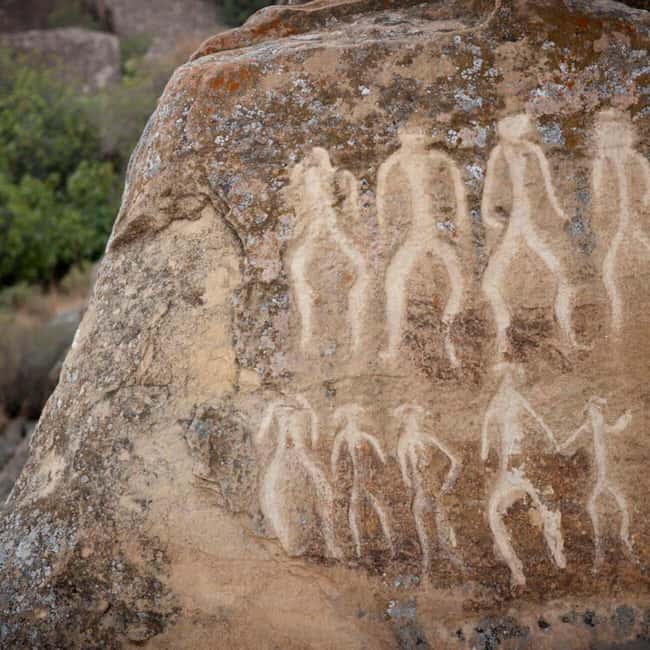
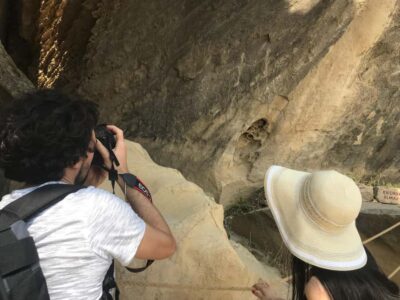
The Gobustan rock art site shifts the focus from geology to early human settlement. Here, you see petroglyphs made thousands of years ago, with carved images that offer clues about the people who lived in this part of Azerbaijan.
The value of these carvings is their directness. You are not looking at a later reconstruction or a modern display. The marks were cut into the rock by people recording aspects of their world, and the guide’s explanation can help you notice details that you might otherwise pass without understanding.
I would pay close attention to the commentary here. Rock art can look simple at first glance, especially when several carvings are weathered. Historical context gives the images weight and helps connect them to early communities, daily life, and the wider Gobustan setting.
Gobustan National Park admission is separate unless you select an option with tickets included. The stated price for Gobustan rock art and mud volcanoes is 15 AZN. Make sure you check which booking option you choose, since the base price of $65 per person does not automatically cover every entrance fee.
Bibiheybat Mosque brings a different mood
Bibiheybat Mosque is one of the day’s most graceful stops. After the raw ground and ancient carvings of Gobustan, the mosque gives you a more composed setting, with architectural detail and a strong connection to Azerbaijan’s religious heritage.
The tour presents the mosque as an architectural highlight, and that is the right way to approach it. Look at the design rather than rushing through it as a quick photo break. The visit adds cultural balance to the day and reminds you that Azerbaijan’s identity is shaped by more than geology and oil.
The supplied details do not specify a formal guided visit inside the mosque or provide dress requirements. You should follow local instructions at the site and treat it as an active religious place, not simply a monument. Modest clothing is a sensible choice for any mosque visit.
Bibiheybat is also useful in the larger sequence of the tour. It breaks up the open-air archaeological stops with a place of worship and architecture, keeping the day from feeling like a string of geological and industrial attractions.
More ateshgah fire temple tours in Baku:
- Baku: Gobustan, Volcanoes, Fire Temple and Yanardag Day Trip
★ 4.7 · 433 reviews - Gobustan & Mud, Fire Temple, Burning Mountain (Group & Private)
★ 4.5 · 418 reviews - Gobustan-Mud Volcan-Fire Temple and Mountain Tour/Entrance inc
★ 5.0 · 267 reviews - Gobustan, Mud volcanoes, Fire temple, Fire mountain PRIVATE TOUR
★ 5.0 · 47 reviews
Azerbaijan’s first drilled oil well
Oil is central to Azerbaijan’s modern story, and the tour includes a stop at the site described as the world’s first drilled oil well. This is an important addition because it connects the natural resources beneath the Absheron Peninsula with the country’s later economic growth.
You may not find this stop as visually dramatic as a flame or a bubbling volcano. Its value is historical. The well represents the moment when oil shifted from a natural feature of the region to an industrial force. It helps explain why Baku and the surrounding peninsula became so important in the oil industry.
I like having this stop in the itinerary because it gives the day a clear thread. Gobustan shows the earth in a raw form, while the oil well shows people learning how to extract and use what lies below it. The guide’s explanation matters here, since the significance is not always obvious from the site alone.
If you prefer only striking scenery, this may feel like a shorter or more informational stop. If you want to understand how Azerbaijan developed, it earns its place.
Ateshgah Fire Temple and the old worship of flame
Ateshgah, known as the Fire Temple of Baku, is one of the most distinctive cultural sites on the route. The temple was used by Zoroastrians, Hindus, and Sikhs, and its importance is tied to natural gas fires in the area.
The site brings several religious traditions into one setting. It is not simply a building with an unusual name. Its story reflects the way natural flames shaped worship and attracted people from different communities. The guide can help you keep those traditions separate and understand why the temple mattered to each group.
The idea of an eternal flame is central to the site, although the supplied information describes it as natural gas-fueled. Admission for Ateshgah and Yanardagh together is listed as 15 AZN when tickets are not included. That combined charge is useful to remember when comparing the advertised tour price with the amount you will actually pay.
Ateshgah is one of the places where interpretation makes a real difference. Without explanation, you may see a historic courtyard and fire-related architecture. With context, you can connect the building to regional geology, religious practice, and the long human fascination with fire.
Yanardagh, the Burning Mountain
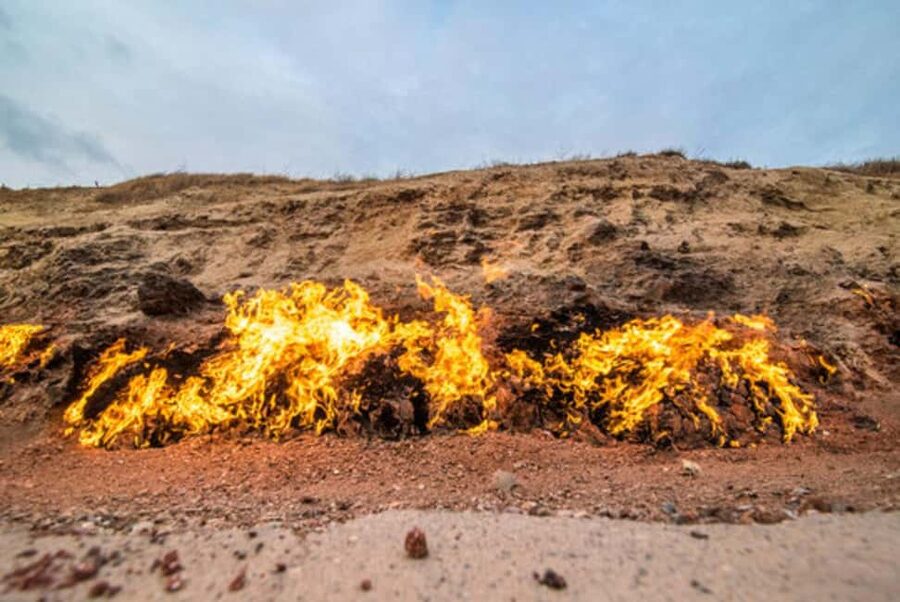
Yanardagh means Burning Mountain, and the sight is exactly what the name suggests: a natural gas fire that continues to burn on a hillside. It is a simple but memorable spectacle, especially after visiting a temple where fire was part of religious life.
The contrast between Ateshgah and Yanardagh is worth noticing. Ateshgah shows people building a place around sacred flame. Yanardagh presents fire as a natural event, burning directly from the hillside. Seeing both in one trip lets you compare worship and geology without needing a separate excursion.
The flame is the main attraction, so this is a shorter, more focused visit than Gobustan. You are there to see the fire and hear why it occurs. Do not expect a large complex filled with many different attractions. Yanardagh works best as the final natural wonder in a day already packed with variety.
As with Gobustan and Ateshgah, the Burning Mountain entry fee is part of the stated 30 AZN total if you do not select tickets in advance. Check the exact option before paying so the final cost does not surprise you.
Heydar Aliyev Center as the final Baku photo stop
The Heydar Aliyev Center is the last point of the route. It is visited as a sightseeing and photo stop, not as an interior tour. The group does not enter because of time limits.
That distinction matters. The center is famous for its sweeping modern design, so an exterior view still gives you the main visual reason to stop. But if you specifically want to explore the exhibitions inside, this tour will not provide that experience.
I see this as a fitting final image after a day focused on Azerbaijan’s past and natural forces. The center’s modern form brings you back to present-day Baku. Just keep your expectations clear: you get a photo opportunity, not an indoor cultural visit.
What the $65 price really includes
At $65 per person, the tour offers good value if you want several sites without arranging separate transport. Hotel pickup and drop-off, roundtrip travel, a Polish-speaking guide, and bottled water are included. The convenience is especially useful because Gobustan and Absheron involve multiple stops outside central Baku.
The important qualification is admission. If your chosen option does not include tickets, you pay 30 AZN extra, with 15 AZN for Gobustan rock art and mud volcanoes and 15 AZN for Ateshgah and Yanardagh. The price comparison should therefore use the full amount, not just the headline tour fare.
A guided trip is also more useful here than it might be at a single scenic viewpoint. The rock carvings, oil well, temple, and natural flames each require different background information. A Polish-speaking guide can keep the explanations accessible throughout the day and help you see the links between otherwise unrelated stops.
The tour includes a bottle of water, but I would still plan your personal needs around the amount of time outdoors. The exact duration is not provided, so the day may feel full, particularly because it covers Gobustan, several Absheron sites, and a final stop in Baku.
Who will get the most from this route
I would recommend this tour to you if you want a broad first look at the area around Baku. It suits visitors who enjoy archaeology, unusual natural sights, religious history, architecture, and industrial heritage in equal measure.
It is especially useful if you speak Polish and want explanations in that language. The tour also suits anyone who prefers a planned route with hotel pickup rather than negotiating several out-of-town journeys independently.
You may want a different arrangement if your priority is a slow visit to Gobustan alone, an extended museum experience, or a private schedule with plenty of time at every stop. The route covers a lot, and the Heydar Aliyev Center is exterior-only. The information provided does not state the group size or exact timing, so ask about those points if they are important to you.
The tour is also a good match for first-time visitors who want to understand how Azerbaijan’s story fits together. You see ancient carvings, natural gas fires, religious sites, oil development, and modern architecture in one organized day.
Booking details worth checking
You can reserve now and pay later, which keeps your plans flexible. Cancellation is available up to 24 hours in advance for a full refund.
When booking, confirm whether you are selecting the option with entrance tickets. If not, budget the additional 30 AZN. Also confirm the Polish-speaking service, since the experience information identifies Polish as the language for this tour.
Pickup is available from your hotel or a central location, and drop-off is included. Since no exact schedule is supplied, ask for the pickup time and expected return time before the day begins, especially if you have evening plans in Baku.
Should you book the Gobustan and Fire Temple tour?
Book it if you want the widest possible introduction to Baku’s surroundings in one organized outing. The combination of mud volcanoes, ancient petroglyphs, Bibiheybat Mosque, the first drilled oil well, Ateshgah, Yanardagh, and the Heydar Aliyev Center gives you a useful sweep across Azerbaijan’s natural and cultural story.
The strongest reasons to choose it are the Polish-speaking guide, included transportation, and the unusual range of stops. The main cautions are the extra entrance fees, the full itinerary, and the fact that the Heydar Aliyev Center is only an exterior photo stop.
For $65, it is a sensible choice when convenience and variety matter more than a leisurely pace. Select the ticket-inclusive option if you want a simpler day, and approach Gobustan and Ateshgah as places where the guide’s explanations are as valuable as the photographs.
FAQ
Is hotel pickup included?
Yes. Pickup and drop-off are included from your hotel or a central location.
Is transportation included?
Yes. Roundtrip transportation is included in the tour price.
Is the guide Polish-speaking?
Yes. The experience is offered with a Polish-speaking guide. The included guide service is also described as multilingual.
Are entrance tickets included?
They are included only if you select the option with entry tickets. Otherwise, the tickets cost 30 AZN in total, with 15 AZN for Gobustan rock art and mud volcanoes and 15 AZN for Ateshgah and Yanardagh.
Does the tour enter the Heydar Aliyev Center?
No. The Heydar Aliyev Center is the final sightseeing and photo stop, and groups do not enter because of time limits.
Can I cancel the booking?
Yes. You can cancel up to 24 hours in advance for a full refund. You can also reserve and pay later, so no payment is required today.
Just added around Baku
- Wine Tour Baku★ 5.0 · 4 reviews
- Traditional Azerbaijani Cuisine Workshop★ 5.0 · 5 reviews
- Tour to the North part of Azerbaijan Forests and Mountatin Quba★ 5.0 · 10 reviews
- Full Day KHINALUG and the Candy Mountains Tour★ 5.0 · 15 reviews
- Baku Sightseing Tour★ 5.0 · 12 reviews
- The Magnificent Baku Night Tour★ 5.0 · 3 reviews
- Small-Group Day Trip to Gobustan, Mud Volcanoes, Ateshgah & Yanar Dagh★ 4.5 · 3 reviews
- Sheki tour with overnight★ 5.0 · 5 reviews
Gobustan Mud Volcano Tours, compared.
Gobustan, Mud Volcano, Fire Mount, Temple Lunch Entry
Read our review →
Gobustan, Volcanoes, Fire Temple and Yanardag Day Trip
Read our review →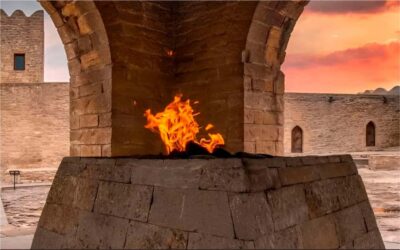
Mud Volcan-Fire Temple and Mountain Tour/Entrance inc
Read our review →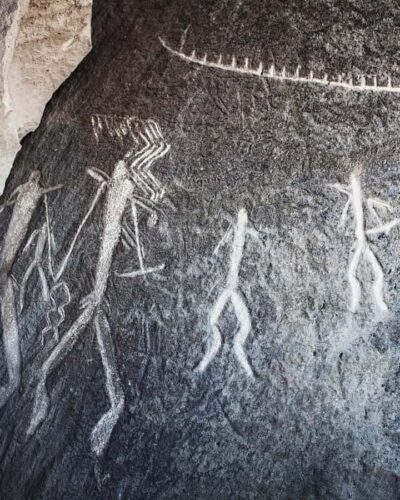
Gobustan Mud Volcanoes Temple & Entry tickets included
Read our review →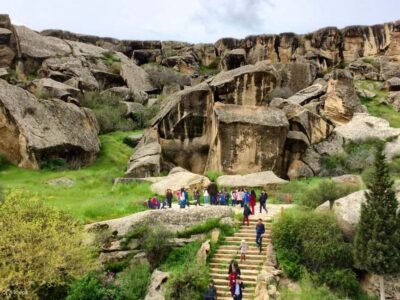
Gobustan-Absheron Tour with Hotel PICK UP and DROP OFF
Read our review →
Gobustan/Absheron guided tour with lunch and tickets
Read our review →Browse the lists this tour appears in