
Reviewed · GOBUSTAN MUD VOLCANO TOURS
Gobustan & Mud Volcano
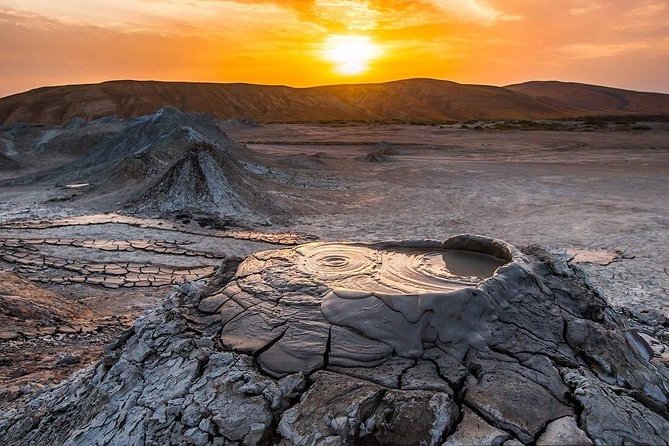
Gobustan’s oddest attraction is not the ancient carvings, but the cold gray mud bubbling from the ground nearby. I like that this private tour pairs two very different sights in one short outing: prehistoric rock art and active mud volcanoes. It gives you a quick look at a side of Azerbaijan that feels far removed from Baku’s polished center.
I also like the air-conditioned vehicle and private format, especially for a group that wants its own pace. The main drawback is that the volcanoes can be quite small, and their mud flow depends on recent rain. The rock-art admission fee is also not included, so the $60 price is not quite all-in.
In This Review
- Key points to know before booking
- Why Gobustan makes a good short trip from Baku
- Reading the ancient marks at Gobustan
- What the mud volcanoes are really like
- The private vehicle changes the pace
- What makes the guiding important
- Timing, weather, and what to bring
- Who will get the most from this outing
- Cancellation and booking details
- Should you book Gobustan and the mud volcanoes?
- FAQ
- How long does the Gobustan and mud volcano tour last?
- What time does the tour start?
- Is pickup available?
- Is the tour private?
- Are entrance tickets included?
- Is lunch included?
- Can I cancel for a full refund?
Key points to know before booking
- Cold mud, not hot lava: You can touch the gray mud, but these volcanoes are not fiery cones or bubbling hot springs.
- Two very different stops: Spend about an hour with ancient petroglyphs, then around 30 minutes at the mud volcanoes.
- Private touring: Only your group participates, making it easier to ask questions or adjust the pace.
- Aygul and Sadar: Aygul is associated with organizing the visit, while Sadar is a guide named in connection with especially helpful explanations.
- The $60 covers transport basics: Bottled water and an air-conditioned vehicle are included, but lunch and the Gobustan rock-art admission are not.
- Weather matters: Poor weather can lead to a new date or a full refund, and you can cancel free up to 24 hours before departure.
Why Gobustan makes a good short trip from Baku
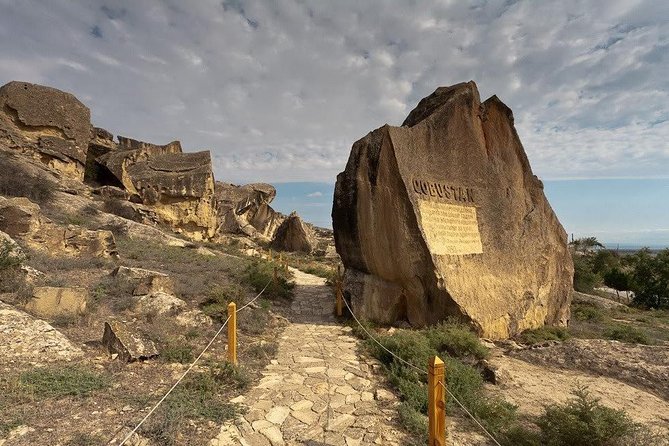
Gobustan sits about 60 kilometers south of Baku on the southeastern spur of the Great Caucasian Range. It is a dry, hilly area cut by gullies and ravines. The name Gobustan translates as ravine land, which gives you a useful picture before you arrive.
You are not heading to a lush nature reserve or a grand mountain valley. This is a stark, semi-desert setting where bare earth, low ridges, and eroded channels create the scene. The lack of greenery is part of the appeal. Gobustan feels elemental, and the ancient carvings make more sense when you see the exposed rock around them.
At $60 per person, the tour is best judged as a private half-day outing rather than a simple ride to one attraction. Your price covers an air-conditioned vehicle and bottled water, along with the convenience of having the route arranged for you. Pickup is offered, which matters in Baku, since Gobustan is not a quick walk or casual city excursion.
The total duration is about three to four hours. The named stops take roughly an hour and a half combined, so the remaining time is used for the drive between Baku and Gobustan and for moving between the sites. That makes this a manageable morning trip, with a 9:30 am start that leaves much of the rest of your day open.
More gobustan mud volcano tours in Baku:
- Baku: Gobustan, Mud Volcano, Fire Mount, Temple Lunch Entry
★ 4.9 · 3,246 reviews - BEST Gobustan, Volcanoes & Absheron Fire Tour (Group or Private)
★ 5.0 · 1,254 reviews - Gobustan and Absheron tour (All inclusive)
★ 5.0 · 1,014 reviews
Reading the ancient marks at Gobustan
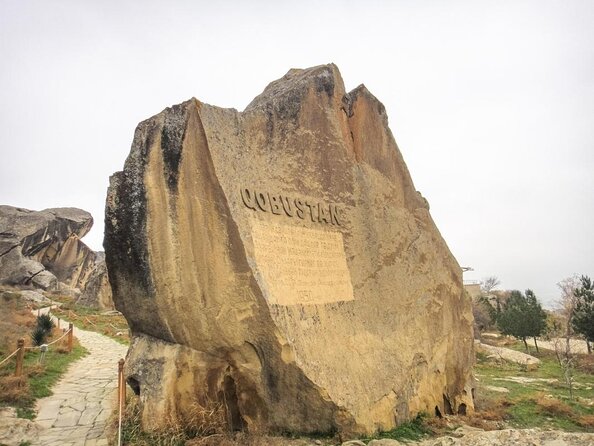
The Gobustan rock-art stop is the more substantial part of the outing. Plan on about one hour here, with admission to the rock-art site not included in the tour price.
The petroglyphs are ancient images cut into rock. They offer a direct, visual link to people who lived in this dry region long before Baku became a modern capital. You may see figures and scenes that hint at hunting, animals, movement, and daily life, though the exact carvings available to you depend on the site route and conditions on the day.
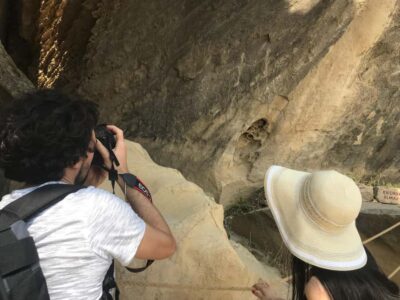
I would give this stop your full attention rather than treating it as a quick photo break. The carvings are not the sort of sight that shouts from a distance. You need time to look closely, compare shapes, and listen to an explanation. This is where a guide can make a real difference. Sadar is the guide specifically associated with clear explanations about both the places and the people of Azerbaijan, so if he is available, you may find the historical context especially useful.
A small museum is also part of the Gobustan visit according to the tour information. It is described as small but interesting, which sets the right expectation. Do not plan on a major museum experience with room after room of displays. Think of it as a compact introduction that helps you understand the carvings before or after seeing them outdoors.
The admission detail deserves attention. The rock-art ticket is not included, while the mud-volcano admission is included. That split is easy to miss when comparing tours, so allow for an extra entrance charge. The supplied information does not state the exact fee, so you should confirm the current amount before booking if your budget is tight.
The rock-art site suits people who enjoy history that is visible but not heavily polished. You are looking at marks on stone in an open, dry setting, not entering a grand monument. If you want a dramatic ruin or a long museum visit, this stop may feel brief. If you like seeing evidence of ordinary life from the distant past, it gives the trip its strongest sense of place.
What the mud volcanoes are really like
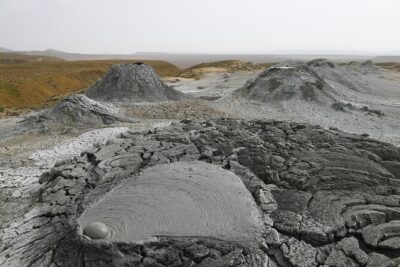
The second stop lasts about 30 minutes and takes you to mud volcanoes where you can touch the cold mud. This is the tour’s most unusual moment, and probably its best photo opportunity.
A mud volcano is not the same thing as a lava volcano. The material here is cold mud, not molten rock. You should expect small cones or bubbling patches rather than a huge eruption. The mud may rise, pop, or sit quietly depending on conditions.
The amount of activity can change after recent rain. That point matters because photographs of mud volcanoes can create inflated expectations. On one day, you might see more movement and fresh mud. On another, the cones may look modest and still. The attraction remains strange and memorable, but it is not a guaranteed natural spectacle.
The ability to touch the cold mud adds a simple hands-on element. It is more engaging than only looking at a distant formation, though you should use common sense and follow the guide’s directions about where to touch. The supplied information confirms that the mud is cold, but it does not provide instructions about washing facilities or protective gear, so avoid assuming those are available.
Thirty minutes is a sensible amount of time here. The volcanoes are quite small, and a longer stop could feel repetitive unless the activity is strong. You will have time for photographs, a close look at the mud, and a short explanation before returning to the vehicle.
This stop is best for curious people who enjoy unusual geology and quick outdoor experiences. It may disappoint you if you expect towering cones, hot springs, or a long walk through a volcanic field. Its charm comes from the oddness of seeing the earth quietly push out cold mud in a dry part of Azerbaijan.
The private vehicle changes the pace
This is a private tour, so only your group participates. That is a meaningful advantage over a large coach outing. You can ask questions without speaking over a crowd, and the guide can spend more time on the points that interest you.
The air-conditioned vehicle is another practical plus. The trip begins in Baku and heads about 60 kilometers south, so comfort during the road time matters. Gobustan is a dry area, and an enclosed, cooled vehicle gives you a pleasant break between stops.
Pickup is offered, though the exact meeting arrangement is not specified in the supplied information. Confirm the pickup point and timing when you book. The scheduled start is 9:30 am, so you should be ready before then rather than treating the morning as flexible.
A private format can also improve the experience for families or small groups with different interests. Someone fascinated by petroglyphs can ask for more explanation, while someone mainly interested in the volcanoes does not need to spend hours at either stop. The tour is still fairly short, so the format does not turn it into a slow, full-day excursion.
The tradeoff is price. At $60 per person, the tour costs more than joining a basic shared transfer, but you are paying for private transport, pickup convenience, bottled water, and a guide-led visit. For two or more people splitting the value of a private vehicle, that can be reasonable. For a solo visitor focused only on seeing the mud volcanoes, it may feel less economical.
Group discounts are offered, but the amount is not stated. Ask for the current group rate before assuming it will apply. Since lunch is not included, plan to eat before the departure or after you return to Baku.
Same city, a completely different kind of day:
- Baku: Guba, Shahdag, Laza & Lunch w/ Free City & Night Tour
★ 4.8 · 1,455 reviews - Shamakhi And Gabala Tour (All inclusive)
★ 5.0 · 815 reviews - From Baku: Gabala and Shamakhi Tour (Free Baku City Tour)
★ 4.8 · 695 reviews - Baku: Candy Cane, Guba, Khinaliq village with Homemade Lunch
★ 4.9 · 519 reviews
What makes the guiding important
The sights are unusual, but neither one explains itself perfectly. Petroglyphs can look like random scratches without context, and mud volcanoes need a little explanation to become more than a strange patch of wet earth.
A strong guide can connect Gobustan’s setting with its human past and explain why the rock carvings matter. Sadar is named as a guide who helped make the day more understandable, especially when discussing Azerbaijan’s places and people. His role is useful because the visit is not only about taking pictures. It is also about understanding how this dry region supported human life and why its geology is so distinctive.
Aygul is associated with organizing the wider visit. If you have a particular interest in history, geology, photography, or family pacing, tell the organizer in advance. Since the tour is private, your questions can shape how the limited time is used.
You should also keep your expectations grounded. The provided rating is 4.7 from three reviews, which suggests a strong early impression but is still a small sample. The praise centers on the organization and the guide’s help, not on the mud volcanoes being large or dramatic. That distinction is important when deciding what you want from the day.
Timing, weather, and what to bring
The 9:30 am start gives you a clear morning plan. With a three to four-hour duration, you should return around midday or early afternoon, although the exact timing depends on road conditions and how long your private group spends at each stop.
Good weather is required. If poor weather cancels the tour, you are offered another date or a full refund. Since the mud volcanoes are outdoors and Gobustan is an exposed semi-desert area, weather can affect both comfort and what you see.
Wear practical shoes and clothing suited to dry, uneven ground. The provided information does not promise extensive walking, but the rock-art stop is outdoors and the volcanoes involve getting close to muddy ground. Choose footwear you do not mind getting dusty or dirty.
Bring a phone or camera if you enjoy unusual pictures. The mud volcanoes offer the clearest photo opportunity, while the petroglyphs reward close observation more than dramatic wide shots. Bottled water is included, but you may still want extra water if you prefer to carry your own supply.
Because lunch is not included and the tour is short, food planning is simple. Eat before departure or arrange your meal for after the tour. Do not count on lunch being part of the morning.
Who will get the most from this outing
I would recommend this tour to you if you want to leave Baku and see two distinctly Azerbaijani sights without giving up an entire day. It works well for couples, families, friends, and small groups who value a private vehicle and direct access to a guide.
History-minded visitors will probably get the most from the petroglyphs. The carvings are the reason to take the trip seriously, while the volcanoes add a playful and unusual second act.
It also suits anyone who enjoys odd natural features. Touching cold volcanic mud is a memorable experience precisely because it is not a standard sightseeing stop. You will not need specialist geology knowledge to enjoy it.
I would hesitate to recommend it if you want a polished attraction with extensive facilities, a long museum visit, or a guaranteed dramatic eruption. The museum is small, and the volcanoes can be small too. Recent rain affects how much mud is moving, so the natural show is variable.
The tour is also less suited to someone who wants a completely self-guided outing. Much of the value comes from having the route, transport, and explanations handled for you. If you already have a rental car and prefer to explore independently, the private tour may offer less added value.
Cancellation and booking details
You can cancel for a full refund up to 24 hours before the 9:30 am start time. Cancellations or changes made within 24 hours are not refunded or accepted.
The tour may also be canceled if it does not reach the required minimum number of participants. In that case, you are offered another date or experience, or a full refund. Poor weather can produce the same options.
Confirmation is sent when you book, and a mobile ticket is available. Most people can participate, but the supplied details do not give a specific accessibility statement. If you have mobility needs or concerns about uneven ground, ask MyBakuTours before paying.
Should you book Gobustan and the mud volcanoes?
Book it if you want a compact, private trip that combines ancient carvings with an unusual geological stop. The best reasons are the private air-conditioned transport, the chance to ask questions directly, and the strong role of organization and guiding associated with Aygul and Sadar.
Go in expecting a small museum, modest mud volcanoes, and a changing amount of activity rather than a major eruption. Remember that lunch and the rock-art admission cost extra.
For most first visits to Baku, this is a worthwhile half-day choice if you want more than city streets and grand buildings. It offers a dry, strange, memorable view of Azerbaijan, with enough history to give the scenery meaning and enough mud to keep the outing light.
FAQ
How long does the Gobustan and mud volcano tour last?
The tour lasts approximately 3 to 4 hours, including travel from Baku and visits to both stops.
What time does the tour start?
The scheduled start time is 9:30 am.
Is pickup available?
Yes, pickup is offered. Confirm the exact pickup point when booking.
Is the tour private?
Yes. Only your group participates in the activity.
Are entrance tickets included?
Admission to the mud volcanoes is included. Admission to the Gobustan rock-art stop is not included.
Is lunch included?
No. Lunch is not included in the $60 price.
Can I cancel for a full refund?
Yes, if you cancel at least 24 hours before the experience start time. Cancellations within 24 hours are not refunded.
Just added around Baku
- Wine Tour Baku★ 5.0 · 4 reviews
- Traditional Azerbaijani Cuisine Workshop★ 5.0 · 5 reviews
- Tour to the North part of Azerbaijan Forests and Mountatin Quba★ 5.0 · 10 reviews
- Full Day KHINALUG and the Candy Mountains Tour★ 5.0 · 15 reviews
- Baku Sightseing Tour★ 5.0 · 12 reviews
- Small-Group Day Trip to Gobustan, Mud Volcanoes, Ateshgah & Yanar Dagh★ 4.5 · 3 reviews
- The Magnificent Baku Night Tour★ 5.0 · 3 reviews
- Sheki tour with overnight★ 5.0 · 5 reviews
Gobustan Mud Volcano Tours, compared.
Gobustan, Mud Volcano, Fire Mount, Temple Lunch Entry
Read our review →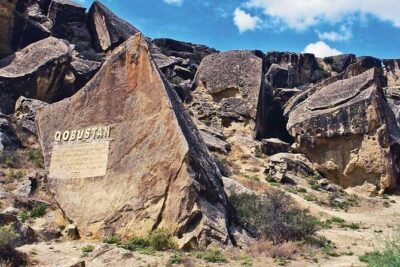
Gobustan, Volcanoes, Fire Temple and Yanardag Day Trip
Read our review →
Mud Volcan-Fire Temple and Mountain Tour/Entrance inc
Read our review →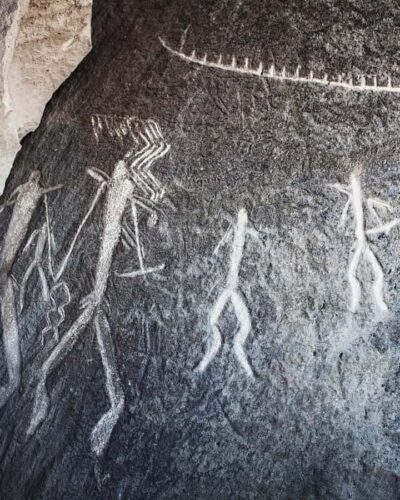
Gobustan Mud Volcanoes Temple & Entry tickets included
Read our review →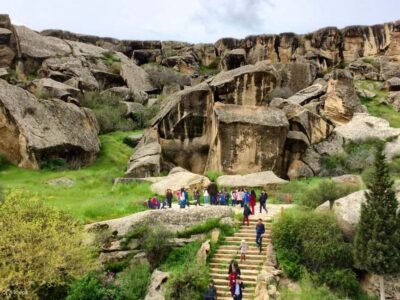
Gobustan-Absheron Tour with Hotel PICK UP and DROP OFF
Read our review →
Gobustan/Absheron guided tour with lunch and tickets
Read our review →Browse the lists this tour appears in