
Reviewed · GOBUSTAN MUD VOLCANO TOURS
Gobustan-Absheron Tour
Gobustan’s bubbling mud fields and ancient rock carvings make this one of the most unusual day trips from Baku. You’ll move from prehistoric hunting scenes to Soviet-era oil pumps, then across the Absheron Peninsula to a fire temple and a hill where flames rise from the ground.
I like the wide mix of sights and the chance to see several places that are awkward to connect by public transport. I also like the small-group cap of 18 people, along with guides such as Naz, Nazef, Emir, and Mishfig, who have earned strong praise for clear explanations and flexible pacing. The main concern is the long day and some confusion over what the $29 price includes, especially lunch and entrance tickets.
In This Review
- Key points to know before you book
- Why this day trip makes sense from Baku
- The first oil well and Absheron’s working past
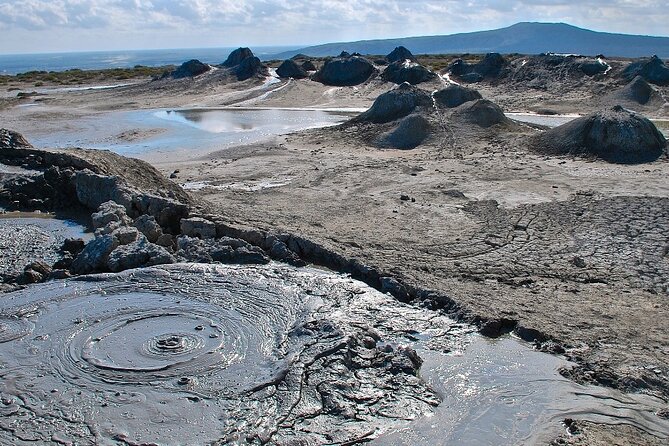
- Mud volcanoes in a gray, otherworldly setting
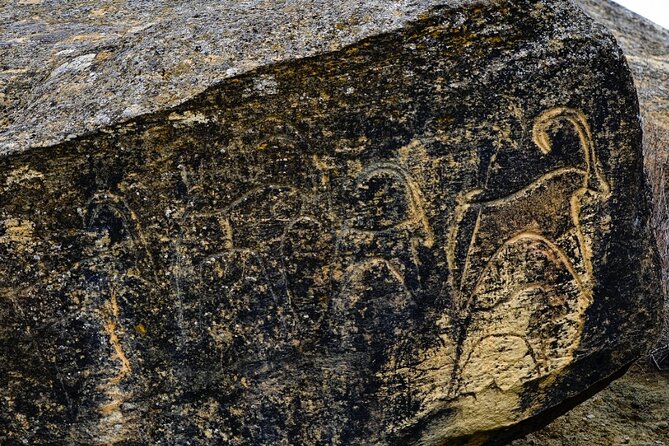
- Gobustan’s prehistoric carvings
- The Gobustan museum adds the missing context
- Lunch in Baku, with one important question
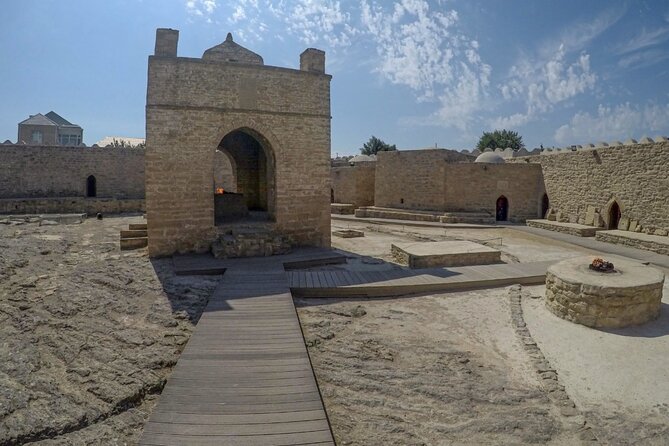
- Ateshgah, the Temple of Fire
- Yanar Dag and flames from the hillside
- The guide can shape the whole day
- Timing, transport, and the $29 value
- Who should book this experience?
- Should you book the Gobustan-Absheron tour?
- FAQ
- How long does the Gobustan-Absheron tour last?
- Where does the tour begin and end?
- What attractions are included in the route?
- Are entrance tickets included?
- Is lunch included?
- What languages does the guide speak?
- How many people can join the tour?
- Is a vegetarian meal available?
- Can I cancel for a full refund?
Key points to know before you book
- Mud volcanoes outside Baku: Ride out to a stark, moonlike area where gray bubbles and wet mud form a strange natural show.
- Petroglyphs at Gobustan: Walk among prehistoric carvings and visit the modern museum for context about early human life.
- Azerbaijan’s fire traditions: Ateshgah explains the religious history of natural flames, while Yanar Dag lets you see fire rising from the earth.
- A full 9 to 11 hours: This is a serious day trip, not a quick half-day outing.
- Maximum of 18 people: The group size is manageable, though the actual experience depends heavily on your assigned guide.
- Check the final cost: The tour details include conflicting information about lunch, while entrance tickets are listed as extra.
Why this day trip makes sense from Baku
Baku is easy to enjoy on foot, but many of Azerbaijan’s most distinctive sights lie outside the center. Gobustan and Absheron are not a single compact attraction. They spread across different parts of the countryside and require a full day to connect.
That is where this tour earns its keep. You get air-conditioned transport, a professional English or Russian-speaking guide, and a route that links natural oddities with ancient culture and the country’s oil story. You do not have to arrange separate taxis or work out the order of the stops yourself.
The $29 starting price is appealing for such a long outing. It is especially good value if your group is small, the vehicle runs on time, and lunch is included as described in parts of the tour information. But the formal inclusion list says lunch and all attraction tickets are not included. You should confirm the current price structure before paying, since the real cost depends on those extras.
The pickup point is at 1 Azərbaycan Prospekti in central Baku, and the activity returns there at the end. The tour is listed with a mobile ticket, and confirmation is sent at booking.
More gobustan mud volcano tours in Baku:
- Baku: Gobustan, Mud Volcano, Fire Mount, Temple Lunch Entry
★ 4.9 · 3,246 reviews - BEST Gobustan, Volcanoes & Absheron Fire Tour (Group or Private)
★ 5.0 · 1,254 reviews - Gobustan and Absheron tour (All inclusive)
★ 5.0 · 1,014 reviews
The first oil well and Absheron’s working past
The first short stop is an oil well drilled in 1846, which first produced oil on July 14, 1848. The site is presented as the first oil well in Azerbaijan and the world, and it gives useful context for understanding why Baku became so important.
You will also pass pumpjacks built during the Soviet period. Some are still working, a reminder that oil production here is not just a chapter in a museum. It remains part of the region’s story.
This stop lasts about 15 minutes, so expect a quick look rather than a long lesson. I like it because it adds a human and industrial side to a day otherwise filled with ancient ruins and natural fire. If oil history is your main interest, this will feel too brief. As an opening scene, though, it helps explain the country you are about to see.
Mud volcanoes in a gray, otherworldly setting
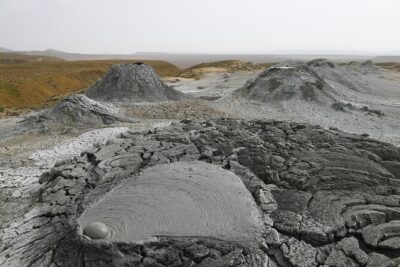
The mud volcanoes are likely to be the day’s most visually strange stop. Instead of lava, these low cones push out cool mud and gas. The result is a bare, gray setting with small pools, cracked earth, and bubbling patches that can look more like a science-fiction film set than a normal field.
The tour allows about an hour here. A short trail leads toward the volcanoes and gives you different views of the surrounding area. The ground can be uneven, so sensible shoes are a good idea even though the supplied information does not set out a formal footwear rule.
A key practical detail is the ride to the mud volcano area. One account describes old four-wheel-drive vehicles carrying the group to the site, which can be a fun part of the outing. It also means the transport may feel less polished here than on the main road. Keep an open mind and protect anything that could be splashed with mud.
The setting is exposed and the stop is built around scenery rather than a large visitor center. Your guide matters. A good explanation makes the bubbles and cones more interesting, while a rushed visit can feel like a photo stop in a remote field.
The admission situation needs attention. The formal details list the Mud Volcanoes Complex as an extra ticket, even though the tour summary says entrance fees are included. Ask the operator what you will pay on the day.
Gobustan’s prehistoric carvings
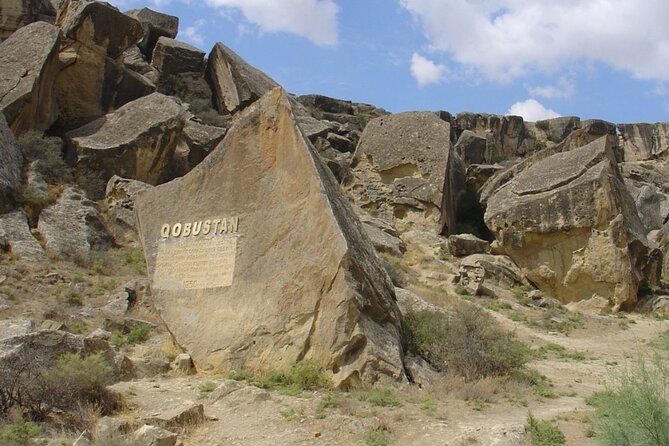
Gobustan Rock Art is the cultural heart of the trip. Across the rocky hills, prehistoric people carved images of animals, boats, hunters, dancers, and daily activities into stone. These markings offer a rare look at how people represented the world long before written records.
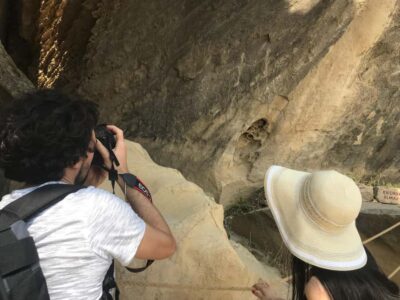
You will have time to walk around the site with the guide rather than simply view the carvings from a bus. The explanations focus on survival, social order, living conditions, and the ways early Homo sapiens adapted to a hard environment. That context matters. Without it, a small carving can be easy to miss or misunderstand.
The site is often described as a village of early Cro-Magnon people. Treat that as a broad interpretive idea rather than expecting intact houses or a preserved settlement. What you mainly see is rock, open ground, and carvings, with the guide helping you connect those fragments to prehistoric life.
This part lasts about an hour. Admission is listed as not included, so budget for a separate ticket. Since the walking portion is outdoors, the experience is best for people who enjoy looking closely and listening to interpretation. If you want constant action, the pace may feel slow.
More absheron peninsula tours in Baku:
- Baku: Gobustan Absheron Tour Entry Tickets included
★ 4.9 · 329 reviews - Baku: Gobustan-Absheron Tour with Hotel PICK UP and DROP OFF
★ 4.8 · 170 reviews - Baku: Gobustan/Absheron guided tour with lunch and tickets
★ 4.8 · 158 reviews - Gobustan and Absheron peninsula ( Group or Private ) TOUR ( All inclusive )
★ 5.0 · 130 reviews
The Gobustan museum adds the missing context
A visit to the Gobustan Rock Art Cultural Landscape includes a modern museum before or alongside the outdoor site. This is an important part of the route because it gives you visual and historical material that the rocks alone cannot provide.
The museum helps explain how the carvings were made and what daily life may have looked like. It also gives you a clearer sense of the long human timeline behind the site. I find this pairing useful: first get the background indoors, then go outside and see the actual evidence.
The tour allocates about an hour here as well. The attraction is listed separately from the open-air museum, and both are marked as not included in the supplied cost details. Check whether a combined admission ticket is used or whether the operator charges separately.
Do not expect an untouched prehistoric village waiting behind the museum. The real value is the connection between the displays, the guide’s story, and the scattered carvings on the hills.
Lunch in Baku, with one important question
After Gobustan, the group returns toward Baku for a traditional three-course meal and tea at Baku Restaurant, described as being in one of the city’s parks. The meal is meant to recharge you before the afternoon visit to Absheron.
A set meal can be a practical choice on a long day. You do not lose time searching for a restaurant, and you get a chance to try Azerbaijani dishes in a planned setting. A vegetarian option is available if you request it at booking.
There is one clear warning here: the information is inconsistent. The tour description and several customer accounts refer to a delicious included meal, but the formal list of inclusions says lunch is not included. One account also notes that restaurant service was slow. If you have a tight schedule or dietary needs, confirm exactly what is served, what you pay, and how long the meal lasts.
The planned lunch stop is about an hour. That pause breaks up the day well, but it also adds to the total duration. You are not racing from one monument to the next without a rest.
Ateshgah, the Temple of Fire
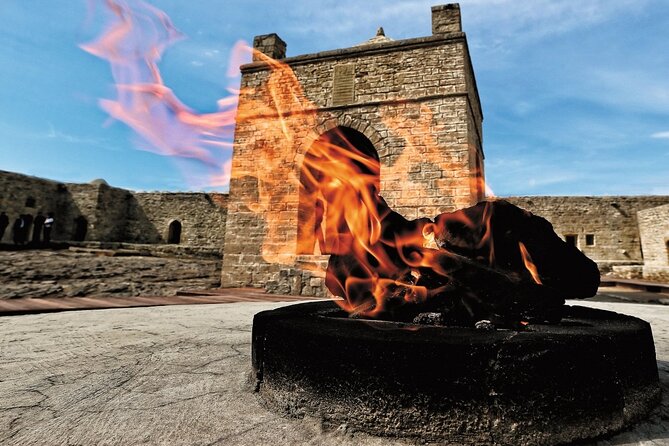
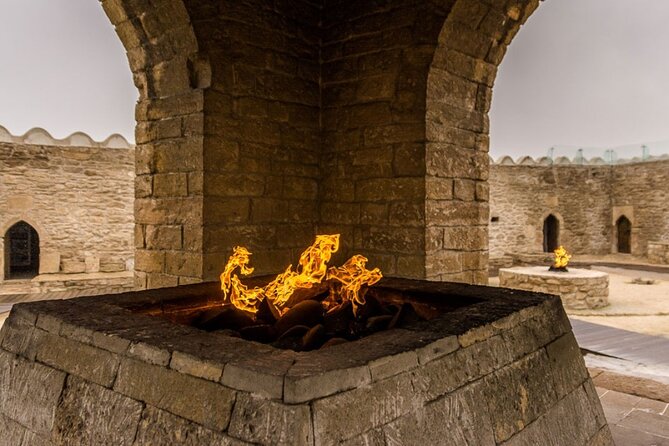
Ateshgah is a walled fire temple on the Absheron Peninsula. Its story connects natural gas flames, Zoroastrian worship, Hindu visitors, merchants, and the caravan routes that once crossed this part of Azerbaijan.
The complex includes a central altar area surrounded by small rooms. Those rooms are tied to the lives of pilgrims, fire worshippers, and people who stopped along the trade routes. Your guide explains the traditions of fire worship and the practical role of the site as a place where people could stay.
The temple is especially valuable when you understand that Azerbaijan’s reputation as the Land of Fire is not just modern branding. Natural flames once burned in several places around Absheron, and those fires shaped religious stories and drew people from far beyond the region.
The scheduled visit is about 30 minutes. That is enough for a guided introduction and a walk through the complex, but not a slow, detailed archaeological study. The Fire Temple ticket is listed as extra. Bring this into your budget rather than assuming the $29 covers it.
Yanar Dag and flames from the hillside
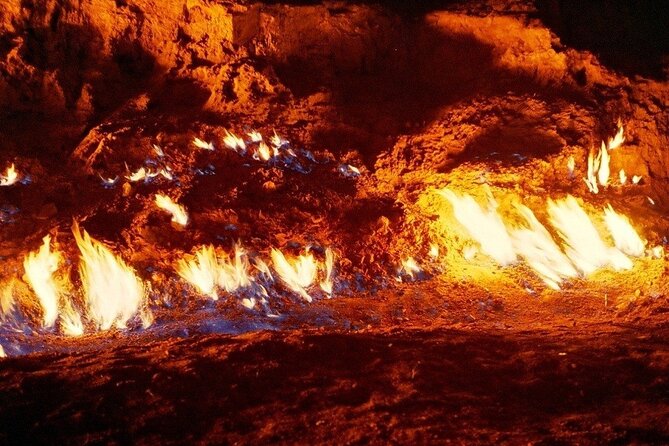
Yanar Dag means Burning Mountain, and the name tells you what to expect. Flames burn from a hillside where gas escapes through the ground. Unlike the mud volcanoes, which are quiet and gray, Yanar Dag gives the day a bright final scene.
The stop is planned for about an hour. You can view the flames from the hillside and look across the surrounding area. The fire is a natural gas phenomenon, not a torch or a staged performance, which makes it a fitting final stop after Ateshgah.
Still, keep your expectations sensible. Yanar Dag is a focused attraction, not a vast mountain range or a long wilderness walk. The main appeal is the unusual sight of fire coming directly from the earth, plus the story your guide provides about its place in Azerbaijan’s identity.
Admission is listed as extra. Since this is the last major stop, the group returns to Baku afterward, ending at the original meeting point.
The guide can shape the whole day
The route is fixed, but the quality of the day depends greatly on the person leading it. Strong feedback has singled out Naz, also named Nazpəri Həsənzadə, for useful historical detail and an enjoyable approach. Nazef is praised for linking the past to the present and adjusting the material to suit the group. Emir is described as helpful and especially effective for first-time visitors.
Mishfig is also associated with well-organized transport and clear information. These names should not be treated as a guarantee that one particular guide will lead your departure. They are useful examples of the level of service you should hope for.
There has also been a sharply negative account of a guide who barked orders, hurried the group, and delivered information in a dull monotone. That matters because this is a long day with several guided stops. A poor manner can make even interesting places tiring.
The group maximum is 18 people, which is more personal than a large coach tour. The actual group may be smaller, and one departure reportedly operated as a private tour because only one party booked. That is a pleasant possibility, but not something to count on.
Timing, transport, and the $29 value
Plan on nine to eleven hours from morning departure to evening return. The route includes driving between Baku, Gobustan, and Absheron, along with outdoor walks, museum time, lunch, and several admissions.
Air conditioning matters during a full day in the open. The included vehicle service also saves you from arranging transport to places that sit well beyond central Baku. The small four-wheel-drive transfer at the mud volcanoes may be separate from the main vehicle.
At $29 per person, the tour looks like a strong low-cost way to cover the region. The value is best when you want convenience and a broad first look rather than a private specialist tour. Add the cost of the Open-Air Museum, Fire Temple, Yanar Dag, Natural History Exhibition, and Mud Volcanoes Complex if those tickets are not covered. Also confirm lunch.
I would choose this trip if I had limited time in Baku and wanted to see both the prehistoric and fire-related sides of Azerbaijan. I would not choose it for a slow, highly specialized visit to one site. The long route and fixed schedule favor variety.
Who should book this experience?
This tour suits first-time visitors who want an efficient introduction to the region beyond Baku. It is also a good match for people interested in geology, ancient rock art, religious history, and the oil industry, all in one day.
Families and mixed-interest groups may appreciate the variety. One person gets mud volcanoes, another gets petroglyphs, and someone else gets fire temples and oil wells. Most people can participate, and a vegetarian meal can be arranged if requested.
You should think twice if you dislike long days, outdoor walking, or changing between several types of attraction. The quality of the guide is important, so ask who is scheduled if that information is available. Before booking, get a clear answer about lunch and entrance fees.
Should you book the Gobustan-Absheron tour?
Book it if you want a practical, broad day trip from Baku at a low base price. The combination of mud volcanoes, ancient carvings, Ateshgah, and Yanar Dag is unusual, and the included transport makes the route far easier than arranging it yourself.
Go in with realistic expectations. Some stops are brief, the scenery can be stark, and several tickets may cost extra. Confirm the meal, admission fees, pickup details, and guide language before you commit. If those costs are reasonable, this is a good-value introduction to the strange and fascinating country beyond Baku’s center.
FAQ
How long does the Gobustan-Absheron tour last?
The tour lasts approximately 9 to 11 hours. It begins in the morning and returns to Baku late in the day.
Where does the tour begin and end?
The meeting point is at 1 Azərbaycan Prospekti, Bakı 1005, Azerbaijan. The tour ends back at the same meeting point.
What attractions are included in the route?
The route includes the world’s first oil well, mud volcanoes, Gobustan Rock Art, the Gobustan Rock Art Cultural Landscape and museum, lunch in Baku, Ateshgah Fire Temple, and Yanar Dag.
Are entrance tickets included?
The supplied information is inconsistent. The tour summary says entrance fees are included, but the formal details list tickets for the Open-Air Museum, Fire Temple, Yanar Dag, Natural History Exhibition, and Mud Volcanoes Complex as not included. Confirm this before booking.
Is lunch included?
The information conflicts on this point. The description and some customer accounts refer to a traditional three-course lunch with tea, while the formal inclusion list says lunch is not included. Confirm the current arrangement with the provider.
What languages does the guide speak?
Professional guide service is provided in English and Russian.
How many people can join the tour?
The tour has a maximum group size of 18 people. Some departures may be smaller.
Is a vegetarian meal available?
Yes. You should advise the operator at the time of booking if you require a vegetarian option.
Can I cancel for a full refund?
Yes, if you cancel at least 24 hours before the experience start time. Cancellations made less than 24 hours in advance are not refunded, and changes within that period are not accepted.
Just added around Baku
- Wine Tour Baku★ 5.0 · 4 reviews
- Traditional Azerbaijani Cuisine Workshop★ 5.0 · 5 reviews
- Tour to the North part of Azerbaijan Forests and Mountatin Quba★ 5.0 · 10 reviews
- Full Day KHINALUG and the Candy Mountains Tour★ 5.0 · 15 reviews
- Baku Sightseing Tour★ 5.0 · 12 reviews
- Small-Group Day Trip to Gobustan, Mud Volcanoes, Ateshgah & Yanar Dagh★ 4.5 · 3 reviews
- The Magnificent Baku Night Tour★ 5.0 · 3 reviews
- Sheki tour with overnight★ 5.0 · 5 reviews
Gobustan Mud Volcano Tours, compared.
Gobustan, Mud Volcano, Fire Mount, Temple Lunch Entry
Read our review →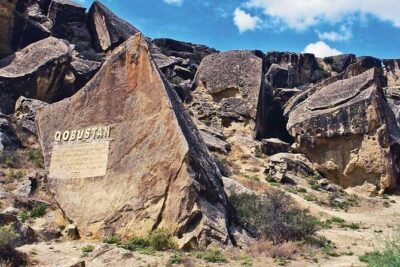
Gobustan, Volcanoes, Fire Temple and Yanardag Day Trip
Read our review →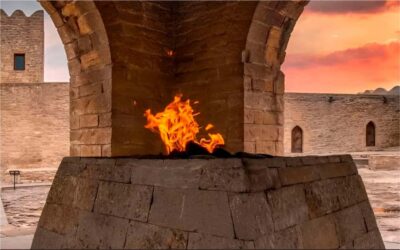
Mud Volcan-Fire Temple and Mountain Tour/Entrance inc
Read our review →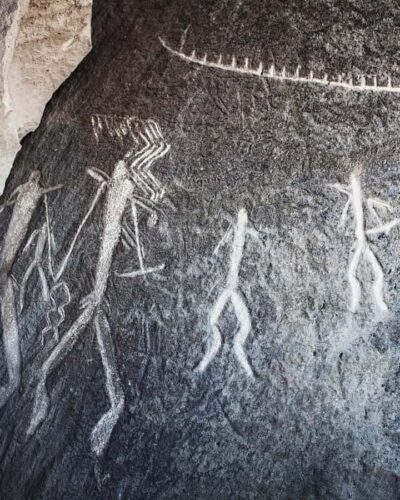
Gobustan Mud Volcanoes Temple & Entry tickets included
Read our review →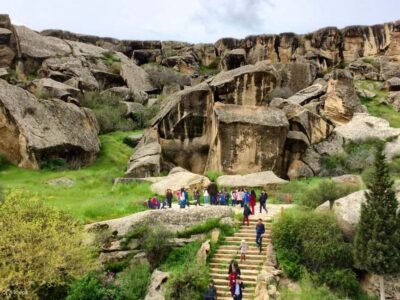
Gobustan-Absheron Tour with Hotel PICK UP and DROP OFF
Read our review →
Gobustan/Absheron guided tour with lunch and tickets
Read our review →Browse the lists this tour appears in