
Reviewed · WALKING TOURS
Baku Soviet Architecutre Gudied Walking Tour
Baku’s story comes into focus when you walk from its oil-boom streets to its Soviet monuments and polished modern center. This 2.5-hour tour links Fountain Square, Nizami Street, the Opera and Ballet Theater, Government House, and the Caspian waterfront into one useful first look at the city.
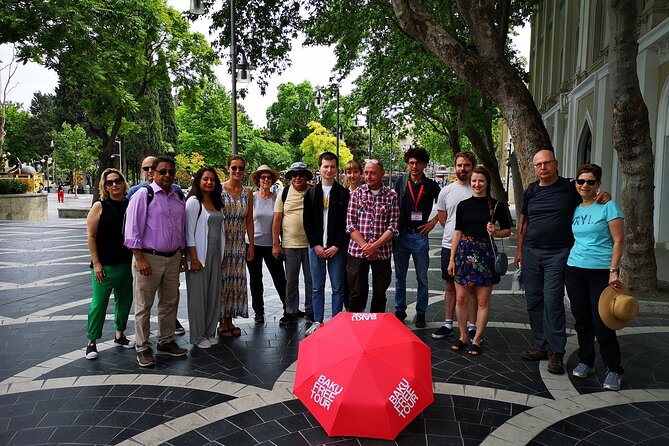
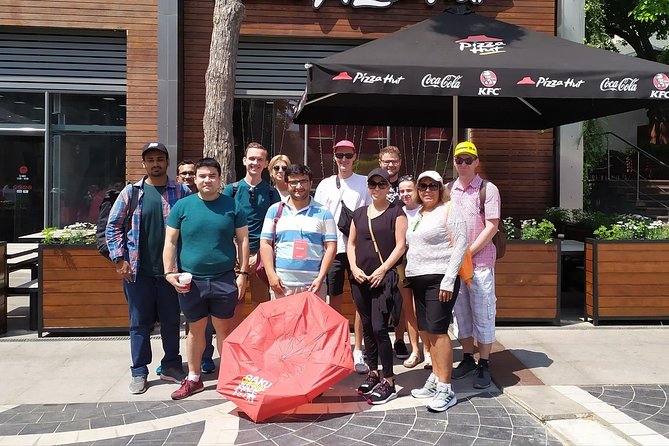
I like the small group of no more than 15 people, which leaves room for questions, and I like the way guide Gani connects architecture with music, literature, Russian influence, local legends, and present-day life. The route also finishes with local tea or coffee, a welcome pause after a long city walk.
The main consideration is pace and distance. You cover many stops, but most are exterior visits and each stop is short. At $60 per person, the value depends on how much you want interpretation and orientation rather than museum entry or private transport.
In This Review
- Key points at a glance
- Baku explained through streets, statues, and Soviet symbols
- Fountain Square opens and closes the route
- Nizami Street shows Baku’s modern daily rhythm
- Nasimi Monument and the 1950s skyline
- Nizami Cinema links independence with the arts
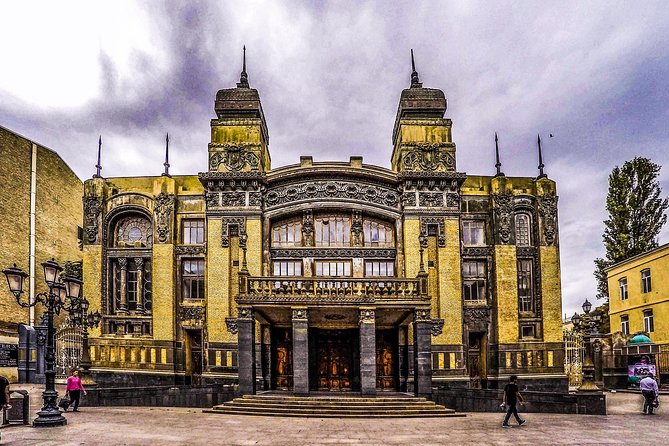
- The Opera and Ballet Theater anchors a cultural walk
- Khagani Street reveals Russian influence
- Taghiyev’s former residence tells the oil-boom story
- Government House delivers the clearest Soviet landmark
- Baku Boulevard finishes beside the Caspian Sea
- Local tea gives the walk a proper ending
- What Gani adds to the experience
- Is $60 a fair price?
- Who should book this Baku walk?
- Should you book it?
- FAQ
- Where does the Baku Soviet Architecture Guided Walking Tour start?
- What time does the tour begin?
- How long does the tour last?
- Where does the tour end?
- What places are included on the route?
- Is food or drink included?
- Is private transportation included?
- How large is the group?
- Can I cancel for a full refund?
Key points at a glance
- Nine central Baku stops: The route runs from Fountain Square through Nizami Street and cultural landmarks to Government House and Baku Boulevard.
- A clear Soviet-to-modern theme: You see Stalinist architecture, a major Soviet landmark, oil-era streets, and today’s shopping and entertainment center.
- Gani leads the walk: He is praised for strong English, local knowledge, patience, humor, and a friendly manner.
- A social and cultural angle: Expect stories about residents, Russian-speaking society, myths, music, literature, nightlife, and modern pop culture.
- Tea or coffee is included: The tour ends at a local coffee shop, giving you time to sit and ask a few final questions.
- Useful for a first afternoon: The 1 p.m. start leaves the morning open and returns you to the meeting point after about two and a half hours.
Baku explained through streets, statues, and Soviet symbols
This is not a tour built around entering grand interiors. It is a walking lesson in how Baku changed over roughly a century, with the city itself providing the classroom.
You begin in the center, where the old oil boom helped turn a trading street into an urban core. From there, the route moves through shopping streets, theaters, libraries, monuments, parks, and government buildings. The point is not simply to collect photographs. It is to understand how oil wealth, Russian settlement, Soviet rule, independence, and present-day city life overlap in the same few blocks.
I find that approach especially useful in Baku. The city can look polished and newly built at first glance, yet its streets carry several different eras at once. A guide helps you notice the links instead of seeing each building as an isolated sight.
The walk is also framed as a pop-culture tour, so expect more than dates and architectural labels. Gani’s approach includes local stories, myths, residents’ habits, music, literature, and suggestions for places where people spend time after work. That social detail can be as helpful as the monuments, especially if you have only a short stay.
A few more Baku trips to weigh up
- Baku: Stunning Walking Tour of Historical and Modern City
★ 4.9 · 270 reviews - Baku Oil Heritage & Old Town Walking Tour
★ 5.0 · 232 reviews - Baku Walking Tour (Old City)
★ 5.0 · 127 reviews
Fountain Square opens and closes the route
The meeting point is Karnaval-353 on Istiglaliyyat in central Baku, with a 1 p.m. start. The tour begins and ends at Fountain Square, making the logistics simple. You do not need to find a second pickup point across town or arrange a ride back after the walk.
Fountain Square is more than a popular downtown meeting place. Its surrounding district grew during Baku’s first oil boom in the late 19th and early 20th centuries, when commerce and new wealth reshaped the city.
You spend about 15 minutes here, enough to set the historical frame without lingering too long. It is a good place to ask your first questions about Baku’s growth, oil wealth, and the relationship between the older commercial center and the newer city around it.
Because the square is also the ending point, you can use it as a convenient base after the tour. You might continue shopping, find a meal nearby, or return to a place that caught your eye during the walk.
Nizami Street shows Baku’s modern daily rhythm
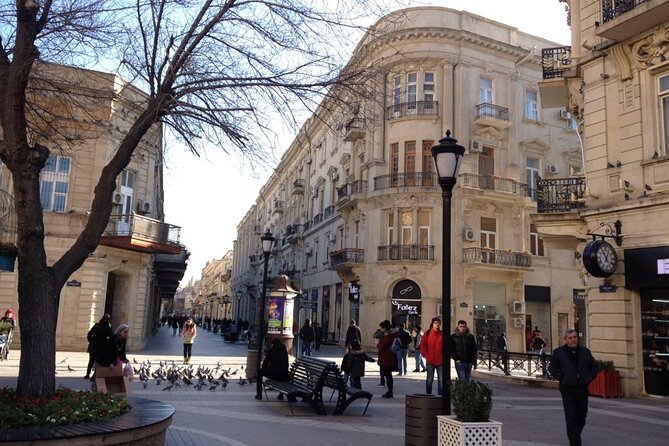
The next stop is Nizami Street, the central shopping and entertainment spine of modern Baku. A traffic-free section stretches for about 800 meters within the longer 3.5-kilometer street.
This is where the tour shifts from historical background to everyday city life. Shops, restaurants, concert halls, and theaters fill the route, and the street is used by people taking a break after work. You get a look at how Baku’s public life operates now, not just how it looked during the oil boom or Soviet period.
The stop lasts around 15 minutes, so do not expect a detailed shopping visit. Instead, use the time to watch the street and listen to the guide explain where locals meet, relax, and go out. The walk’s pop-culture focus makes this section more useful than a standard architectural survey.
Nizami Street can also help you orient yourself for the rest of your stay. It is central, easy to recognize, and connected to several cultural sights on the route.
Nasimi Monument and the 1950s skyline
At the intersection of Samad Vurgun and Nizami streets, the Nasimi Monument provides a short stop with a strong architectural payoff. This is one of Baku’s busy intersections, but the main reason to pause is the view toward Stalinist architecture from the 1950s.
The site gives you a quick lesson in Soviet-era urban design. Rather than treating Soviet buildings as plain or interchangeable, the guide can point out their scale, placement, and formal style. That matters because the architecture is often easiest to understand from the street, where you can see how it shapes the surrounding avenues.
You spend about 15 minutes here. Traffic and city activity are part of the setting, so this is not a quiet monument stop. Bring your attention to the buildings and keep your questions ready.
Same city, a completely different kind of day:
- Baku: Gobustan, Mud Volcano, Fire Mount, Temple Lunch Entry
★ 4.9 · 3,246 reviews - Baku: Guba, Shahdag, Laza & Lunch w/ Free City & Night Tour
★ 4.8 · 1,455 reviews - BEST Gobustan, Volcanoes & Absheron Fire Tour (Group or Private)
★ 5.0 · 1,254 reviews - Gobustan and Absheron tour (All inclusive)
★ 5.0 · 1,014 reviews
Nizami Cinema links independence with the arts
The route continues to 28 May Street, a commemorative street connected with Azerbaijan’s first independence in 1918. The Nizami Cinema stop also brings in Qara Qarayev, one of Azerbaijan’s major classical composers.
This section asks you to look at nation-building through culture. Music and literature helped shape how Azerbaijanis understood national identity, and the discussion places those subjects beside the city’s political history.
I like this part because it keeps the tour from becoming a parade of buildings. You are not only learning who built what. You are considering how a country expresses itself through composers, writers, public monuments, and named streets.
Again, the stop is about 15 minutes. It is best for people who want cultural context, though anyone hoping to enter the cinema or attend a performance should treat this as an exterior orientation rather than an arts ticket.
The Opera and Ballet Theater anchors a cultural walk
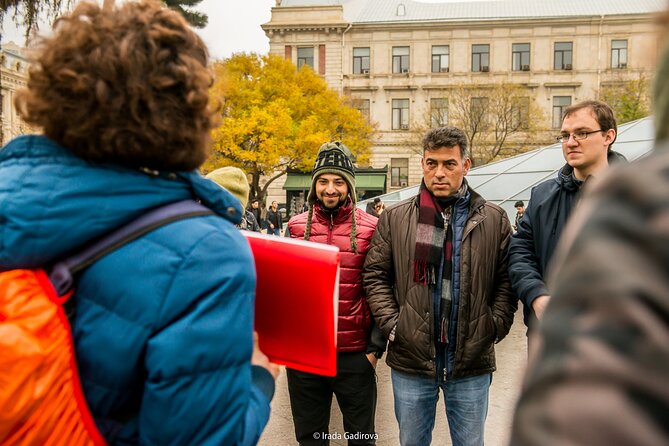
The next portion takes you through the cultural stretch of Nizami Street. The route includes the Song Theatre, the National Library, the Azerbaijan State Academic Opera and Ballet Theater, and a reference to Lev Landau, the Nobel Prize-winning physicist.
The listed timing gives this stop about 15 minutes, although the surrounding walk is described as lasting more than half an hour. In practical terms, you should expect to move through several cultural landmarks while the guide explains Baku’s artistic and intellectual life.
This is one of the strongest parts of the route for first-time visitors who want a broader picture of the city. Opera, theater, libraries, music, and science all appear in the same conversation. You come away with a sense that Baku’s identity is not limited to oil money, grand avenues, or Soviet buildings.
There is no admission included for performances or interiors. The value here is the explanation and the chance to see where these institutions fit within central Baku.
Khagani Street reveals Russian influence
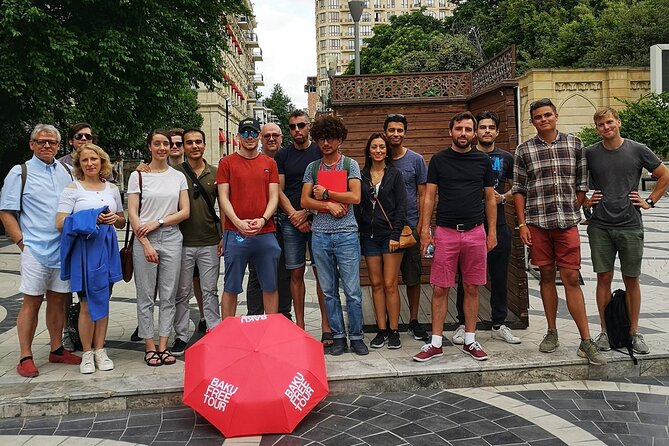
Khagani Street and Khagani Park were historically known as Molokanskaya, a name linked to spiritual Christians exiled from Russia to Azerbaijan. The street also contains the Russian Drama Theatre.
This stop turns toward language, migration, and the place of Russian culture in Azerbaijani society. Those subjects can be difficult to grasp from buildings alone, so a local guide’s explanation is important. You can ask how Russian language and Russian communities fit into daily life, and how that influence sits alongside Azerbaijani identity.
The stop lasts roughly 15 minutes. The park gives the group a natural pause, while the theater adds a visible reminder of the city’s cultural mix.
I consider this one of the tour’s most distinctive sections. Many city walks cover monuments and shopping streets, but fewer explain how different communities and languages helped shape urban life. If you are interested in society rather than just scenery, pay close attention here.
Taghiyev’s former residence tells the oil-boom story
The National Museum of History of Azerbaijan occupies the former private residence of Haji Zeynalabdin Taghiyev, often described as the father of the nation. The building’s ornate interior and layout reflect the wealth created during Baku’s oil boom.
The tour uses this stop to tell Taghiyev’s rise from poverty to immense wealth. That personal story gives the oil era a human shape. Instead of hearing only that oil transformed Baku, you learn how one figure moved through that transformation and became associated with the country’s development.
You spend about 15 minutes here. The itinerary does not include museum admission, so you should not assume you will tour the interior. The exterior and historical explanation still make the stop worthwhile, and you can return later if you want a longer museum visit.
This is also a good moment to ask about the difference between private fortunes and public development. Baku’s grand buildings did not appear by accident, and Taghiyev’s story helps explain the forces behind them.
Government House delivers the clearest Soviet landmark
Government House is the tour’s most direct encounter with Soviet monumental architecture. It is a gigantic, iconic landmark, and its scale is difficult to miss.
After the smaller streets, parks, theaters, and commercial areas, this building gives the Soviet chapter a strong visual center. The size and formal presence make it useful for understanding how government architecture communicated power and order.
The stop lasts about 15 minutes and is primarily an exterior viewing point. You will not spend the time touring government offices, but the building works well as a place for photographs and a discussion of Baku under Soviet rule.
If Soviet architecture is your main reason for booking, this is one of the route’s essential stops. Still, you should know that the overall tour is broader than Soviet buildings alone. Oil-era architecture, modern shopping streets, cultural institutions, and social history take up just as much space.
Baku Boulevard finishes beside the Caspian Sea
The final major stop is Baku Boulevard, also called Dənizkənarı Milli Park or National Park. The promenade runs parallel to the Caspian shoreline and dates in part to a waterfront developed in 1909.
The boulevard’s story reaches back to the era when Baku’s oil barons built mansions near the Caspian. The shore was also artificially built up over time, inch by inch, to create the public waterfront you see today.
You spend about 20 minutes here, the longest stop on the route. It is a fitting ending because the boulevard brings together several themes from the walk: oil wealth, civic improvement, grand city planning, and modern public space.
This is the most open part of the tour, so it can feel like a welcome change after central streets and busy intersections. Your guide can also connect the waterfront to the city’s present-day image without losing sight of its industrial and financial past.
Local tea gives the walk a proper ending
Coffee or tea is included, and the tour finishes with a cup of local tea at a local coffee shop. Lunch is not included, so plan to eat before or after the tour.
I like the tea stop because it gives the experience a social ending. You can ask follow-up questions, clarify a name or building, and let your feet recover. It also makes the tour feel less like a timed checklist.
The total duration is about two hours and 30 minutes, though the stop-by-stop schedule suggests a relaxed walk with several brief explanations. Wear comfortable shoes and leave some flexibility in your afternoon. The route covers a number of central streets, and the experience works best when you can listen rather than hurry from point to point.
What Gani adds to the experience
Guide Gani receives repeated praise for his English, patience, humor, and ability to answer questions. The most useful detail for you is that he adapts the walking speed and explanations to the group instead of rushing through every stop.
That matters on a city walk with this many subjects. One person may want more Soviet architecture, another may ask about Russian language, and someone else may care most about nightlife or local food areas. A small group makes that sort of exchange possible.
Gani’s style also appears to be personal rather than purely scripted. He explains the last hundred years of Baku’s development through stories about residents, popular places, legends, and modern culture. You should still ask direct questions if you want more detail on a particular building or period.
The maximum group size is 15. That is not a private tour, but it is small enough for a guide to hear questions and keep the group together without a large flag-waving procession.
Is $60 a fair price?
At $60 per person, this is not the cheapest way to walk around central Baku. You are paying for a guided interpretation of the city, not for entrance tickets, lunch, or private transportation.
The price makes more sense if you have limited time, want a strong first orientation, or prefer learning about people and society alongside architecture. The tour covers nine major points in one afternoon and ends back at the starting area, so you can continue exploring on your own.
It is less compelling if you mainly want to enter museums, spend long periods photographing buildings, or move at your own pace. No museum admission is included, and each formal stop lasts only about 15 minutes.
Group discounts may improve the value for families or friends booking together. A mobile ticket keeps check-in simple, and the nearby public transportation makes reaching the central meeting point easier.
Who should book this Baku walk?
I would choose this tour for a first afternoon in Baku, especially if you want the new city explained before exploring more deeply on your own. It also suits anyone curious about Soviet architecture but willing to consider the wider story of oil, independence, culture, and language.
It is a good match for:
- First-time visitors with only a short stay
- People interested in architecture and urban history
- Visitors who want local stories and social context
- Small groups who like asking questions
- Anyone seeking ideas for evening areas and popular local meeting places
You may want another format if walking for two and a half hours is difficult, if you need private transport, or if indoor museum visits are your priority. Most people can participate, and service animals are allowed, but the route is still a city walk with several streets and stops.
The tour needs good weather. If poor weather or too few bookings causes cancellation, you are offered another date or experience, or a full refund. You can cancel for a full refund up to 24 hours before the 1 p.m. start time.
Should you book it?
Book it if you want Baku to make sense quickly. The route gives you an unusually broad introduction, from oil wealth and Russian influence to Stalinist architecture, national culture, modern nightlife, and the Caspian waterfront.
I would not book it solely for grand Soviet buildings, since that is only one part of the experience. But for a well-paced first look led by Gani, with time for questions and tea at the end, the $60 price can be worthwhile, particularly when your stay in Baku is short.
FAQ
Where does the Baku Soviet Architecture Guided Walking Tour start?
The tour starts at Karnaval-353, Istiglaliyyat, Baku 1005, Azerbaijan.
What time does the tour begin?
The scheduled start time is 1 p.m.
How long does the tour last?
The experience lasts approximately two hours and 30 minutes.
Where does the tour end?
The tour ends back at the meeting point near Fountain Square.
What places are included on the route?
Stops include Fountain Square, Nizami Street, the Nasimi Monument, Nizami Cinema, the Azerbaijan State Academic Opera and Ballet Theater, Khagani Street, the National Museum of History of Azerbaijan, Government House, and Baku Boulevard.
Is food or drink included?
Coffee or tea is included at a local coffee shop at the end of the tour. Lunch is not included.
Is private transportation included?
No. Private transportation is not included. The tour is a walking experience.
How large is the group?
The tour allows a maximum of 15 people.
Can I cancel for a full refund?
Yes. You can cancel at least 24 hours before the experience start time for a full refund. Poor weather or failure to meet the minimum number of participants may also result in an alternative date or a full refund.
Just added around Baku
- Wine Tour Baku★ 5.0 · 4 reviews
- Traditional Azerbaijani Cuisine Workshop★ 5.0 · 5 reviews
- Tour to the North part of Azerbaijan Forests and Mountatin Quba★ 5.0 · 10 reviews
- Full Day KHINALUG and the Candy Mountains Tour★ 5.0 · 15 reviews
- Baku Sightseing Tour★ 5.0 · 12 reviews
- Small-Group Day Trip to Gobustan, Mud Volcanoes, Ateshgah & Yanar Dagh★ 4.5 · 3 reviews
- The Magnificent Baku Night Tour★ 5.0 · 3 reviews
- Sheki tour with overnight★ 5.0 · 5 reviews
Walking Tours, compared.
Baku Old City Wonders: A Walking Tour Through Time
Read our review →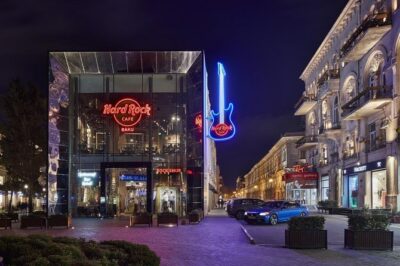
Gobustan & Absheron Tour with Free Old City Walking Tour
Read our review →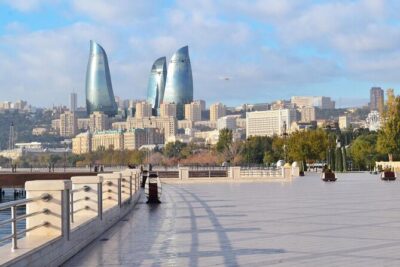
Browse the lists this tour appears in