
Reviewed · BAKU OLD CITY TOURS
Baku Oil Heritage & Old Town Walking Tour
Baku’s story is written in stone, and much of that stone was paid for with oil. This 2.5-hour walk connects the medieval walls of Icherisheher with the grand palaces, schools, gardens, and civic buildings raised during the city’s first oil boom.
I like the way the tour links famous sights to real people, especially the oil barons who built grand homes and public buildings. I also like the use of old photographs and diagrams, which help you picture Baku before its streets filled with modern traffic and new construction.
The main drawback is simple: you see the Maiden Tower and Shirvanshah’s Palace from outside, with no admission included. At $70 per person, the value depends on how much you want explanation and context rather than museum entry time.
In This Review
- Key points before you book
- Why Baku’s oil story is the right place to begin
- Starting at Fountain Square
- Through the Gosha Gala Gate into Icherisheher
- What the Old City section does well
- Beyond the walls on Istiglaliyyat Street
- Philharmonic Fountain and the Ali and Nino connection
- Baku City Hall and the oil-boom city
- Palace of Happiness and the personal side of oil wealth
- The former Taghiyev School for Girls
- Ismailiyya Palace and the memory of a son
- Nizami, literature, and the return to Fountain Square
- Price, pace, and the private-tour question
- Who will get the most from this walk
- Should you book the Baku Oil Heritage and Old Town Walking Tour?
- FAQ
- How long does the Baku Oil Heritage and Old Town Walking Tour last?
- Where does the tour start and finish?
- Are admission tickets to the Maiden Tower and Shirvanshah’s Palace included?
- Is lunch included?
- How many people can join the tour?
- What is the cancellation policy?
Key points before you book
- Oil wealth in human form: Hear how oil money shaped Baku’s architecture, schools, gardens, and social life.
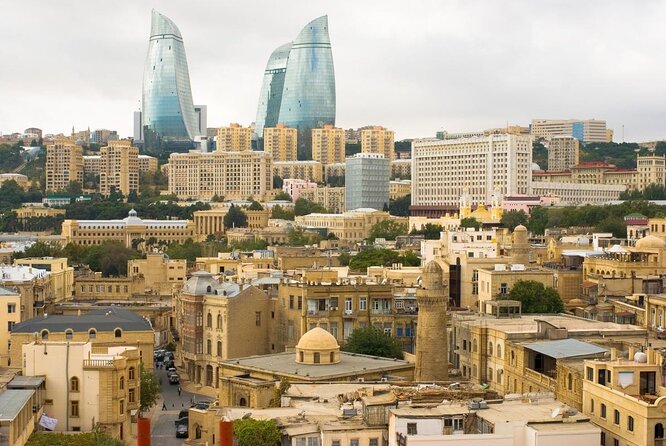
- Medieval and modern Baku together: Walk from the fortress walls and Maiden Tower to grand Imperial Russian and oil-boom buildings.
- Guides who make the past lively: Gani is known for humor, clear storytelling, and strong answers to questions; Lina has also led this walk.
- Historic photos add useful context: Prepared images help you compare present-day Baku with the city of the oil boom.
- A practical first look at the city: The walk ends with a better sense of where to eat, what to see next, and how Azerbaijani life fits into the city’s past.
- Mostly an exterior tour: Major sights are explained at the entrance, but museum tickets and interior visits are not part of the experience.
Why Baku’s oil story is the right place to begin
Baku can feel like several cities placed side by side. Inside the old walls, you find narrow lanes, mosques, and medieval defenses. Outside them, broad streets reveal the ambitions of Imperial Russia, wealthy oil families, Soviet planners, and modern Azerbaijan.
This tour gives you a clear thread through those changes. Oil is not treated as a dry economic subject. It explains why Baku expanded beyond its fortress, why wealthy families ordered extravagant buildings, why European styles appeared beside local traditions, and why education became part of the city’s modernization.
That context matters. On your own, you may admire the stonework of Ismailiyya Palace or the Baku City Hall without knowing why it is there. With a guide, the buildings become evidence of money, rivalry, family pride, religion, politics, and social change.
The walk is also a useful introduction to everyday life. The guide discusses culture, local customs, food suggestions, Azerbaijani phrases, and what to see after the tour. That makes this more than a list of photo stops. It helps you get your bearings early in a Baku visit.
More baku old city tours in Baku:
- Guba Khinalug & Candy Cane Mountains tour (by Old City Tours)
★ 4.5 · 208 reviews - Gabala + Shamakhi tour (by Old City Tours)
★ 4.5 · 198 reviews - Baku Walking Tour (Old City)
★ 5.0 · 127 reviews
Starting at Fountain Square
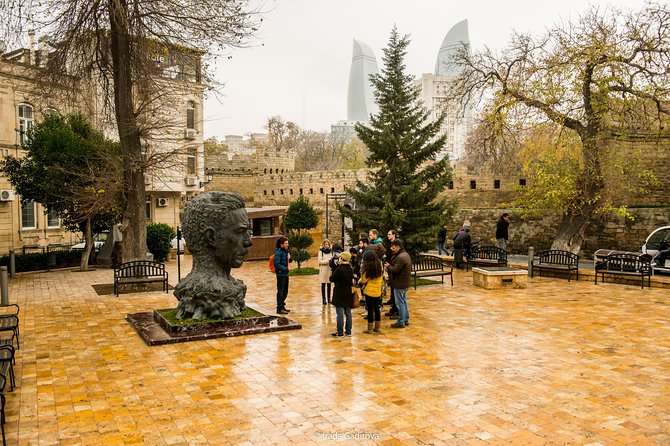
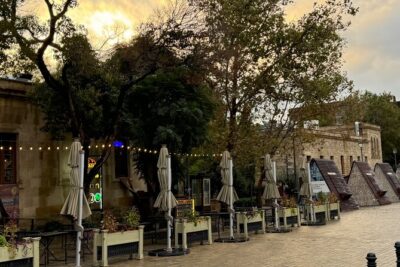
The tour begins and ends at Fountain Square on Nizami Street. Today, this is a central place for leisure, shopping, restaurants, and meeting friends. Its earlier role was less relaxed: during the late nineteenth and early twentieth centuries, this area was part of the main trading street of a fast-growing oil city.
That change from commercial boomtown to public gathering place is a useful opening lesson. Baku’s first oil boom did not only create drilling and export wealth. It changed where people lived, how the city was laid out, and how wealthy families displayed their success.
Allow about ten minutes here for the introduction. Since admission is free, the value comes from the guide’s explanation rather than from a ticketed attraction. Fountain Square is also a practical meeting point, though you should check the exact instructions carefully because the listed starting point is given as KFC9RCP+28F on Nizami Street.
Through the Gosha Gala Gate into Icherisheher
The first major part of the walk enters Icherisheher, Baku’s walled Old City. The Gosha Gala Gate is the main entry point, and passing through it gives you an immediate change of scale. Modern streets give way to stone walls, narrow passages, and a more enclosed urban setting.
The Old City contains four UNESCO World Heritage sites, and the tour covers several of its most important places. You will hear about the twelfth-century citadel walls, the Maiden Tower, the Muhammad Mosque, Shirvanshah’s Palace, and the compact streets that connect them.
The guide explains the Maiden Tower at its entrance rather than taking you inside. That is worth knowing before you book. The tower is one of Baku’s defining sights, but this experience focuses on its setting, meaning, and place in the city’s story. If you want to climb or explore the interior, you will need separate time and an admission ticket.
The same applies to Shirvanshah’s Palace. You receive an explanation outside, supported by historic images, but palace entry is not included. For some people, that is a fair trade because the walk covers several major sights in a short time. If interiors matter most to you, plan a return visit.
The Muhammad Mosque is another important stop. Its eleventh-century date gives you a sense of how old the settlement is beneath the later oil-boom architecture. You also have time to move through the side streets, where the pleasure lies less in checking off monuments and more in seeing how the old quarter fits together.
The Museum of Miniature Books is included among the Old City stops. The tour does not list an admission visit, so expect an exterior explanation or a brief introduction rather than a museum session. This is one of the smaller points on the route, but it adds variety to the usual fortress-and-palace circuit.
What the Old City section does well
I like this part because it prevents Baku from becoming only a story about oil. The medieval quarter shows that the city was important long before the petroleum boom. The guide can then explain how later wealth changed, surrounded, and sometimes competed with this older core.
The pace also matters. The Old City portion lasts about an hour, giving you enough time to understand the main landmarks without turning the entire afternoon into a museum crawl. You will stop for explanations and photographs, then continue through the lanes.
The tradeoff is limited interior access. This is a walking overview, not a full archaeological or museum tour. You get more range, more context, and more connections between places, but less time inside individual monuments.
A few more Baku trips to weigh up
- Baku: Stunning Walking Tour of Historical and Modern City
★ 4.9 · 270 reviews - Best of Baku: 4-Hour City Tour Historic and Modern Landmarks
★ 4.7 · 63 reviews - Baku: Historic and Modern Baku Tour ( Day & NIght Tour)
★ 4.5 · 60 reviews - Baku City Tour with Heritage Tours / All Entrance Fees Inc
★ 4.5 · 52 reviews
Beyond the walls on Istiglaliyyat Street
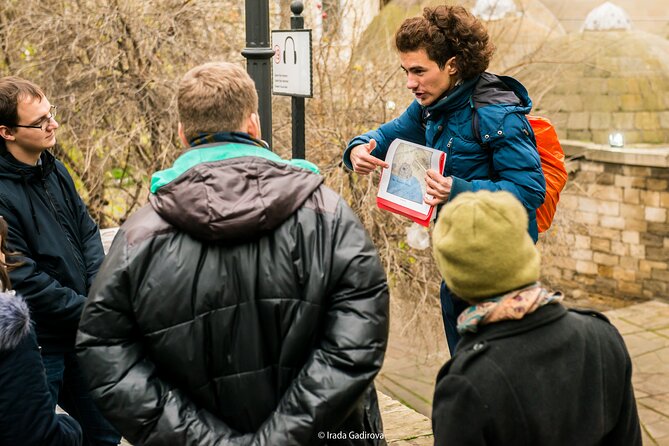
After the Old City, the route follows Istiglaliyyat Street, formerly known as Nikolayevskaya and Kommunisticheskaya. This was one of the major streets of Imperial Russian Baku, and it shows how the city expanded beyond the fortress during its period of rapid growth.
This section is where the oil heritage theme becomes especially visible. Wealthy oil figures commissioned buildings that reflected their taste, status, faith, family stories, and desire for public recognition. The architecture is not merely decorative. It records a city trying to present itself as modern, international, and worthy of its new fortune.
The route covers a notable cluster of buildings and public spaces:
- Governor’s Garden
- Baku City Hall
- Philharmonic Hall
- Palace of Happiness
- Institute of Manuscripts of Azerbaijan
- Ismailiyya Palace
- Literature Museum
- The statue of Nizami
You will not spend ten minutes at every one of these places as separate formal stops. Instead, the street works as a connected lesson in urban change, with several buildings receiving focused attention.
Philharmonic Fountain and the Ali and Nino connection
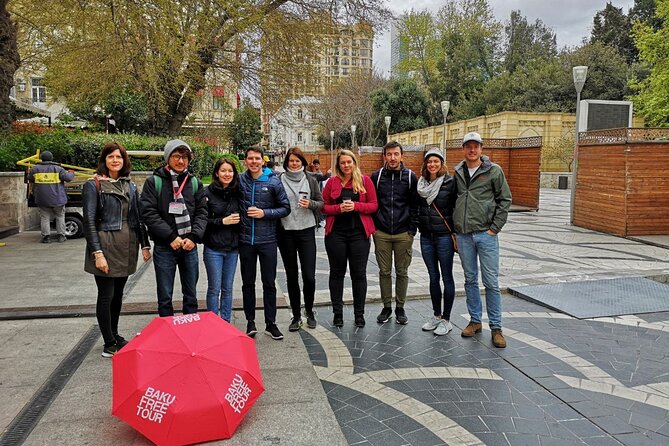
The Philharmonic Fountain marks one of the garden environments created as Baku expanded outside its fortress walls. The guide connects the garden’s story with Ali and Nino, the well-known novel associated with Baku and the cultural tensions of the region.
This is a brief ten-minute stop, but it gives the walk a literary and personal angle. You are not only looking at stone and planning. You are also considering how Baku has been imagined through stories about love, identity, religion, and a changing city.
The fountain and garden offer a pause between the dense Old City lanes and the larger civic buildings ahead. Bring water and wear shoes suited to pavement. Bottled water is included, but lunch is not, and the tour is long enough that a snack before you start may be sensible.
Baku City Hall and the oil-boom city
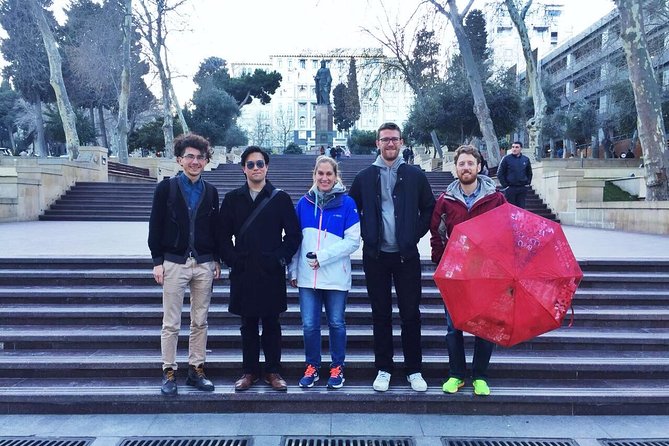
Baku City Hall is one of the major architectural markers of the oil-boom period. Its design helps show the European influence that arrived with Imperial Russian administration, foreign investment, and a cosmopolitan population.
This is a good place to listen for the broader point: Baku’s growth was not shaped by one group alone. Different communities, languages, religious traditions, and business interests helped form the city. The buildings reflect that mix.
The stop lasts about ten minutes. You will view the exterior and hear how the building fits into Baku’s civic development. There is no indication that the tour includes entry, so treat it as an architectural and historical explanation rather than an indoor visit.
Palace of Happiness and the personal side of oil wealth
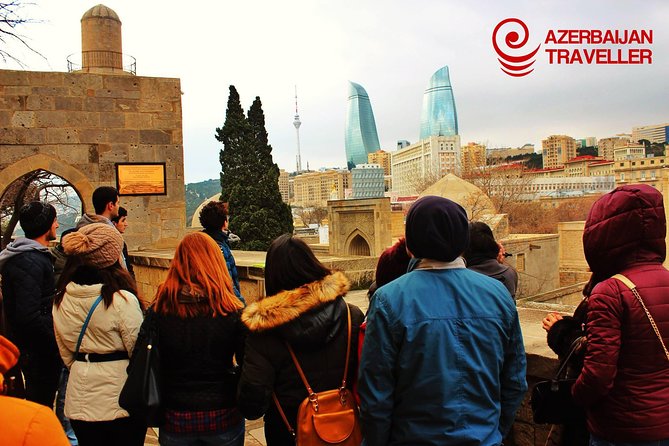
Saadet Sarayi, also called the Palace of Happiness, brings the oil story down to a family scale. The building is tied to an oil baron and his wife, and its story is linked to marriage ceremonies held there today because the mansion serves as a marriage registry.
That connection gives the building an unusual second life. It is not only a grand residence left behind by a wealthy family. It remains associated with couples beginning married life, which makes the old oil fortune feel less remote.
The stop takes about ten minutes. You should expect a story about the building’s owners, its purpose, and its continued social role, not a formal wedding or interior tour.
The former Taghiyev School for Girls
The Institute of Manuscripts of Azerbaijan occupies the former Taghiyev School for Girls, a building tied to the first secular school for Muslim women in Baku. This is one of the most important stops for understanding modernization beyond architecture.
The story touches education, women’s lives, social reform, and the path toward Azerbaijan’s first independence. It shows that the oil boom helped fund more than mansions. It also created institutions and debates about how society should change.
I find this part especially valuable because it gives the tour a social backbone. You learn about the people affected by the city’s growth, not only the men whose names appear on palaces. The building makes the point clearly: wealth can reshape a city through schools, public institutions, and new expectations.
Again, the emphasis is on the outside and on the guide’s explanation. If you want to study the manuscripts collection itself, this walk is not a substitute for visiting the institute separately.
Ismailiyya Palace and the memory of a son
Ismailiyya Palace was commissioned by an oil baron in memory of his son. Its Venetian Gothic style makes it one of the most memorable buildings on the route, but the family reason behind it gives the architecture its emotional weight.
The palace also became an important civic and cultural landmark. Its story shows how private grief, wealth, architectural fashion, and public reputation could meet in one building.
This is the kind of stop where historic photographs are helpful. A picture of the earlier city can show why the palace was so striking in its setting and how the surrounding streets changed over time. The guide’s prepared images and diagrams are a practical feature, especially if you have trouble reading a city only through its present-day appearance.
Nizami, literature, and the return to Fountain Square
The route also passes the Literature Museum and the statue of Nizami, bringing Azerbaijani literary culture into a walk otherwise focused on walls, oil, and public architecture. This helps keep the tour from becoming a parade of wealthy men’s buildings.
You return to Fountain Square at the end. The ending is convenient because you are already in a central part of Baku, with options for food and further sightseeing nearby. The guide can also suggest restaurants, vegetarian choices, local dishes, and other activities.
Several guides have led this experience, including Gani and Lina. Gani has been especially associated with a lively style, humor, clear English, and the ability to answer detailed questions. Lina has provided a warm introduction to the Old City and practical food advice, including baklava and vegetarian suggestions. Guide assignments can change, so do not book on the assumption that one particular person is guaranteed.
Price, pace, and the private-tour question
The price is $70 per person. For a short walk, that is not a budget price, especially since major admission fees are not included. You are paying mainly for the guide’s time, the route design, historical material, and the links between places that are easy to miss on your own.
The value is strongest if you are new to Baku, have only a day or two, or want a clear explanation of the city before exploring alone. A private guide can adjust the discussion to your questions and interests. The tour information also lists a maximum of 30 participants, so confirm the exact group arrangement at booking if a truly private experience is important to you.
The walk lasts about two and a half hours. That is long enough to cover both Icherisheher and the oil-boom streets, but short enough to fit into a morning or afternoon. You should expect steady walking and repeated outdoor stops, with no private transport and no lunch included.
A mobile ticket and free cancellation up to 24 hours before the start make planning easier. Last-minute cancellations within 24 hours are not refunded. The tour also depends on good weather and a minimum number of participants, so a cancellation by the operator can lead to another date, another experience, or a full refund.
Who will get the most from this walk
I would choose this tour for a first visit to Baku, particularly if you want to understand why the city looks so different from one block to the next. It also suits anyone interested in architecture, social reform, literary connections, or the human stories behind oil wealth.
Families can do well with it. The storytelling, photographs, and changing scenery help keep the route moving, and children old enough to follow a two-hour history walk may enjoy the palace stories and Old City lanes.
It is less suitable if you want long interior visits, a food tour, or a relaxed stroll with very little explanation. You will not receive lunch, private transportation, or included entry to the Maiden Tower and Shirvanshah’s Palace. The route is about seeing a lot and understanding it, not lingering inside every sight.
Most people can participate, service animals are allowed, and the meeting point is near public transportation. Still, ask about the exact route if mobility is a concern, since the experience takes place on Old City streets and includes substantial walking.
Should you book the Baku Oil Heritage and Old Town Walking Tour?
Book it if you want Baku to make sense quickly. The strongest part is the link between medieval Icherisheher, Imperial Russian expansion, oil-barons’ ambition, women’s education, literature, and modern Azerbaijani life.
At $70, I would not choose it simply to see the buildings. You can view many of them without paying. I would choose it for the guide’s interpretation, the old photos, the personal stories, and the chance to ask questions as the city unfolds around you.
If possible, take it near the start of your stay. You can use the restaurant and sightseeing suggestions afterward, then return to the Maiden Tower, Shirvanshah’s Palace, or another museum with a better sense of what you are seeing.
FAQ
How long does the Baku Oil Heritage and Old Town Walking Tour last?
The tour lasts approximately 2 hours and 30 minutes.
Where does the tour start and finish?
It starts at KFC9RCP+28F on Nizami Street in Baku and ends back at the meeting point in Fountain Square.
Are admission tickets to the Maiden Tower and Shirvanshah’s Palace included?
No. The guide explains both sights from outside, using historic photos, but the tour does not include entry.
Is lunch included?
No. Bottled water is included, but lunch is not.
How many people can join the tour?
The activity has a maximum of 30 participants. The tour description also presents it as a private experience with personal guide attention, so confirm the group format when booking.
What is the cancellation policy?
You can cancel at least 24 hours before the local start time for a full refund. Cancellations or changes made within 24 hours are not refunded or accepted. Poor weather or failure to meet the minimum number of participants may result in another date, another experience, or a full refund.
More Walking Tours in Baku
- Baku Old Town Walking Tour with a Local
★ 5.0 · 64 reviews - Baku Old City Wonders: A Walking Tour Through Time
★ 5.0 · 36 reviews - Baku Downtown Original Walking Tour
★ 5.0 · 36 reviews - Baku: Old City Walking Tour
★ 3.9 · 21 reviews
Just added around Baku
- Wine Tour Baku★ 5.0 · 4 reviews
- Traditional Azerbaijani Cuisine Workshop★ 5.0 · 5 reviews
- Tour to the North part of Azerbaijan Forests and Mountatin Quba★ 5.0 · 10 reviews
- Full Day KHINALUG and the Candy Mountains Tour★ 5.0 · 15 reviews
- Baku Sightseing Tour★ 5.0 · 12 reviews
- Small-Group Day Trip to Gobustan, Mud Volcanoes, Ateshgah & Yanar Dagh★ 4.5 · 3 reviews
- The Magnificent Baku Night Tour★ 5.0 · 3 reviews
- Sheki tour with overnight★ 5.0 · 5 reviews
Baku Old City Tours, compared.
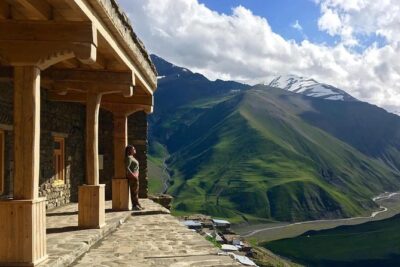
Guba Khinalug & Candy Cane Mountains tour (by Old City Tours)
Read our review →
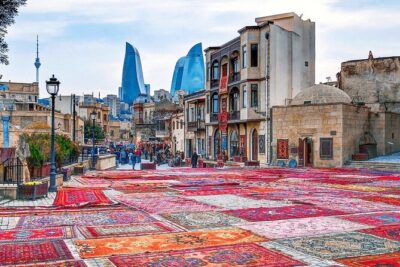
Baku Old City Tour (officially by Old City Tours)
Read our review →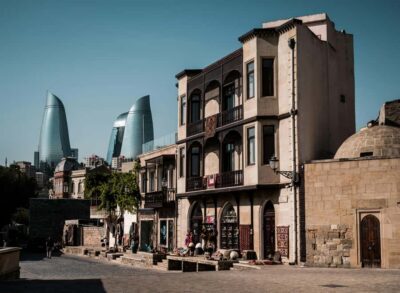
Baku Old City Wonders: A Walking Tour Through Time
Read our review →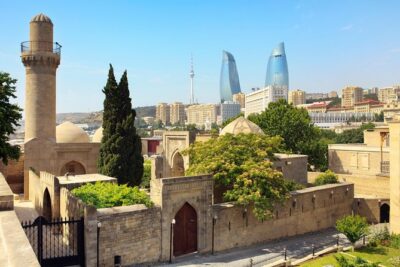
Browse the lists this tour appears in