Reviewed · FULL-DAY
Full Day Sightseeing Tour of the main Attractions around Baku
Gobustan’s ancient rock carvings and Azerbaijan’s bubbling mud volcanoes are the most unusual parts of this day out. Add a mosque, a fire temple, a burning hillside, and the story of the world’s first oil well, and you get a quick lesson in why Azerbaijan is called the Land of Fire.
I like the small group of up to 18 people, which gives guides such as Reza and Riad room to explain local religion, oil, and old customs. I also like the practical value: tickets, lunch, air-conditioned transport, and selected hotel pickup are included in the $60 price.
The trade-off is a long, tightly packed day. The mud volcano road can be rough, and one stop lasts only about 10 minutes. If you get motion sick, the drive to the volcanoes deserves serious thought.
In This Review
- Key points to know before booking
- Why this Baku day tour works
- The first oil well near Bibi-Heybat
- Bibi-Heybat Mosque and a living place of worship
- Mud volcanoes: strange, noisy, and not for everyone
- Gobustan Rock Art for a glimpse of early human life
- Lunch gives the busy schedule a needed pause
- Ateshgah Fire Temple and the Zoroastrian connection
- Yanardag, where gas burns from the hillside
- The Heydar Aliyev Cultural Center finish
- Guide quality can make or break the day
- Is $60 a fair price?
- Who should book this experience?
- Should you book the Baku highlights tour?
- FAQ
- How long does the tour last?
- What is included in the price?
- How many people can join the tour?
- Does the tour visit Gobustan?
- Are the mud volcanoes included?
- Does the tour explain Zoroastrianism?
- Can I cancel for a refund?
Key points to know before booking
- Gobustan combines rock art and archaeology: You get about an hour to see an open-air museum tied to some of Azerbaijan’s oldest human traces.
- Mud volcanoes are the wild card: Bubbling mud and escaping gas can be fascinating, but the ride may be uncomfortable for people prone to motion sickness.
- Fire sites explain Azerbaijan’s identity: Ateshgah introduces Zoroastrian worship, while Yanardag shows natural gas burning at the surface.
- The tour covers difficult-to-link sights: These places sit outside central Baku, so a guided vehicle saves you from arranging several separate trips.
- Lunch and entrance tickets are included: At $60, the package is strong value if you want many outer-Baku sights in one day.
- Guide quality matters: Reza, Riad, Riad, Rena, and Riyadh are named in the supplied details, with particular praise for clear English, humor, and cultural explanations.
Why this Baku day tour works
Baku is easy to enjoy on foot once you are in the center, but several of Azerbaijan’s most distinctive sights lie well beyond the compact old city. This tour links the Absheron Peninsula with Gobustan in one nine-hour outing, beginning at 9 a.m. and returning to the meeting point at the end.
That route gives you a useful story arc. You start with oil and Islam, move into prehistoric art and unusual geology, then finish with the country’s fire-worship traditions and modern architecture. It is not a slow, deeply focused visit to one site. It is a broad introduction to the area around Baku.
I would choose this tour early in a Baku stay, especially if I had only a few days. The guide provides context while you ride, and the small-group format is more personal than a large coach trip. The maximum group size is 18, so the experience is still shared, but you are less likely to disappear in a crowd.
A few more Baku trips to weigh up
- Sheki – Full Day Tour to Five Regions of Azerbaijan
★ 4.5 · 279 reviews - Full Day Trip in Baku (Gobustan & Absheron)
★ 5.0 · 72 reviews - Khizi Candy Mountains, Shahdagh Full Day Guided Tour
★ 4.5 · 61 reviews
The first oil well near Bibi-Heybat
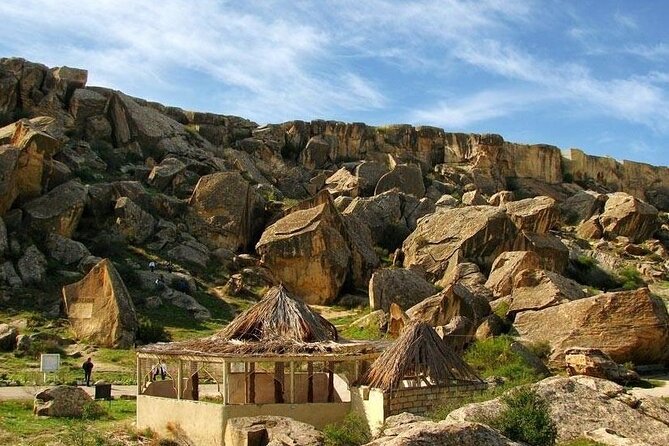
The short opening stop takes about 10 minutes and costs nothing extra. It concerns an oil well at the Bibi-Heybat field, which Azerbaijani historians connect to documents in Russian archives dating to 1846.
The claim matters because this well predates commercial oil production in the United States by 13 years. You are not spending an hour at a grand museum here. This is a brief historical marker that sets up the larger story of Baku, a city shaped by petroleum wealth and the industry that followed.
Keep your expectations in check. The stop is more about the meaning of the site than a long list of things to see. Still, it is a smart opening because oil explains much of Baku’s past, present, and striking modern growth.
Bibi-Heybat Mosque and a living place of worship
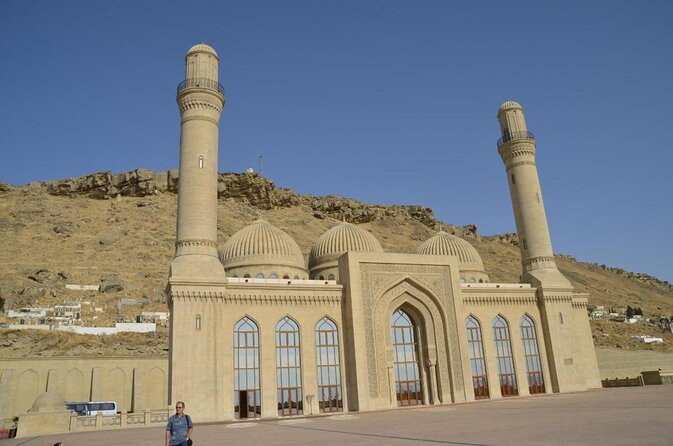
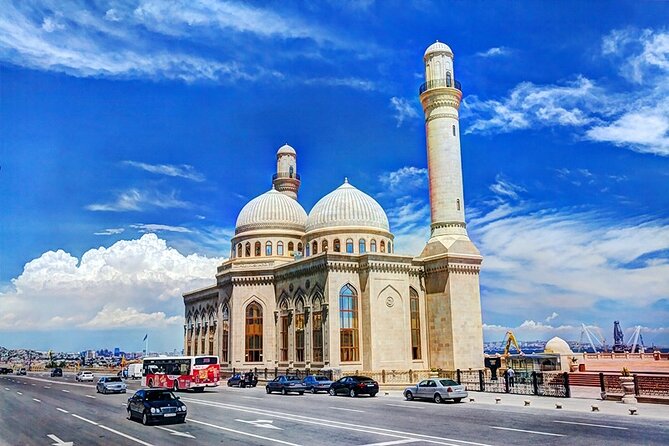
The next stop lasts about 20 minutes and includes no separate admission fee. Bibi-Heybat Mosque sits near Baku’s mountains and a large cemetery, and it is an important pilgrimage site for Muslims.
The shrine is associated with Bibi-Heybet, described as a relative of the Prophet Muhammad. Local tradition gives her tomb healing power, and many people have chosen burial places near the mosque. Your guide can help you understand the religious importance of the site rather than treating it as just another photo stop.
This is a brief visit, so it is best approached as an introduction. You will not have time for a long architectural study or an extended quiet visit. The value is in seeing a place that remains meaningful to local worshippers and in placing Azerbaijan’s Islamic traditions beside the older fire customs later in the day.
Dress and behavior should be respectful at any active religious site. The supplied details do not set out a specific clothing rule, so follow the guide’s instructions when you arrive.
Mud volcanoes: strange, noisy, and not for everyone
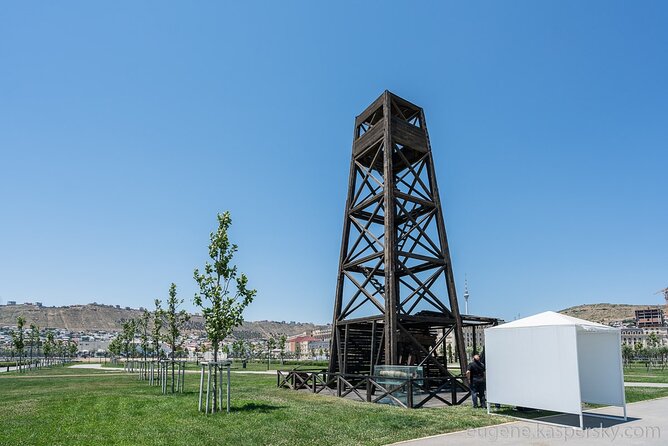
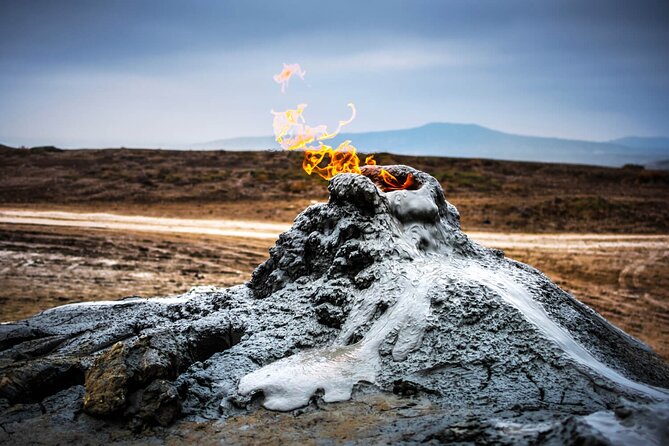
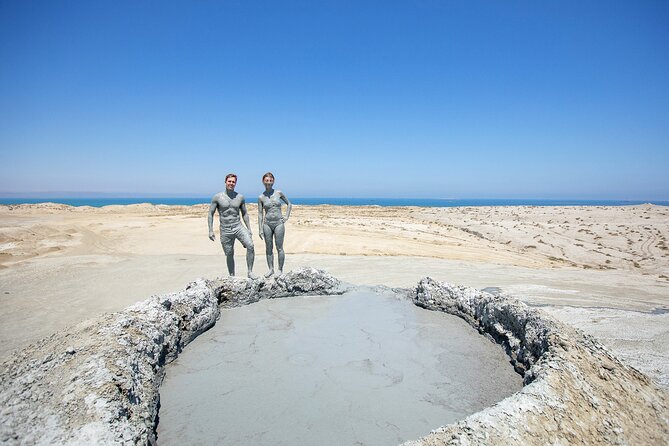
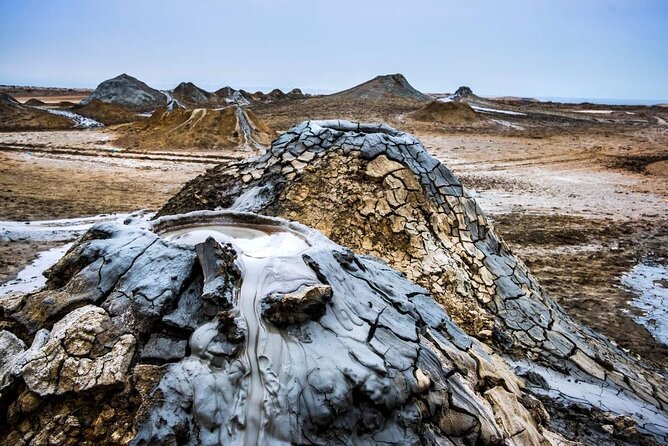
The mud volcano stop lasts about 25 minutes, with admission included. These are not lava volcanoes. They are openings or cone-shaped forms where mud and gases push up from below, often in regions connected with oil and underground activity.
The result can be wonderfully odd. You may see gray mud bubbling in small craters, with gas escaping from the ground. Several people singled out the volcanoes as one of the best parts of the day, and I can see why: the sight is unlike anything in central Baku.
There is a clear practical warning. The road to this area can cause motion sickness, and one account specifically advised people with that problem to skip the stop. The tour information does not say that an alternative visit is provided, so ask the operator before booking if this is a concern.
The stop is short by design. You get enough time to see the formations and take photographs, but not enough for a long walk or geological lesson on site. Much of the explanation will come from your guide, and this is where a strong guide makes a difference.
Same city, a completely different kind of day:
- Baku: Gobustan, Mud Volcano, Fire Mount, Temple Lunch Entry
★ 4.9 · 3,246 reviews - Baku: Guba, Shahdag, Laza & Lunch w/ Free City & Night Tour
★ 4.8 · 1,455 reviews - BEST Gobustan, Volcanoes & Absheron Fire Tour (Group or Private)
★ 5.0 · 1,254 reviews - Gobustan and Absheron tour (All inclusive)
★ 5.0 · 1,014 reviews
Gobustan Rock Art for a glimpse of early human life
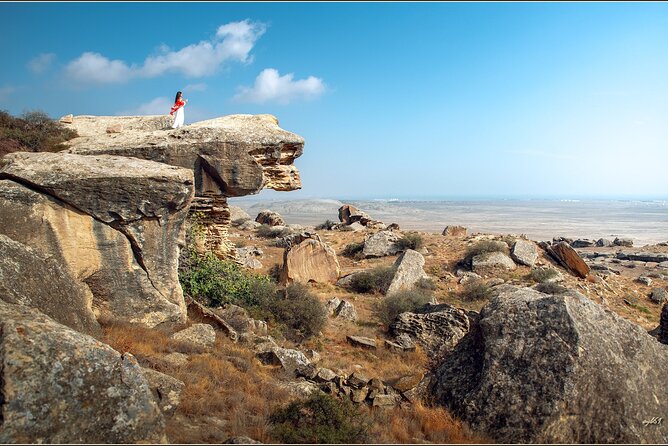
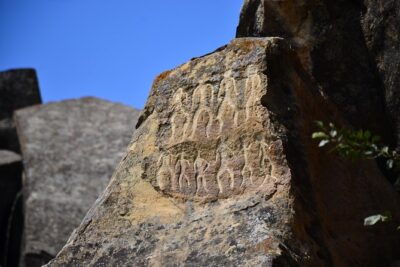
Gobustan receives about an hour, and the entry ticket is included. The area is an open-air archaeological museum with a large collection of historic remains, especially its ancient rock art.
This is the day’s main cultural and archaeological stop. The carvings give you a direct connection to people who lived in this area long before modern Baku. They also help balance the tour’s more dramatic sights, since the significance here is not just visual. You are looking at evidence of human activity preserved in stone.
An hour is enough for a useful introduction, though not for a scholarly visit to every feature. Stay close to your guide so you do not miss the meaning behind the carvings. The supplied details do not specify the exact walking distance, so wear shoes you can use comfortably for an outdoor archaeological site.
Gobustan pairs especially well with the mud volcanoes. One shows the ground bubbling and moving today, while the other preserves the marks of people from the distant past. Together they make the morning more memorable than either stop would be alone.
Lunch gives the busy schedule a needed pause
Lunch is included, which improves the value of the package and removes one common worry on a full-day excursion. Several comments specifically describe the food as delicious or typical, but no menu or restaurant details are provided.
Treat lunch as a practical break rather than a separate culinary tour. It gives you time to sit down between outdoor stops, and it means you do not need to budget separately for a midday meal. Because the tour covers many sites, the schedule is likely to keep moving, so this is not the sort of day where you linger over a long meal.
Food preferences, allergies, and personal spending are not covered in the supplied details. Ask the operator before departure if you need a particular meal.
Ateshgah Fire Temple and the Zoroastrian connection
Ateshgah, or the Fire Temple, receives about an hour, with admission included. The first structures are dated to the second and third centuries, when Zoroastrianism spread through Azerbaijan and fire temples were built in the region.
The site also helps explain the country’s older religious layers. Islam was adopted in Azerbaijan in the seventh century, and Ateshgah later became associated with fire worship before its use changed. Your guide can connect the temple’s history with the natural gas that once made flames appear in this part of the Absheron Peninsula.
One important point: the tour describes Ateshgah as a fire-worshipper temple, but you should not expect a simple story with only one religious label. The site is most useful when you listen to the guide’s explanation of Zoroastrian beliefs, local traditions, and the way religions changed over time.
An hour gives you room to look around rather than rush through. It is also one of the stronger stops for visitors interested in religion, ancient customs, or Azerbaijan’s national image as the Land of Fire.
Yanardag, where gas burns from the hillside
Yanardag takes about 30 minutes and includes admission. It is a burning mountainside where natural gas rises through the upper soil and catches fire when it meets oxygen.
The flames can continue in rain or wind, and the site has been associated with fire burning for many years. The explanation is geological rather than magical, but the effect is still striking. This was one of the most frequently praised stops in the supplied comments, along with Gobustan and the mud volcanoes.
Do not assume the fire will look huge or theatrical. Natural flames vary, and one account noted that wind prevented the guide from lighting a separate fire at the mud volcano stop. Yanardag itself remains the proper place to see the burning ground, while the guide’s explanation helps you understand why it happens.
Thirty minutes is a sensible amount of time. You can see the flames, take pictures, and hear the story without turning the stop into a long wait. If you are choosing which sites deserve your attention, I would put Yanardag near the top.
The Heydar Aliyev Cultural Center finish
The tour description says the day concludes with a stop at the Heydar Aliyev Cultural Center, an avant-garde building and one of Baku’s best-known modern sights. However, the detailed stop list does not give a visit length or confirm whether admission is included.
That distinction matters. You should treat the center as a final photo or viewing stop unless the operator confirms an interior visit. The building’s flowing white form offers a sharp contrast to Gobustan’s stone carvings, Ateshgah’s historic walls, and the rough volcanic ground.
This closing contrast is one of the tour’s clever features. In a single day, you move from prehistoric marks in rock to a modern cultural building linked with contemporary Baku. It shows the city and country through several time periods, even if each stop receives only a limited amount of attention.
Guide quality can make or break the day
The strongest praise is reserved for the guides. Reza, Riad, Rena, Riyadh, and Rza appear in the supplied comments, sometimes with different spellings. That suggests the company uses several guides, so you may not receive a particular person unless the operator confirms it.
The qualities repeatedly attached to the guides are clear English, good command of several languages, humor, warmth, and strong explanations of history and religion. One guide used local tea during the day, and another helped connect people from different nationalities within the group. These small touches can make a long driving day feel more social.
A good guide is especially important at the oil well, Gobustan, and Ateshgah. Without explanation, the oil site is very short, the carvings can be difficult to interpret, and the temple may seem like a collection of old walls. Ask questions as you go. The format rewards curiosity.
There is one transport caution. Most comments describe comfortable vans or clean vehicles, but one person found the vehicle unsatisfactory. Since the vehicle type is not guaranteed beyond air conditioning, contact the provider if comfort is a major concern.
Is $60 a fair price?
At $60 per person, this is a strong package if you want to see the outer Baku sights in one day. The price includes an air-conditioned vehicle, professional guide, entrance tickets, lunch, local taxes, and hotel pickup from selected hotels.
The value comes from the number of separate places linked together. Hiring transport to reach Gobustan and the mud volcanoes, then arranging another trip to Ateshgah and Yanardag, could take more planning and may cost more depending on your group. Here, the guide also provides the historical thread.
The price is less compelling if you prefer slow travel. You will make six listed stops, plus the Heydar Aliyev Cultural Center, within roughly nine hours. Several visits are short, and driving takes up part of the day. I would pay for this tour to gain access and context, not because it offers long, unhurried time at every site.
Group discounts are available, and the tour accepts mobile tickets. Hotel pickup is offered only at selected hotels, so confirm that detail before relying on a pickup at your accommodation.
Who should book this experience?
I would recommend it to a first-time Baku visitor who wants a broad look at the region beyond the city center. It suits people who enjoy mixing archaeology, religion, geology, oil history, and modern architecture rather than focusing on one subject.
It is also a good fit if you do not want to drive or arrange several taxis. The route is hard to reproduce efficiently on your own, especially when you add the mud volcanoes and the separate fire sites.
You may want another plan if you get motion sick, dislike full days in a vehicle, or want extensive time at museums and religious sites. The tour requires good weather, and it can be canceled if poor conditions or low numbers prevent the trip from running. Cancellation is free up to 24 hours before the start time, but changes or cancellations inside that window are not refunded.
Should you book the Baku highlights tour?
Book it if you have one open day and want the clearest introduction to Baku’s unusual surroundings. The best combination is Gobustan, the mud volcanoes, and Yanardag, with Ateshgah adding the religious context and the oil well explaining the city’s economic story.
Before paying, confirm hotel pickup, ask about the vehicle, and mention motion sickness concerns. If you accept the quick pace, the $60 price gives you a lot: transport, lunch, tickets, and a guide who can turn scattered sights into one understandable day.
FAQ
How long does the tour last?
The tour lasts about nine hours. It starts at 9:00 a.m. and ends back at the meeting point.
What is included in the price?
The $60 price includes an air-conditioned vehicle, professional guide, entry tickets, lunch, local taxes, and hotel pickup from selected hotels.
How many people can join the tour?
The group can have a maximum of 18 people. Group discounts are available.
Does the tour visit Gobustan?
Yes. You spend about one hour at Gobustan Rock Art, an open-air archaeological museum, and the entry ticket is included.
Are the mud volcanoes included?
Yes. The tour includes about 25 minutes at the mud volcanoes, with admission included. The road may be uncomfortable if you get motion sick.
Does the tour explain Zoroastrianism?
Yes. Ateshgah Fire Temple is visited for about one hour, and the tour explains its connection with Zoroastrianism and fire worship in Azerbaijan.
Can I cancel for a refund?
You can cancel at least 24 hours before the local start time for a full refund. Cancellations or changes made less than 24 hours before the start time are not refunded. If bad weather or too few bookings cancel the experience, you are offered another date or a full refund.
Just added around Baku
- Wine Tour Baku★ 5.0 · 4 reviews
- Traditional Azerbaijani Cuisine Workshop★ 5.0 · 5 reviews
- Tour to the North part of Azerbaijan Forests and Mountatin Quba★ 5.0 · 10 reviews
- Full Day KHINALUG and the Candy Mountains Tour★ 5.0 · 15 reviews
- Baku Sightseing Tour★ 5.0 · 12 reviews
- Small-Group Day Trip to Gobustan, Mud Volcanoes, Ateshgah & Yanar Dagh★ 4.5 · 3 reviews
- The Magnificent Baku Night Tour★ 5.0 · 3 reviews
- Sheki tour with overnight★ 5.0 · 5 reviews
Full-Day, compared.
Full day Tour to Sheki: 4 regions of Azerbaijan in 1 day
Read our review →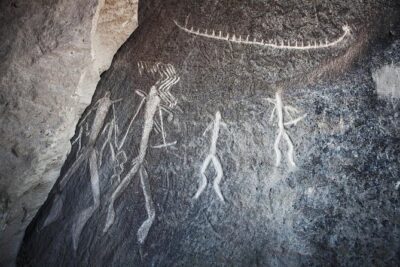
Khizi Candy Mountains, Shahdagh Full Day Guided Tour
Read our review →
Gobustan,Mud Volcanoes & Absheron Peninsula full day tour
Read our review →