Reviewed · BAKU TOURS
Baku’s Ancient Heart
Baku’s ancient core is not a museum sealed behind glass. It is a maze of cobbled lanes, stone walls, old courtyards, working shops, and striking monuments. This walking tour takes you through Icherisheher, the UNESCO-listed Old City, with guide Heydar leading the way through its most important sights and lesser-known corners.
I like two things here. First, the route connects famous landmarks such as the Maiden Tower and Shirvanshahs’ Palace with smaller places that are easy to miss. Second, the tour brings in everyday culture through artisans’ shops, Azerbaijani tea, traditional music, and old trading buildings. The main consideration is physical: you need comfortable shoes, and the experience is not suited to people over 70.
In This Review
- Key points to know before you book
- Why Baku’s Old City makes a good walking tour
- The Maiden Tower and its wide city views
- The palace of the Shirvanshah dynasty
- Ancient walls, gates, and the city’s working past
- Religious sites and quiet reminders of earlier communities
- A bathhouse beneath the streets
- Art, books, and local craft along the route
- Tea, music, and the living Old City
- Is $25 a fair price for this route?
- What to bring and who will enjoy it most
- Should you book Baku’s Ancient Heart?
- FAQ
- Where does the tour take place?
- What are the main sights included?
- Does the tour visit the Maiden Tower?
- Is the Shirvanshahs’ Palace included?
- What languages are available?
- Who is the guide?
- What should I bring?
- Is the tour suitable for people over 70?
- Can I cancel for a full refund?
Key points to know before you book

- The Maiden Tower anchors the walk: Climb its spiral staircase for views over Baku, the Caspian Sea, and the city.
- Heydar leads in English or Russian: His friendly, well-informed approach is the tour’s most praised feature.
- The route goes beyond the headline sights: Expect a 15th-century underground bathhouse, old caravanserais, city gates, art spaces, and a miniature book museum.
- You see both grand and modest Baku: The Shirvanshahs’ Palace provides royal scale, while workshops and tea offer a closer look at local life.
- The $25 price is strong for a history-focused walk: It includes a long list of major sights and specialist stops, though meals and personal purchases are not stated as included.
- Plan for uneven walking: The Old City is explored on foot, so supportive shoes matter more than smart clothes.
Why Baku’s Old City makes a good walking tour
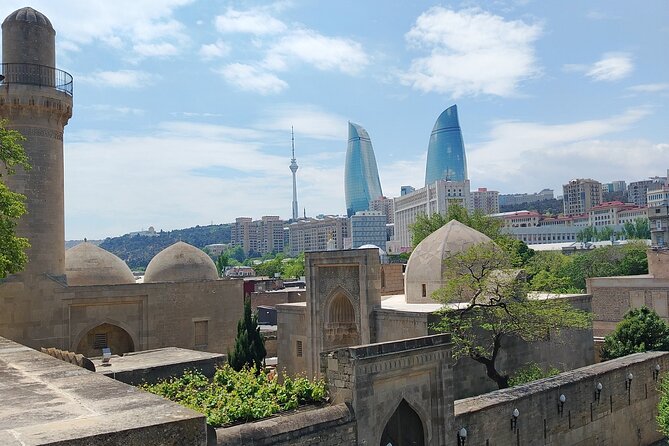
I like tours that give you a clear sense of place instead of sending you from one isolated monument to another. Baku’s Old City suits that approach. Its gates, walls, lanes, mosques, palaces, bathhouses, and trading buildings all belong to the same historic quarter.
You begin at the Double Gates, the main entrance into the old district. Passing through them gives the walk a useful sense of arrival. Modern Baku is outside, but inside the walls the route turns toward stone alleys and buildings tied to several periods of the city’s past.
The Old City’s importance comes from its position on historic trade routes. The caravanserais, or roadside inns, show how merchants once used Baku as a stopping point. Religious buildings, royal quarters, workshops, and bathhouses fill out the picture. You are not only seeing grand architecture. You are seeing the systems that made an old city function.
This is why a guide matters. A bare walk through the lanes could feel like a pleasant stroll with a few impressive buildings. Heydar’s job is to connect each stop, point out details you might pass, and explain how the Old City worked as a place to live, worship, trade, and govern.
Other Baku days people book alongside this one:
- Baku: Gobustan, Mud Volcano, Fire Mount, Temple Lunch Entry
★ 4.9 · 3,246 reviews - Baku: Guba, Shahdag, Laza & Lunch w/ Free City & Night Tour
★ 4.8 · 1,455 reviews - BEST Gobustan, Volcanoes & Absheron Fire Tour (Group or Private)
★ 5.0 · 1,254 reviews
The Maiden Tower and its wide city views
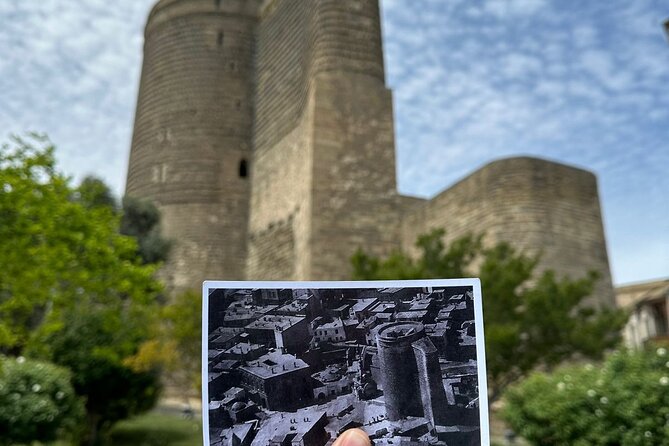
The Maiden Tower is the first major landmark and the clearest symbol of old Baku. The stone structure dates to the 12th century and remains partly mysterious in purpose and story. That uncertainty gives the building a special appeal, since you are looking at a monument whose exact origins still invite questions.
Inside, the route follows a spiral staircase. The climb is an important part of the visit, not just a way to reach the top. As you rise, the thick walls and compact interior make the tower feel more like a fortified structure than a conventional lookout.
At the top, you get panoramic views across Baku, the Caspian Sea, and the surrounding city. The view helps explain the tower’s place within the old district. You can see the contrast between the ancient stone quarter and the newer city beyond it.
The climb also brings a practical point. This is a walking tour with stairs and uneven historic surfaces, not an easy coach excursion. If you have limited mobility, you should consider that before booking. The stated age guidance also says the activity is not suitable for people over 70.
The palace of the Shirvanshah dynasty
From the Maiden Tower, the walk continues through narrow lanes to the Palace of the Shirvanshahs. This is the tour’s grandest architectural stop and one of the best places to understand Baku’s royal past.
The palace complex includes courtyards, carved stone details, and buildings that reflect Islamic and Persian design. The setting matters as much as the individual decoration. Instead of one large palace block, you encounter a group of spaces arranged for court life, religion, ceremony, and residence.
Inside, the museum displays objects linked to the ruling dynasty. These artifacts give the palace more meaning than an empty architectural shell. You can picture the complex as a seat of power rather than simply a photogenic ruin.
I like the contrast between this stop and the smaller lanes around it. The palace shows official Baku, built for rulers and ceremony. The nearby caravanserais, shops, and bathhouse point to the daily life of traders and residents. Together, the stops make the Old City easier to read.
The palace can also be the most information-heavy section of the walk. If you prefer a quick sightseeing circuit, the number of buildings and historical details may feel demanding. If you enjoy architecture and political history, this is where the $25 fee begins to look especially good.
Ancient walls, gates, and the city’s working past
The Baku City Walls once protected the settlement from attack. Today, they help define the Old City’s character and show why this district feels separate from the avenues outside. Your guide points out the defensive structure as you move between the main monuments.
The Double Gates form the principal entrance. Their scale and stone construction make a strong first impression, but their real value is practical: they show how people entered and controlled the old quarter.
You also visit the Multani and Bukhara Caravanserais. These buildings once provided rest and shelter for merchants moving along the Silk Road. Their presence turns an abstract trade story into something you can see in the shape of courtyards and rooms.
I find caravanserais particularly useful stops on a city tour. Palaces tell you who held power. A trading inn tells you how goods, people, languages, and ideas moved through the city. These buildings also add variety to the route, since you are not looking at one palace after another.
The itinerary also includes the former residence of the Bakuvian khans. This stop adds another layer to the city’s ruling families and local administration. It may not have the immediate fame of the Maiden Tower, but it helps fill in the social picture of the old district.
Same city, a completely different kind of day:
- Gobustan and Absheron tour (All inclusive)
★ 5.0 · 1,014 reviews - Shamakhi And Gabala Tour (All inclusive)
★ 5.0 · 815 reviews - From Baku: Gabala and Shamakhi Tour (Free Baku City Tour)
★ 4.8 · 695 reviews - Baku: Candy Cane, Guba, Khinaliq village with Homemade Lunch
★ 4.9 · 519 reviews
Religious sites and quiet reminders of earlier communities
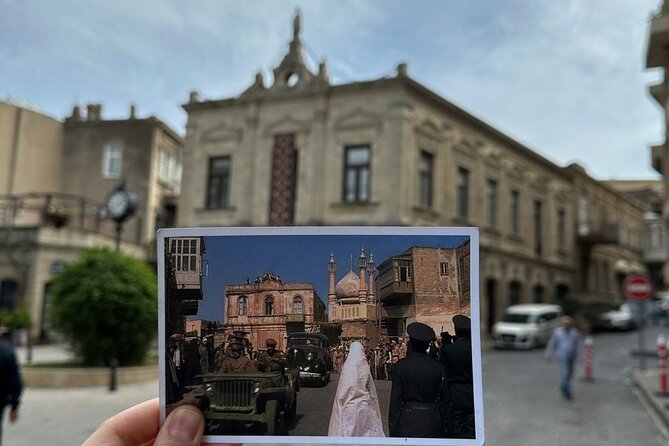
The Juma Mosque is identified as the biggest mosque in the Old City and one of its oldest important religious buildings. Its inclusion gives the route a place of worship alongside the royal and commercial stops.
Your guide also points out the remnants of the Saint Bartholomew chapel. Only remains are listed, so you should not expect a complete church interior. Even so, the site matters because it shows that the Old City’s religious story includes more than one tradition.
This pairing is one of the tour’s strongest features. You see Islamic architecture at the Juma Mosque, then encounter traces of another Christian presence at the chapel site. The stops encourage you to think of Baku as a crossroads, not as a place with one single cultural influence.
The tour also includes the Mugam Club restaurant and museum. Mugam is a traditional Azerbaijani musical form, and this stop brings music into a route otherwise centered on stone, dynasties, and trade. The restaurant and museum setting may appeal to you if you want cultural context beyond architecture.
A bathhouse beneath the streets
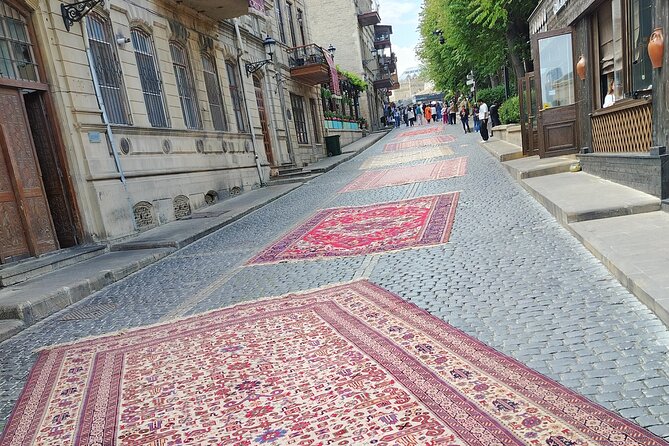
The Hadji Bani underground hammam dates to the 15th century. A hammam, or bathhouse, was an important public institution, and this one offers a glimpse at the practical side of Old City life.
The underground setting makes the stop distinctive. You get a sense of how historic residents used spaces below street level for bathing and social routines. It is also a useful reminder that old cities are layered vertically, with traces below today’s walking route.
This is the sort of place that can be easy to pass without a guide. From the street, an underground bathhouse may not announce itself as loudly as a tower or palace. Its inclusion makes the route feel more carefully planned and gives you a less polished, more everyday view of the past.
Art, books, and local craft along the route
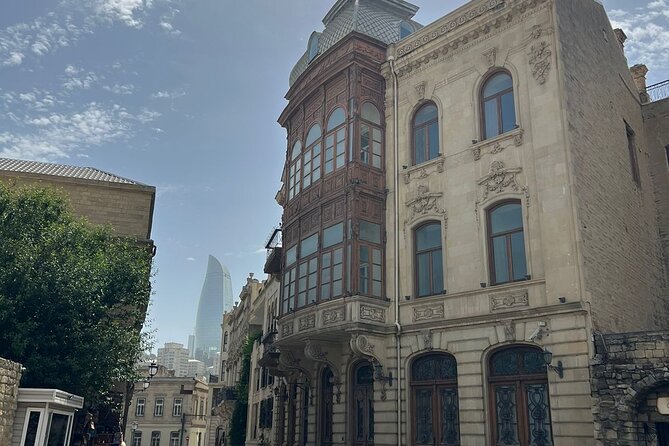
The tour includes Ali Shamsi Art Gallery, where you can see a modern artistic side of Baku inside the historic district. That contrast is valuable. The Old City is not frozen in the past, and a working art space shows how the quarter continues to serve present-day cultural life.
You also visit the miniature book museum, which has been included in the Guinness Book of Records since 2014. The subject is unusual enough to make this a memorable change of pace. After monumental stone buildings, tiny books ask you to slow down and look closely.
The Open Sky Museum adds another stop with a different feel. The supplied details do not specify the exact displays, so I would treat it as a chance to see historical material in an outdoor setting rather than expect a particular collection.
The Encyclopaedia House is also on the route. Its name suggests a cultural or educational focus, but the available information does not give a detailed description of its displays. Your guide’s explanation will be important here, especially if you want to understand why the building belongs on the itinerary.
Local artisans’ shops bring the walk into the present. You may see traditional crafts such as carpet weaving and copper engraving. These visits are best approached as cultural stops first. If you want to buy something, ask about prices and materials before making a decision, since purchases are not listed as part of the $25 fee.
Tea, music, and the living Old City
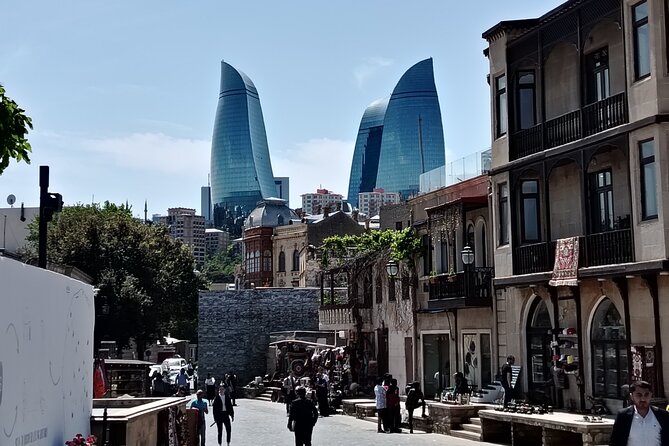
A cup of Azerbaijani tea served in a traditional glass gives the tour a welcome pause. Tea is not just a refreshment here. It offers a simple way to sit with the atmosphere of the old quarter and see the district as a place where people still meet.
The traditional glass is a small detail, but it matters. Good walking tours use such moments to connect a monument with local habits. After the tower, palace, walls, and museums, tea gives the experience a more human rhythm.
The Mugam Club restaurant and museum adds another cultural layer through Azerbaijani music. Since the stop combines food and a museum setting, it may interest you even if you are not planning a full meal. The information does not say that a meal is included, so budget separately for anything you order.
The route also passes the bust of Aliaga Vahid. This stop introduces a notable literary figure and broadens the tour beyond architecture. It is another example of how the walk links buildings with Azerbaijani cultural life.
Is $25 a fair price for this route?
At $25 per person, this is a good-value choice if you want a guided introduction to Baku’s historic core. The price covers a substantial list of sights, including the Maiden Tower, Shirvanshahs’ Palace, Juma Mosque, caravanserais, the underground hammam, art spaces, and the miniature book museum.
The value comes from the range. A short Old City walk that only covers the tower and palace would give you the headline sights but leave out much of the district’s daily and cultural story. This route adds trade, religion, bathing, music, literature, craft, and local tea.
You should still check what your chosen booking option includes, since the meeting point may vary. Personal purchases, food, and any costs not specifically listed should not be assumed to be covered.
The price is especially appealing for a first visit to Baku when you want orientation as well as history. A guide can help you identify places to return to later, including shops, museums, or the Mugam Club. If you already know the Old City well, the value will depend more on Heydar’s explanations and the stops you have not yet seen.
What to bring and who will enjoy it most
Bring comfortable shoes. That advice is essential, not decorative. You will walk through cobbled streets, winding alleys, and historic buildings, with stairs at the Maiden Tower and possibly uneven surfaces elsewhere.
I would recommend this experience for:
- First-time visitors to Baku who want the main historic sights in one route
- People who enjoy architecture, archaeology, trade history, and old city life
- Visitors who prefer walking and explanation to a quick photo stop
- Anyone interested in local crafts, tea, music, and small museums
- Couples and small groups looking for a reasonably priced cultural outing
It may be less suitable if you want a relaxed, seated experience or have difficulty with stairs and extended walking. The stated guidance excludes people over 70, so older visitors should choose another activity or confirm suitability before booking.
Heydar is the named guide, and his strongest qualities are friendliness and clear historical explanation. English and Russian are available, which makes the tour practical for a broad range of visitors.
You can reserve now and pay later, which helps if you are still arranging your Baku plans. Cancellation is allowed up to 24 hours in advance for a full refund, giving you some flexibility if your schedule changes.
Should you book Baku’s Ancient Heart?
I would book this tour if you want one affordable walk that combines Baku’s headline monuments with places you could easily miss alone. The Maiden Tower and Shirvanshahs’ Palace give the route its scale, while the bathhouse, caravanserais, chapel remains, art gallery, miniature books, tea, and music provide its personality.
The best reason to choose it is the balance between major history and local detail. The main caution is the walking itself. Wear good shoes, expect stairs, and do not choose this activity if you need a low-effort sightseeing format.
If you have only one day in Baku, this is a sensible way to begin. If you have several days, it works well as an orientation walk, leaving you free to return later to the palace, shops, museums, or restaurants that catch your interest.
FAQ
Where does the tour take place?
The tour takes place in Baku’s Old City, also known as Icherisheher, in Azerbaijan’s Absheron region.
What are the main sights included?
The route includes the Maiden Tower, Shirvanshahs’ Palace, Juma Mosque, the Double Gates, Baku City Walls, Multani and Bukhara Caravanserais, the Hadji Bani underground hammam, and several cultural sites.
Does the tour visit the Maiden Tower?
Yes. You explore the Maiden Tower, climb its spiral staircase, and see views of Baku, the Caspian Sea, and the surrounding city.
Is the Shirvanshahs’ Palace included?
Yes. The tour visits the palace complex, its courtyards and carvings, and the museum with artifacts connected to the Shirvanshah dynasty.
What languages are available?
The experience is offered in English and Russian.
Who is the guide?
The guide is Heydar.
What should I bring?
Bring comfortable shoes for walking through cobbled streets, winding lanes, and historic buildings.
Is the tour suitable for people over 70?
No. The activity is listed as not suitable for people over 70 years old.
Can I cancel for a full refund?
Yes. You can cancel up to 24 hours in advance for a full refund.
Just added around Baku
- Wine Tour Baku★ 5.0 · 4 reviews
- Traditional Azerbaijani Cuisine Workshop★ 5.0 · 5 reviews
- Tour to the North part of Azerbaijan Forests and Mountatin Quba★ 5.0 · 10 reviews
- Full Day KHINALUG and the Candy Mountains Tour★ 5.0 · 15 reviews
- Baku Sightseing Tour★ 5.0 · 12 reviews
- Small-Group Day Trip to Gobustan, Mud Volcanoes, Ateshgah & Yanar Dagh★ 4.5 · 3 reviews
- The Magnificent Baku Night Tour★ 5.0 · 3 reviews
- Sheki tour with overnight★ 5.0 · 5 reviews
Baku Tours, compared.
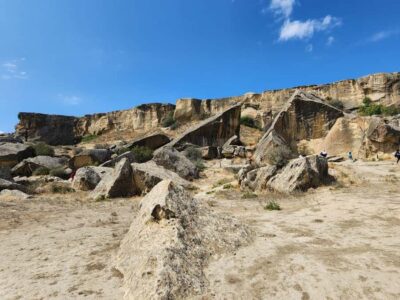
Gobustan, Mud Volcano, Fire Mount, Temple Lunch Entry
Read our review →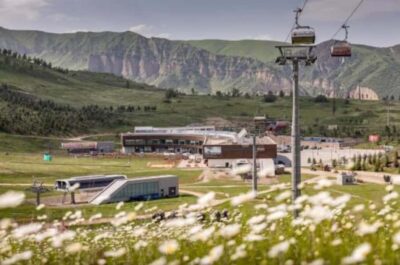
Guba, Shahdag, Laza & Lunch w/ Free City & Night Tour
Read our review →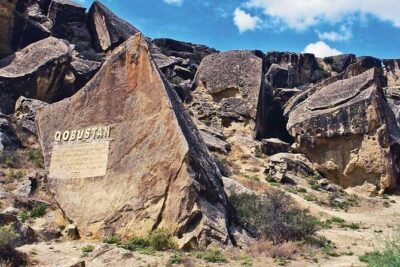
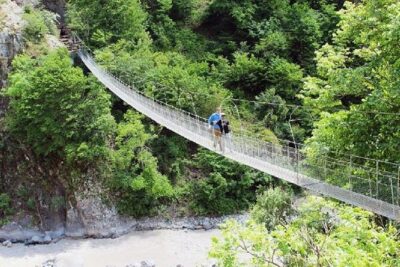
Candy Cane, Guba, Khinaliq village with Homemade Lunch
Read our review →
Guba & Sahdag Tour Lunch included and Laza Waterfall
Read our review →